About project
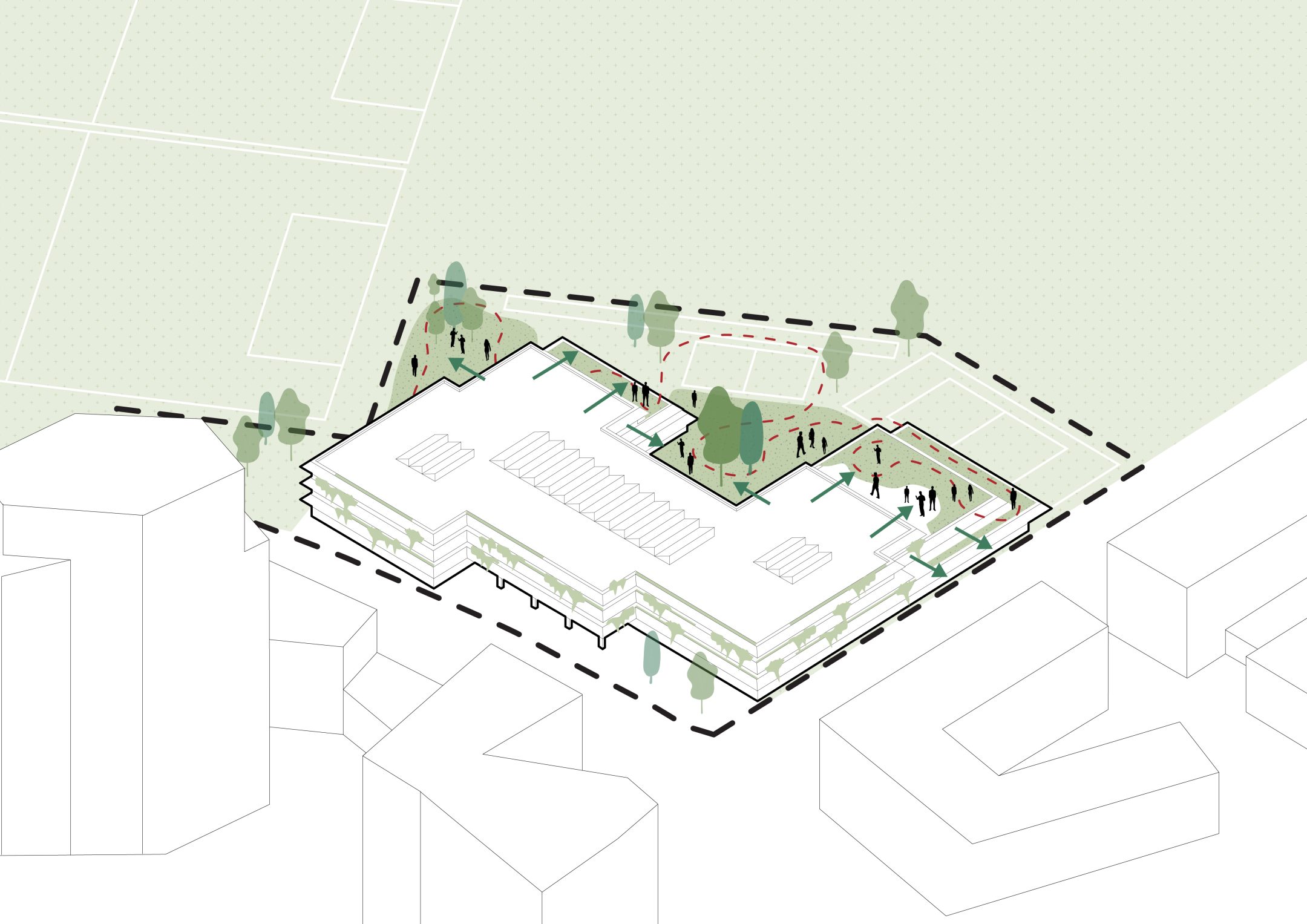
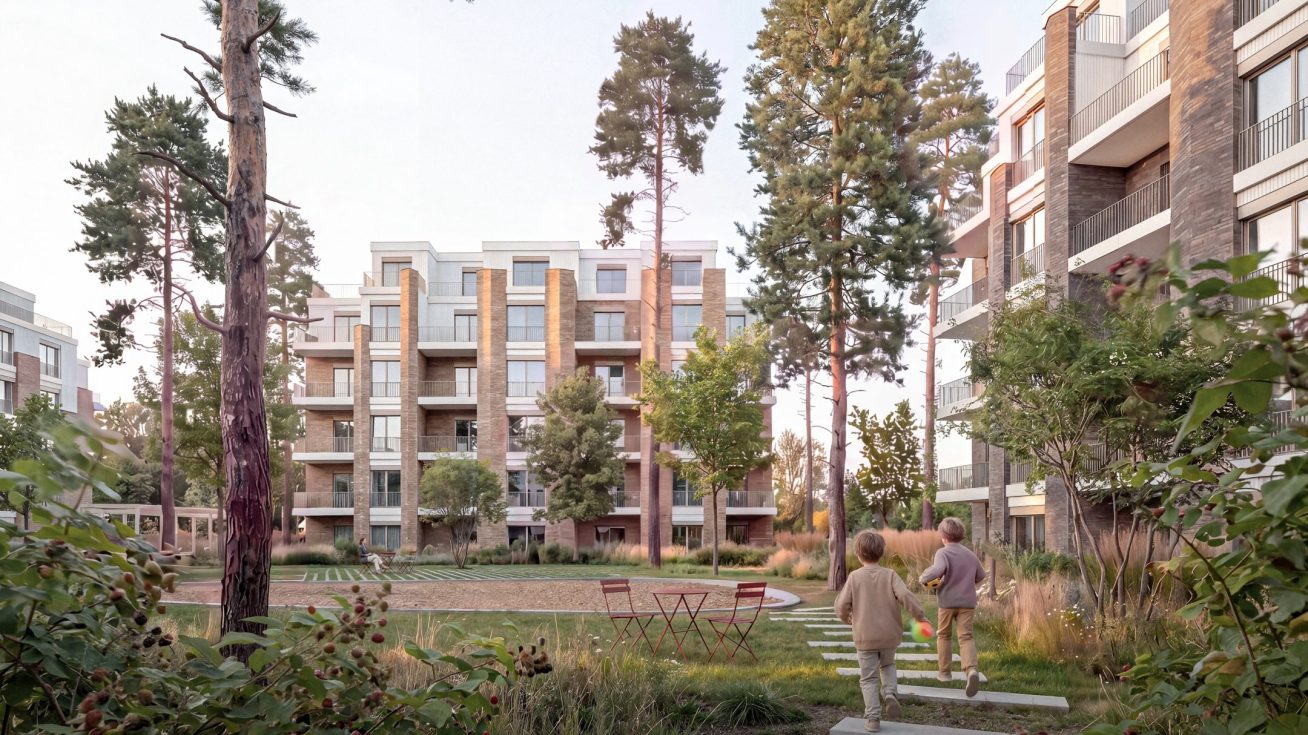
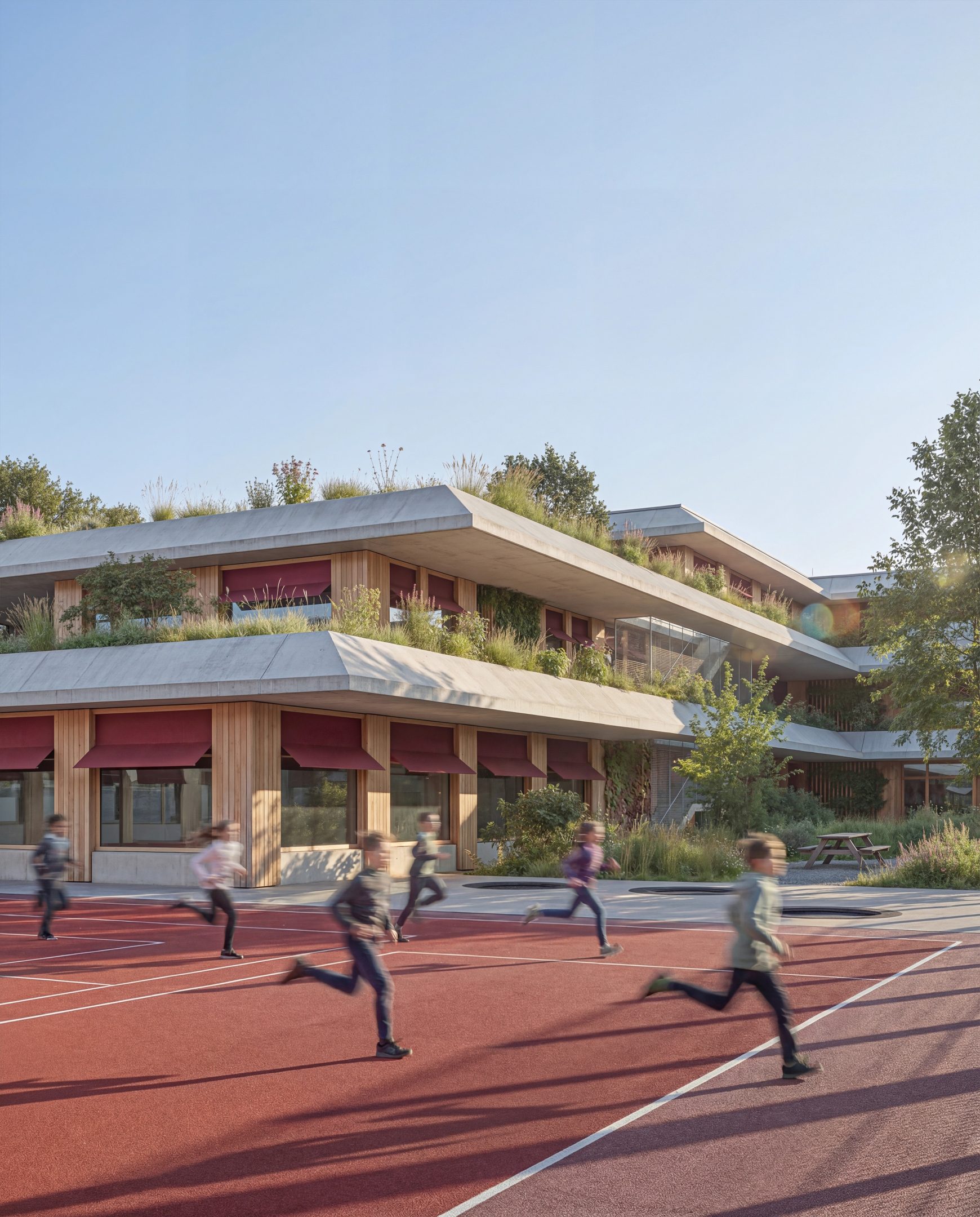
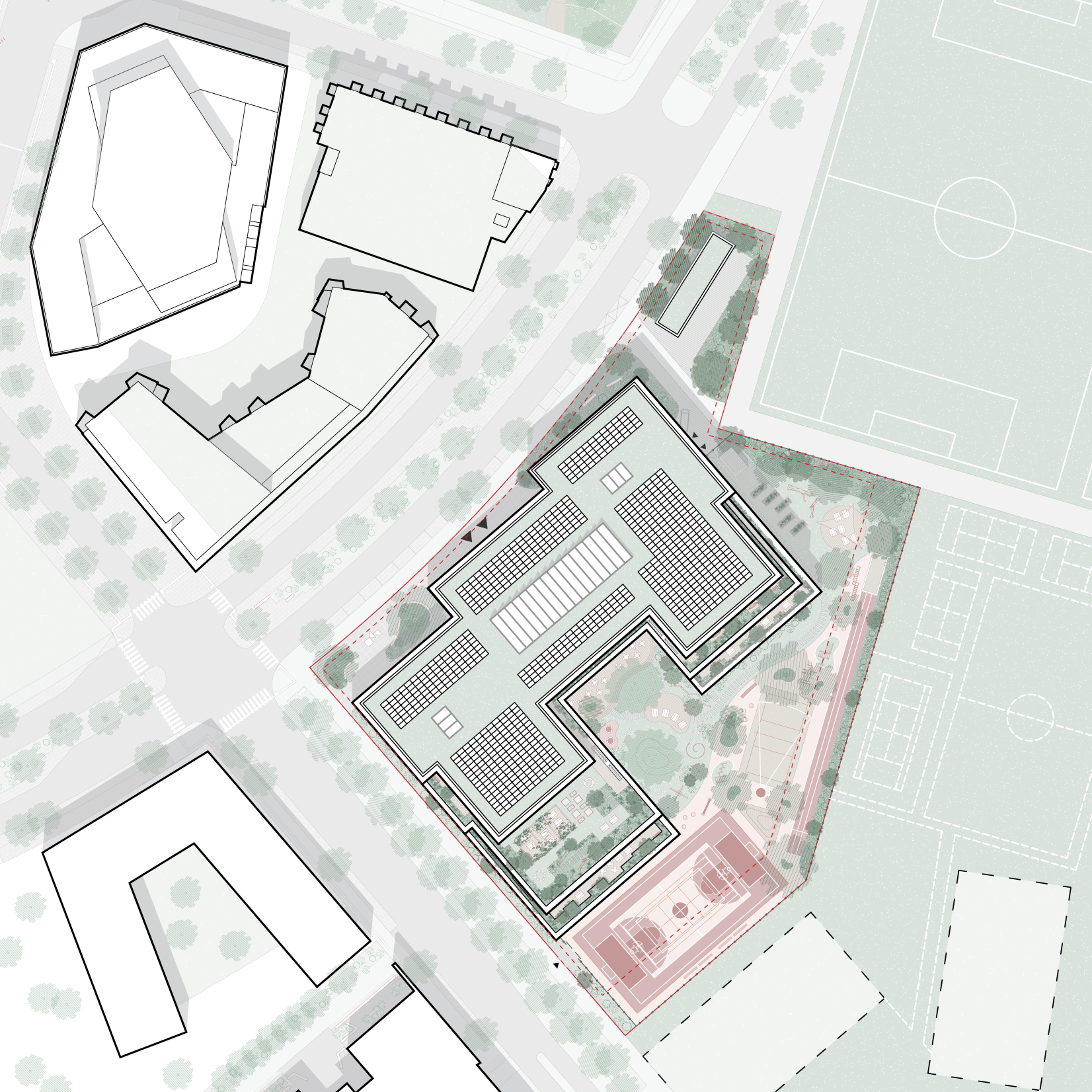
The design of the new Aspern College campus is a modern campus sensitively integrated into an emerging urban neighbourhood with excellent public transport links. The school is conceived as an open centre of education, culture and sport for pupils and the wider community. The low-rise atrium building, divided into three interconnected volumes, respects the scale of the surrounding buildings and preserves the existing mature trees that become the natural centre of the campus. The layout is based on a system of educational clusters promoting clear wayfinding, safe movement and community life.
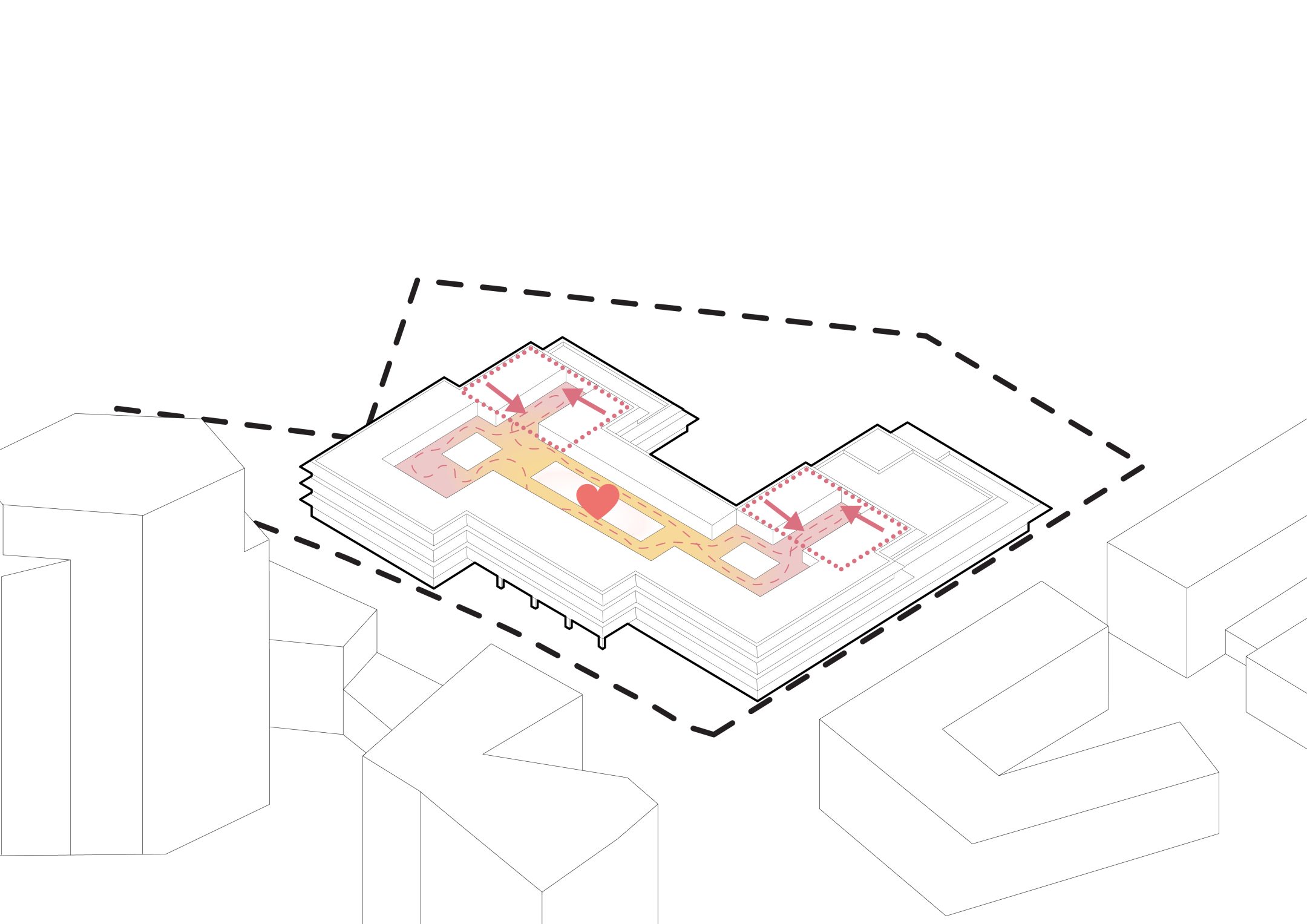
The central element is a multi-storey atrium connecting the different parts of the school and creating a space for meeting and social interaction.
Green terraces and a school garden extend learning outdoors, improve the microclimate and blur the boundary between indoors and outdoors. The architecture emphasises the abundance of natural daylight, the flexibility of the spaces and the creation of an inspiring and safe environment. The school thus becomes not only a place of education, but also a vibrant community space and a temporary home for the children.
-
Client
BIG - Bundesimmobilien Gesellschaft m.b.H.
-
Year
2026
-
Location
Vienna, Austria
-
Size
14 564 m2
-
Authors
Ján Antal, Natália Korpášová, Petra Deáková, Barbora Kuciaková
-
Visualisations
perspektiv, Ján Martin Púčik
Show all
School as an example of responsible architecture
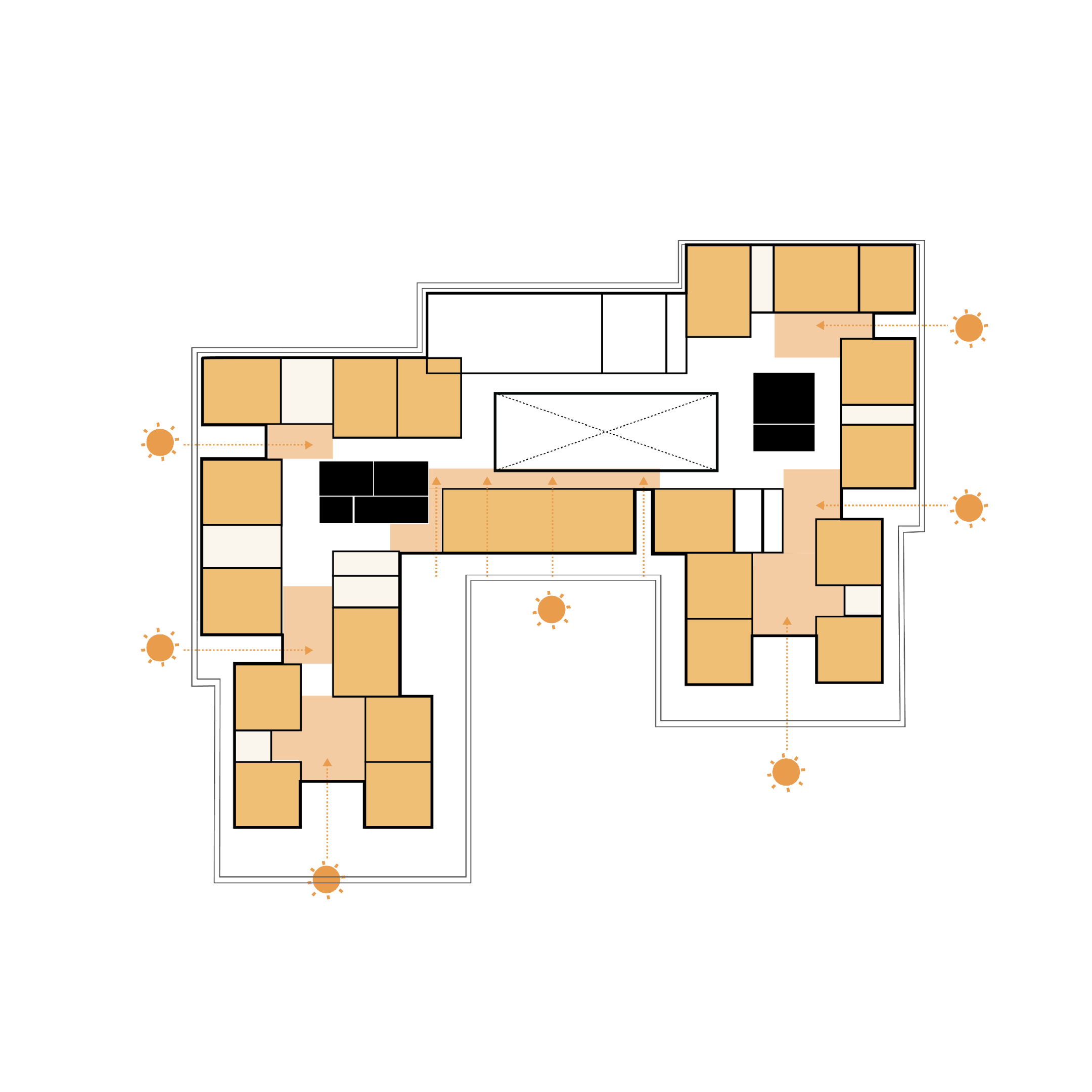
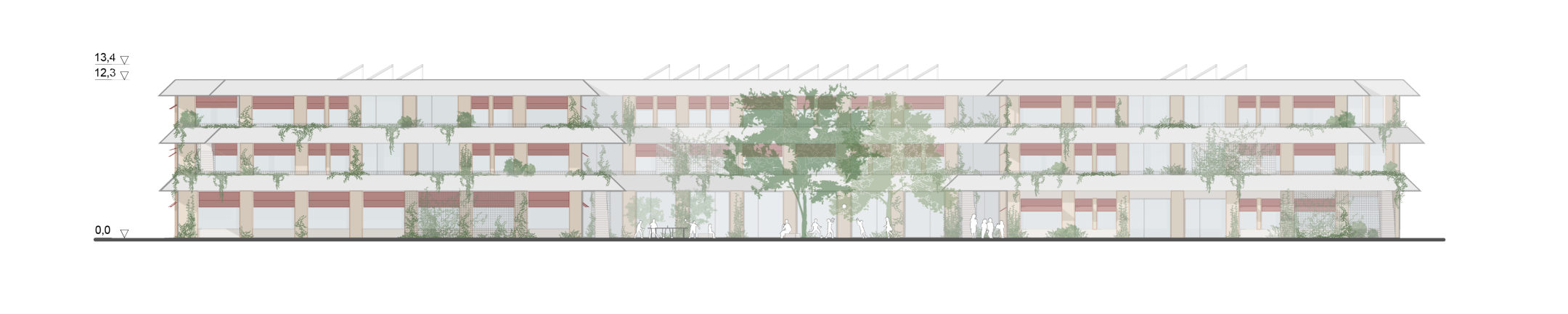
The design of the school is based on the principle of resource efficiency throughout the entire life cycle of the building – from planning and construction to operation and future modifications. The goal is to minimize energy, materials and water consumption while creating a healthy and quality environment for students and teachers. Energy efficiency is primarily based on passive architectural principles. The building’s compact shape, ample daylight and thoughtful proportion of glazed areas reduce heating, cooling and artificial lighting requirements. Covered terraces, exterior screening and greenery contribute to a stable indoor climate.
The supporting structure consists of prefabricated CLT panels – a renewable material with a low carbon footprint. Prefabrication allows for precision manufacturing, fast assembly and reduced construction waste. Local and certified materials are used with the possibility of future recycling or reuse. The concept also includes the preservation of existing trees and the integration of greenery into the architecture. The school is thus not only a place of education, but also a practical demonstration of a sustainable approach to contemporary architecture.
Open education structure
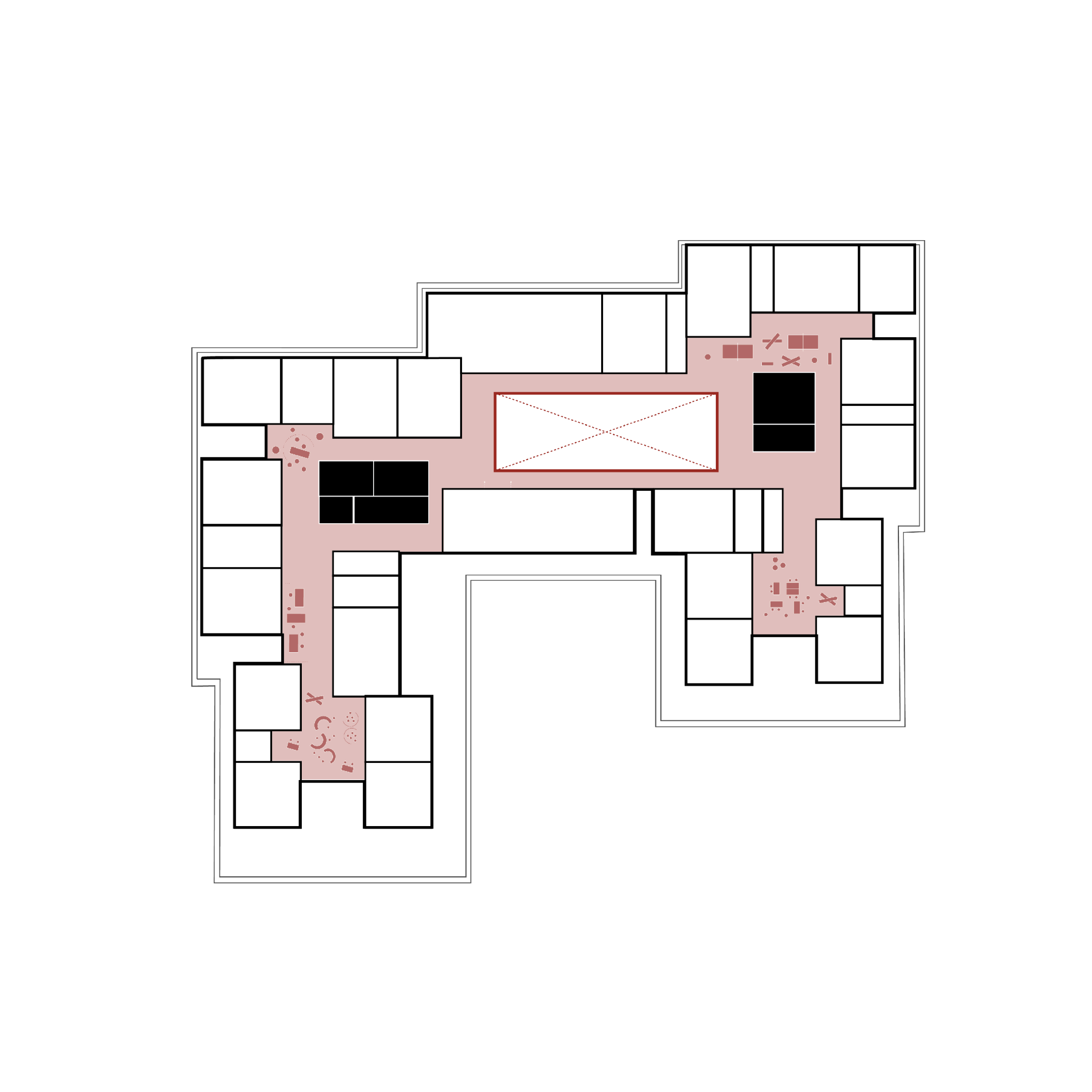
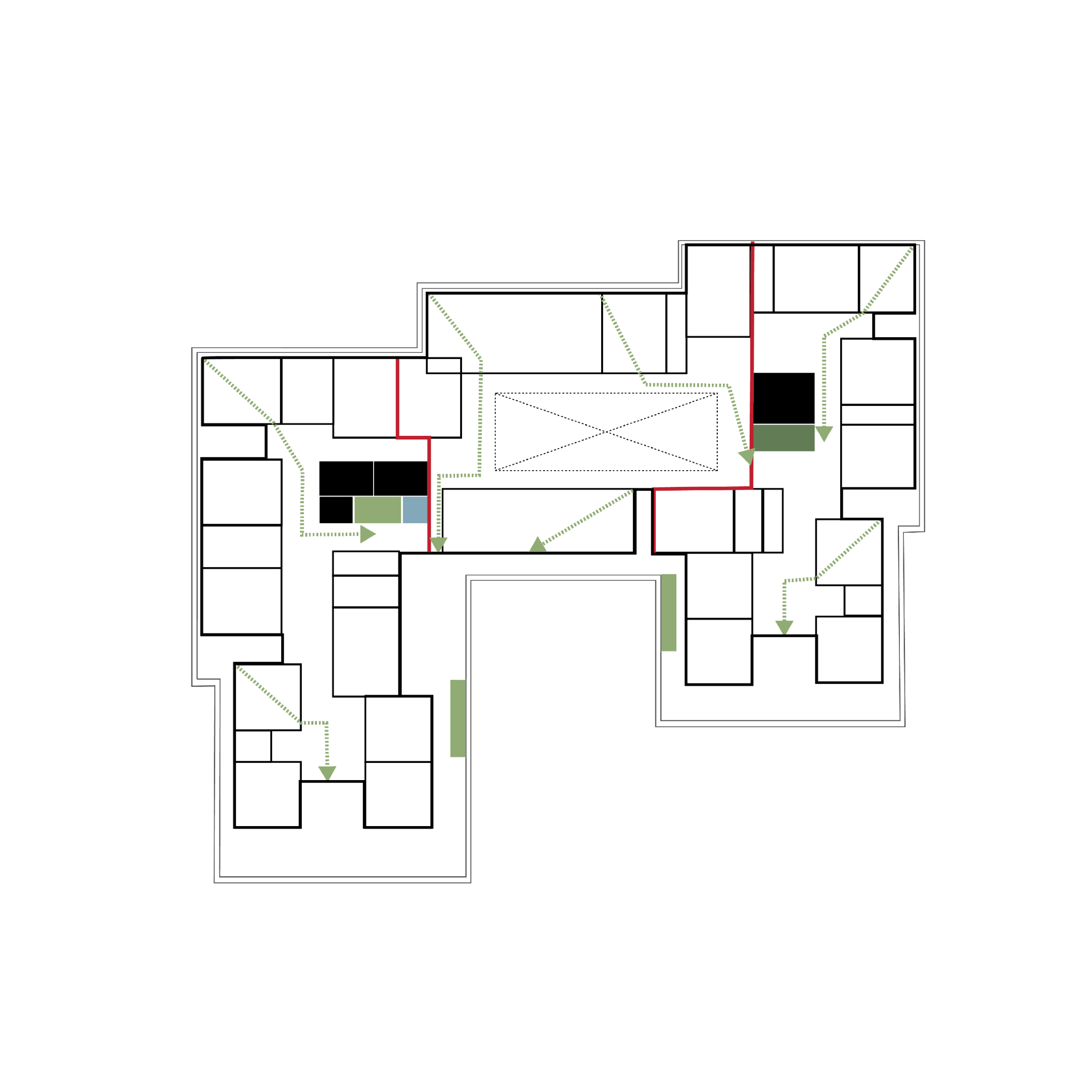
The organisation of the school is based on a system of learning clusters that bring a contemporary and flexible model of education. The individual clusters function as compact units with their own identity and a reasonable degree of privacy. They are located at the ends of the building arms, creating a quiet environment for focused learning. A common communication space develops between them, with specialist classrooms that naturally link pupils of different year groups. The dominant element of the layout is the central atrium – the spatial core of the school, which connects all floors and facilitates orientation in the building. Each cluster has its own “square” designed for group work, experimentation, relaxation and informal conversations. The communication spaces here go beyond their traditional function. The corridors are designed as an active part of the learning environment – offering nooks for collaboration, quiet places for individual study and relaxation zones. This creates a varied and vibrant educational landscape that fosters natural social connections and responds to the diverse needs of contemporary education.
Daylight and school open to the garden
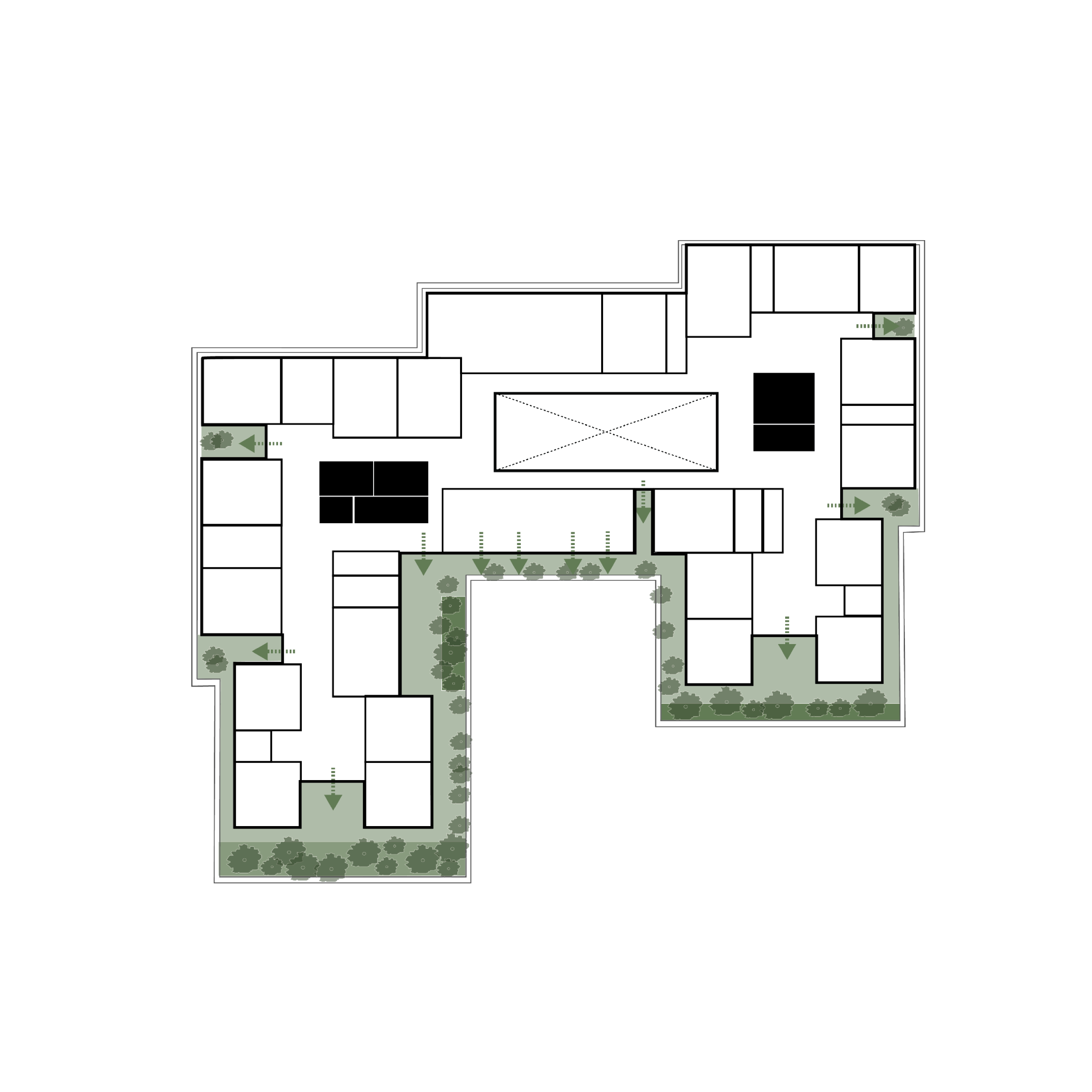
The design of the building emphasizes maximizing the use of natural daylight in each classroom throughout the day. The façade is structured to bring light deep into the layout through the use of light pockets. A fundamental quality of the design is the direct connection between the interior and the green space. The individual clusters can be opened onto south-facing terraces adjacent to the school garden. The covered terraces act as a natural extension of the classrooms – allowing outdoor learning, encouraging contact with nature and also contributing to an improved microclimate. The boundary between indoors and outdoors is thus seamlessly blurred.



How we brought something extra
1. DIFFERENT CHARACTERS OF THE SPACES
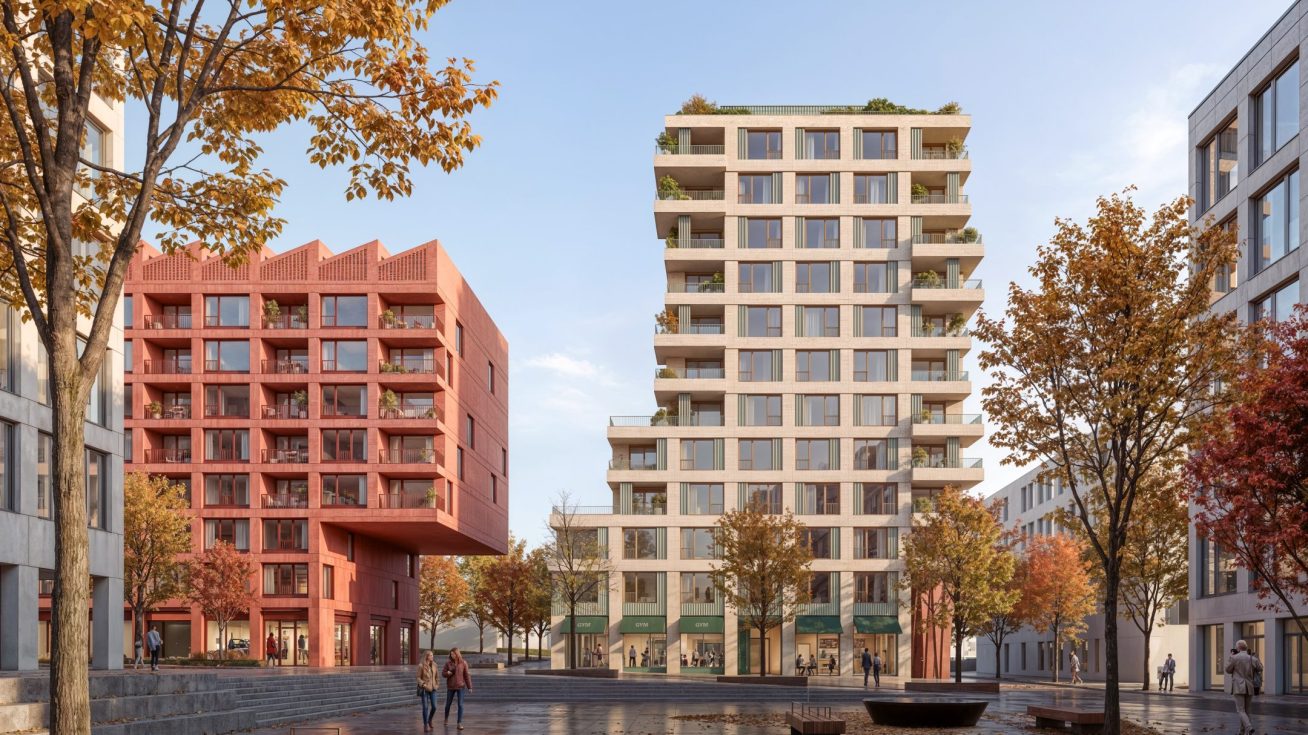
- lively forecourt facing the street
- peaceful green school garden at the back
- calm and dynamic zones for children
- strong material identity
2. BLURRING THE LINE BETWEEN INSIDE AND OUTSIDE
- preservation and integration of mature trees
- green terraces connected to the interior
- spaces for learning and outdoor exercise
- green facade
3. PROMOTING SOCIAL INTERACTION AND BUILDING FRIENDSHIPS
- corridor as a learning space
- continuous communication space
- cluster structure with central square