
About project
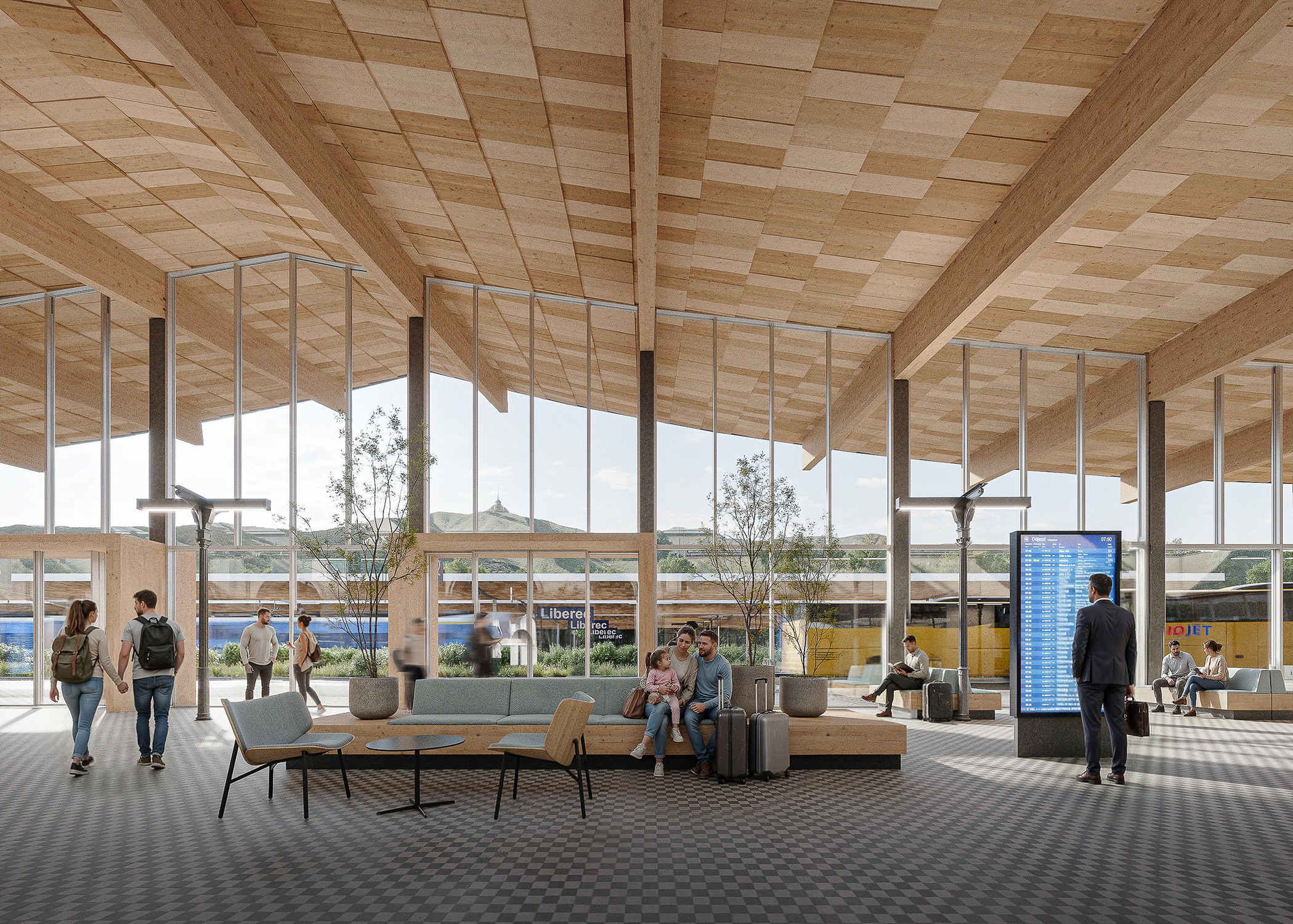
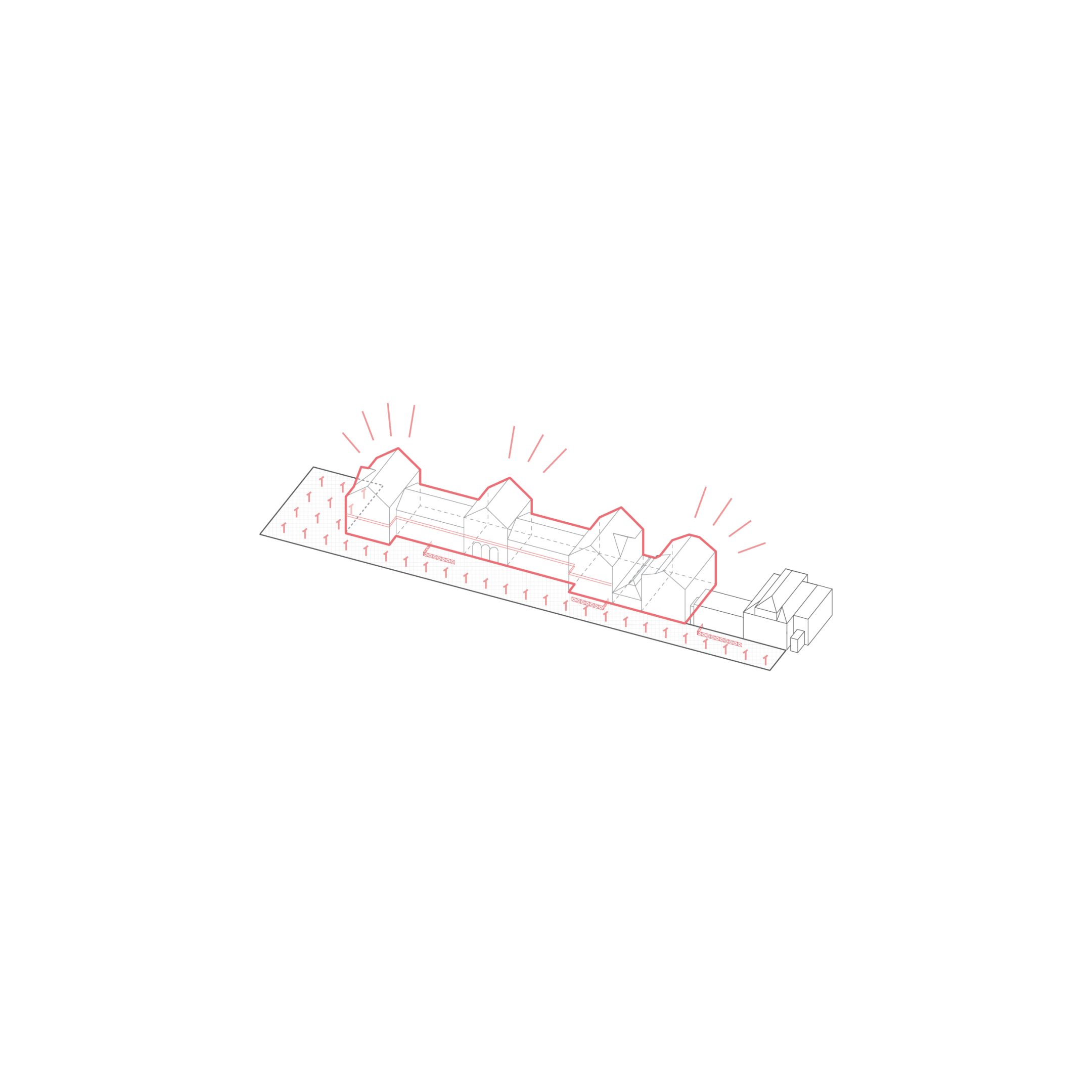
Our competition design for the Liberec Regional Terminal sees the station as a new entrance to the city and the whole region. Liberec is a city among the hills – surrounded by the Jizera Mountains, the Lusatian Mountains, the Giant Mountains and the iconic Ještěd. The landscape, the views and the proximity to the mountains therefore become one of the main motifs of the design and, thanks to the rising roof, allow views of the local landmarks. The terminal is not an anonymous transfer hub, but a place that shows passengers where they are immediately on arrival.
-
Client
Railway Administration, Liberec Region, Statutory City of Liberec
-
Year
2025
-
Location
Liberec
-
Visualisations
Perspektiv, Ján Martin Púčik
-
Architecture
Ján Antal, Martin Křivánek, Dora Halamová, Jakub Longauer, Ondřej Sejkora
-
Planning
Barbora Kuciaková
Show all
Open terminal without barriers
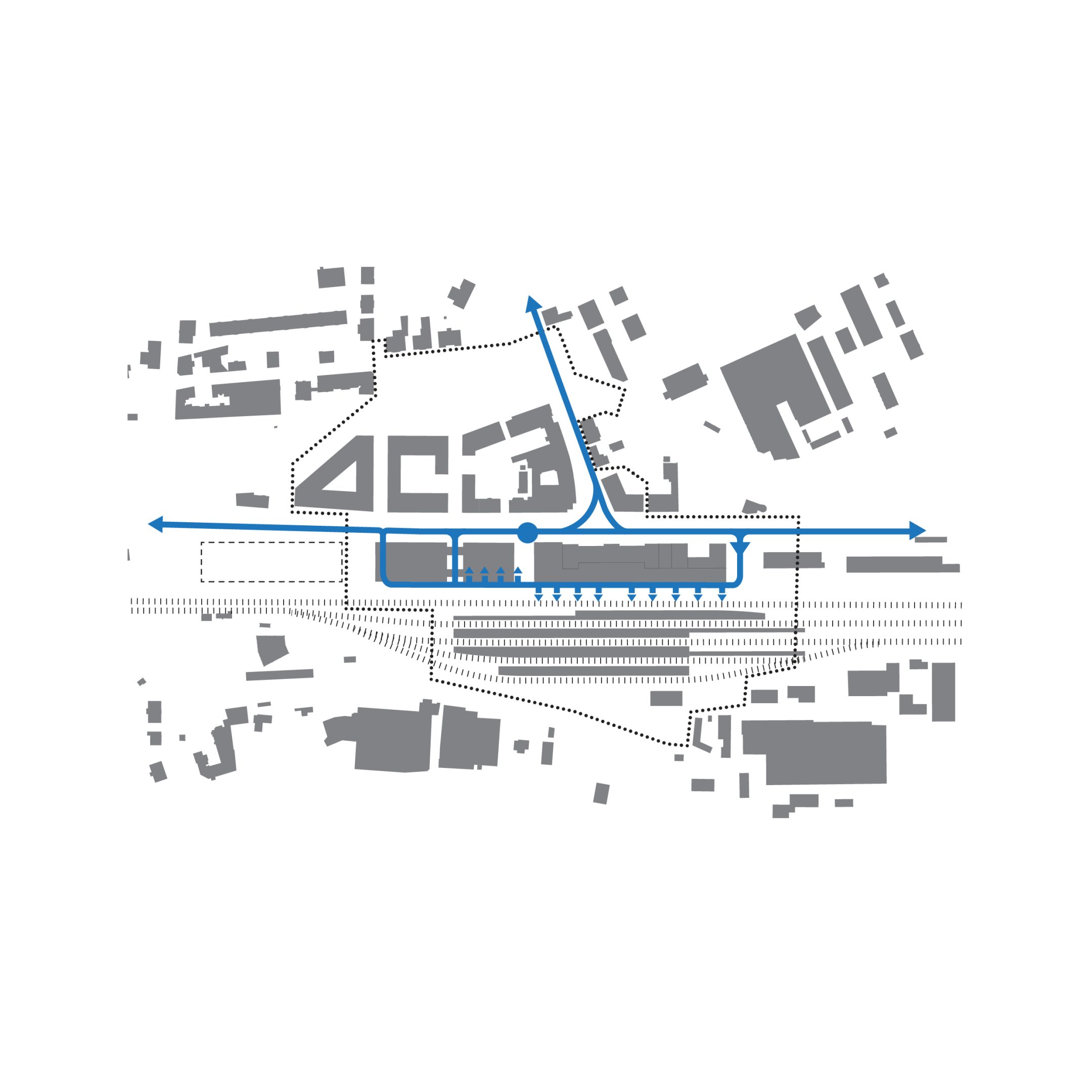
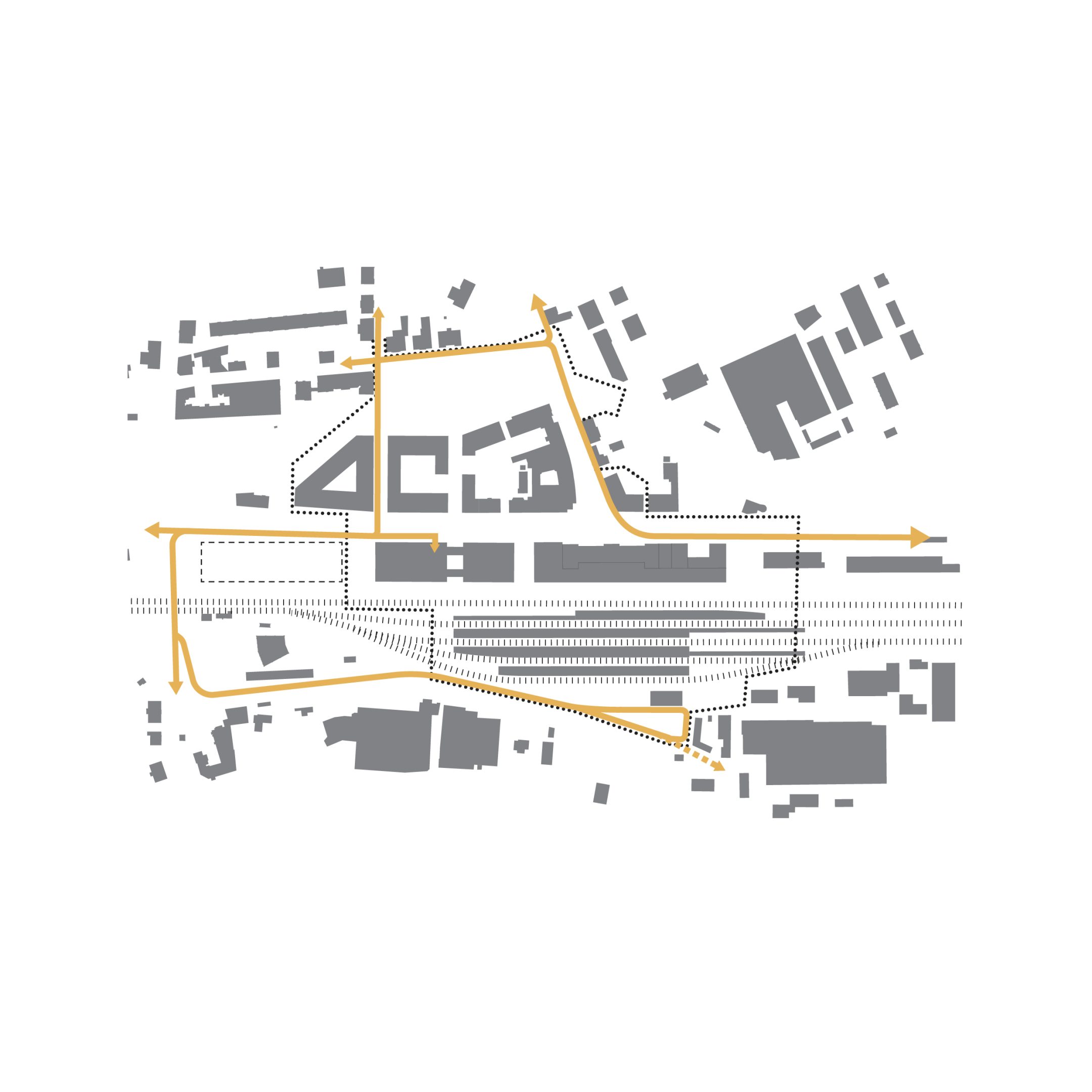
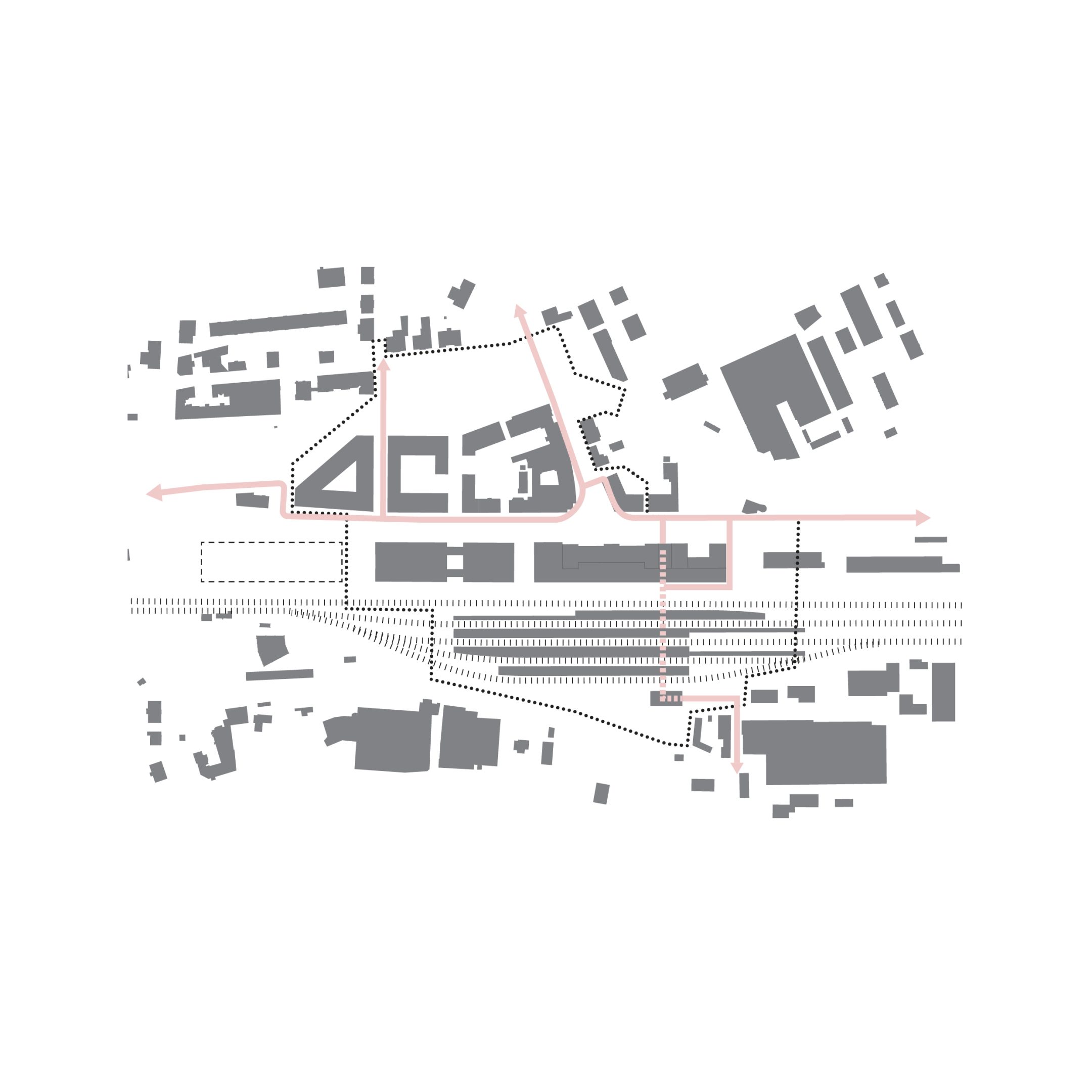
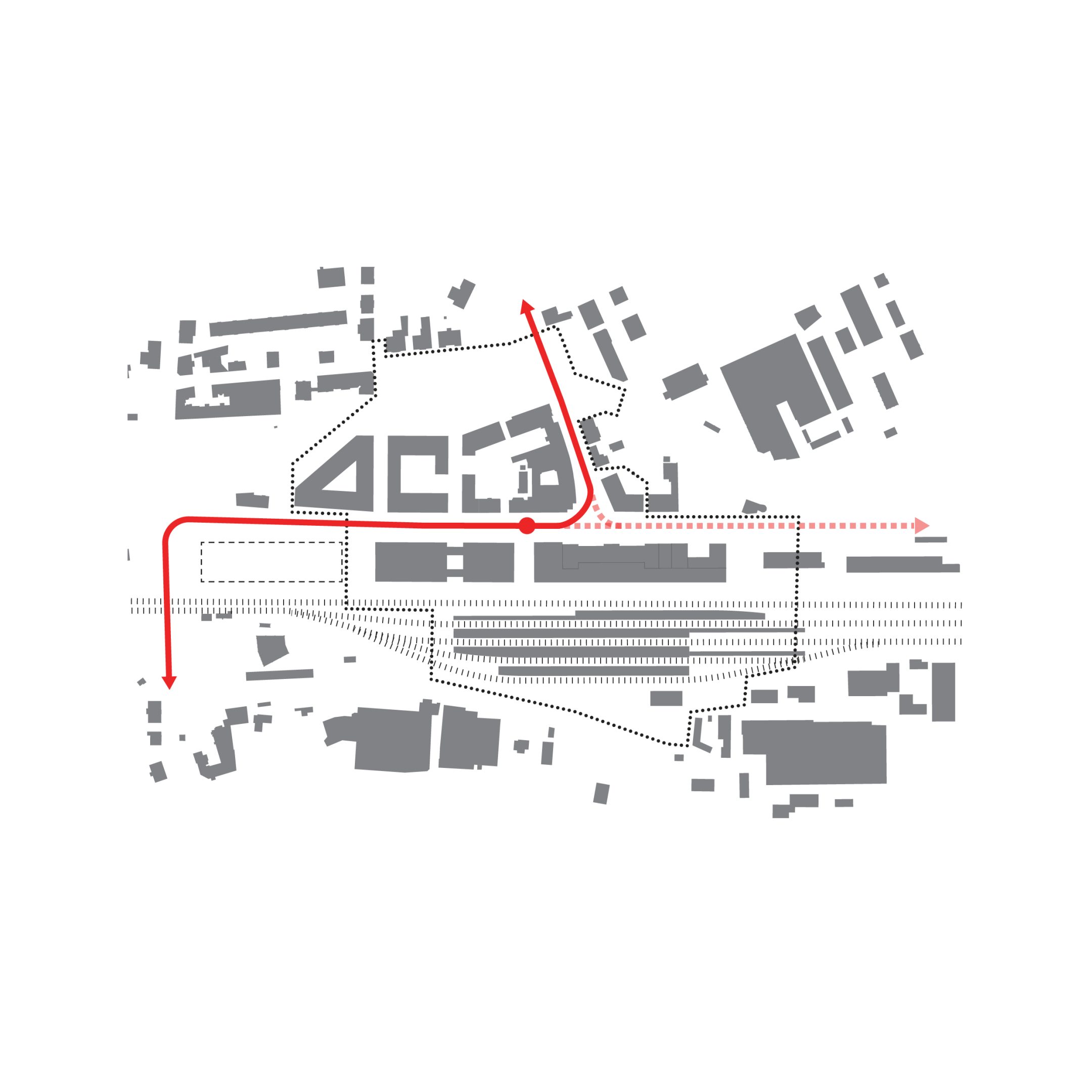
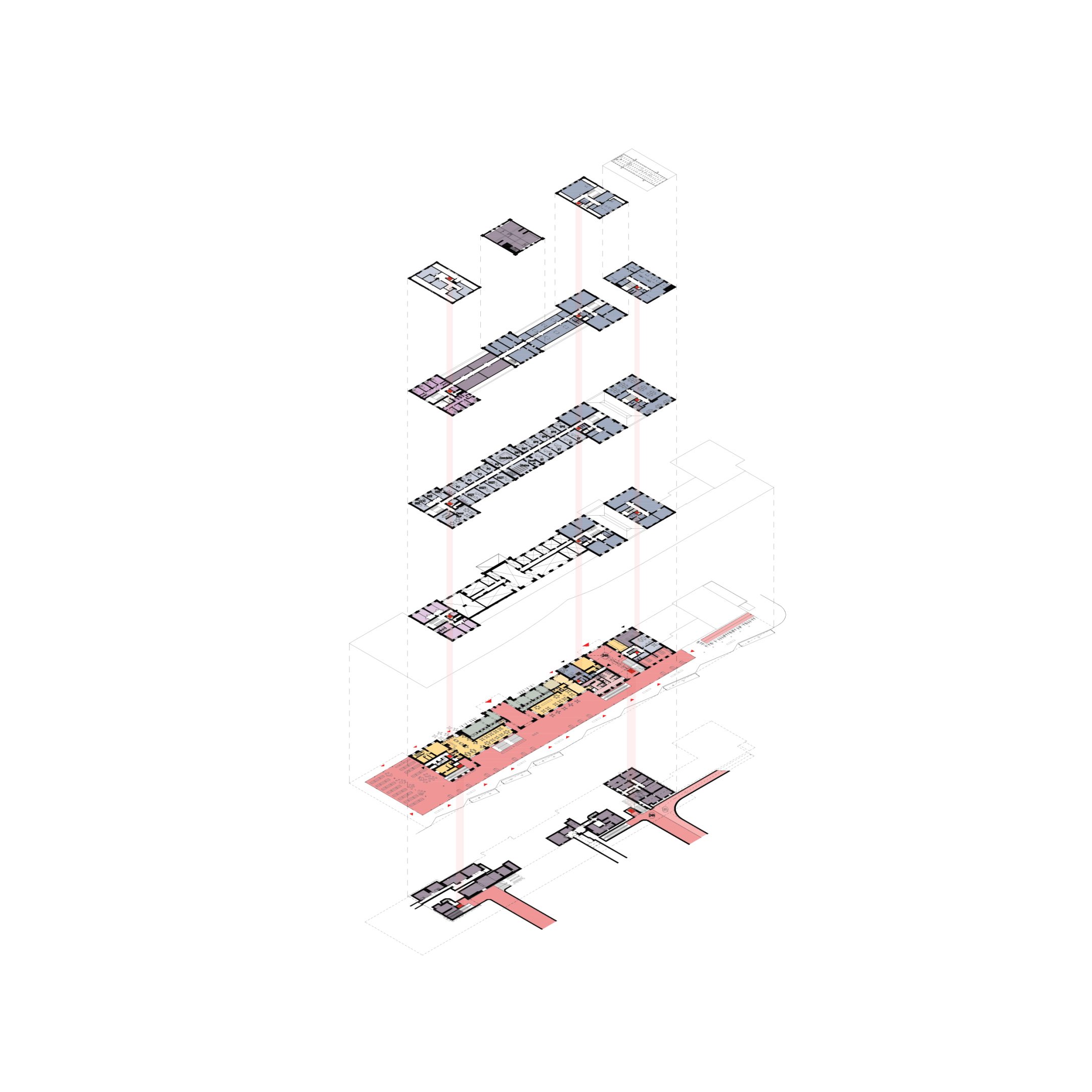
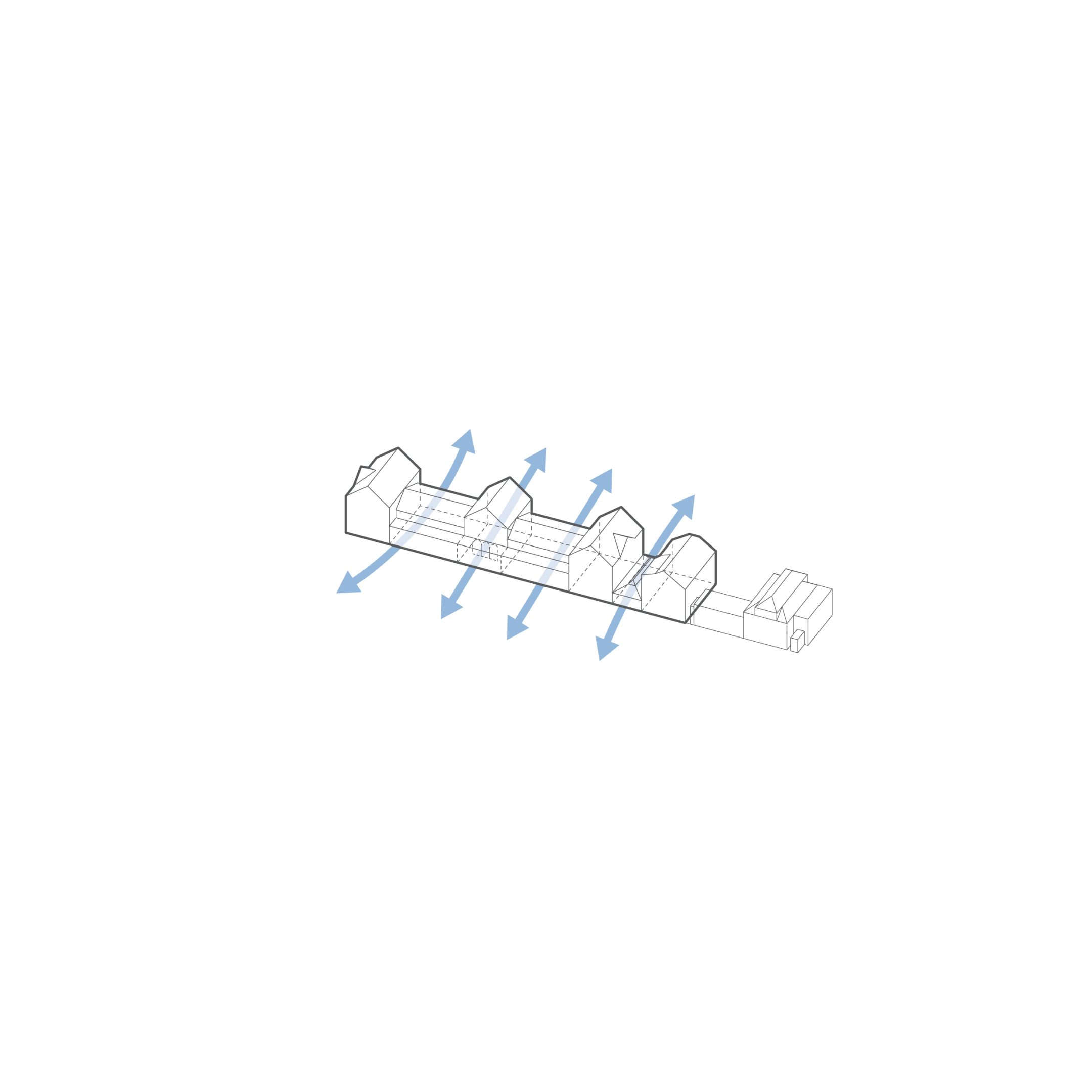
We are designing the new terminal as an open, clear and as barrier-free as possible. The building can be entered from several directions, all modes of transport are logically arranged and circulation spaces naturally connect train, bus, public transport, cycling and parking. The basic design principle is simple orientation: the passenger should not get lost in the station, but intuitively understand which way to proceed.
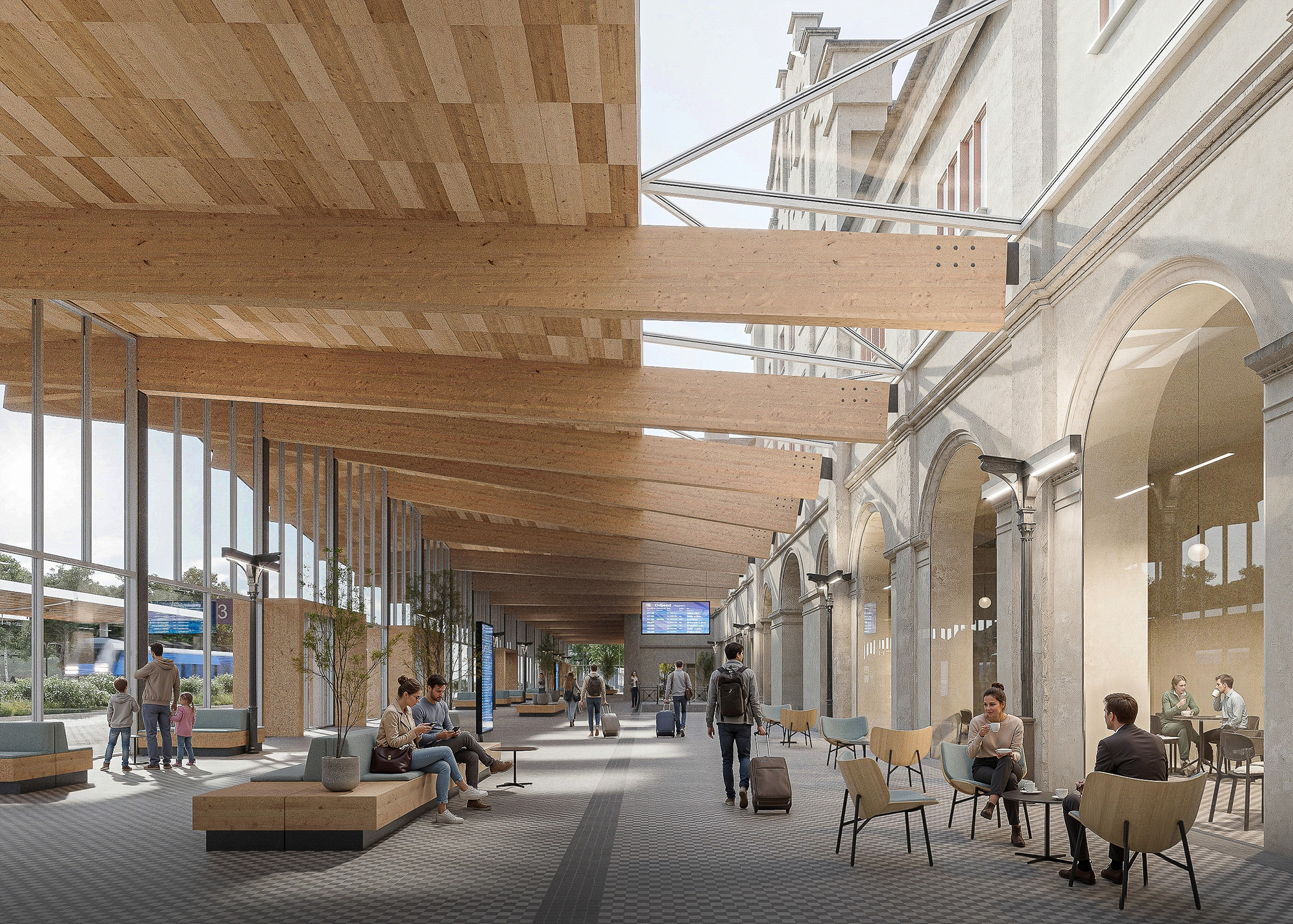
At the same time, we want to continue the historical role of the station as a town house. Not only waiting rooms, but also restaurants, cafes, services, cultural and community spaces or rental areas can make the terminal a lively place where people return even when they are not travelling. In this way, the station becomes part of the city’s culture and an important point in the everyday life of Liberec.
From the station to the new urban structure
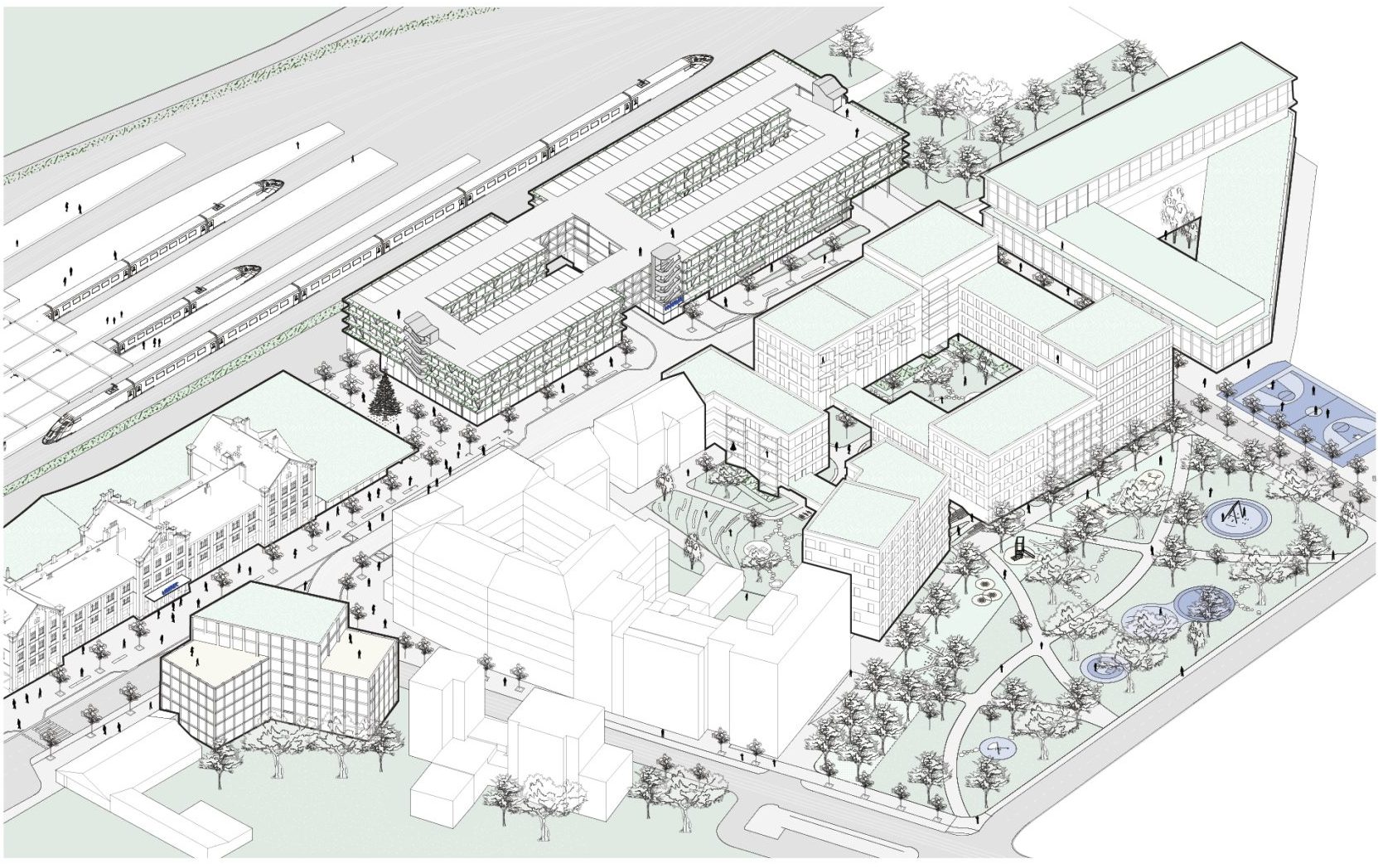
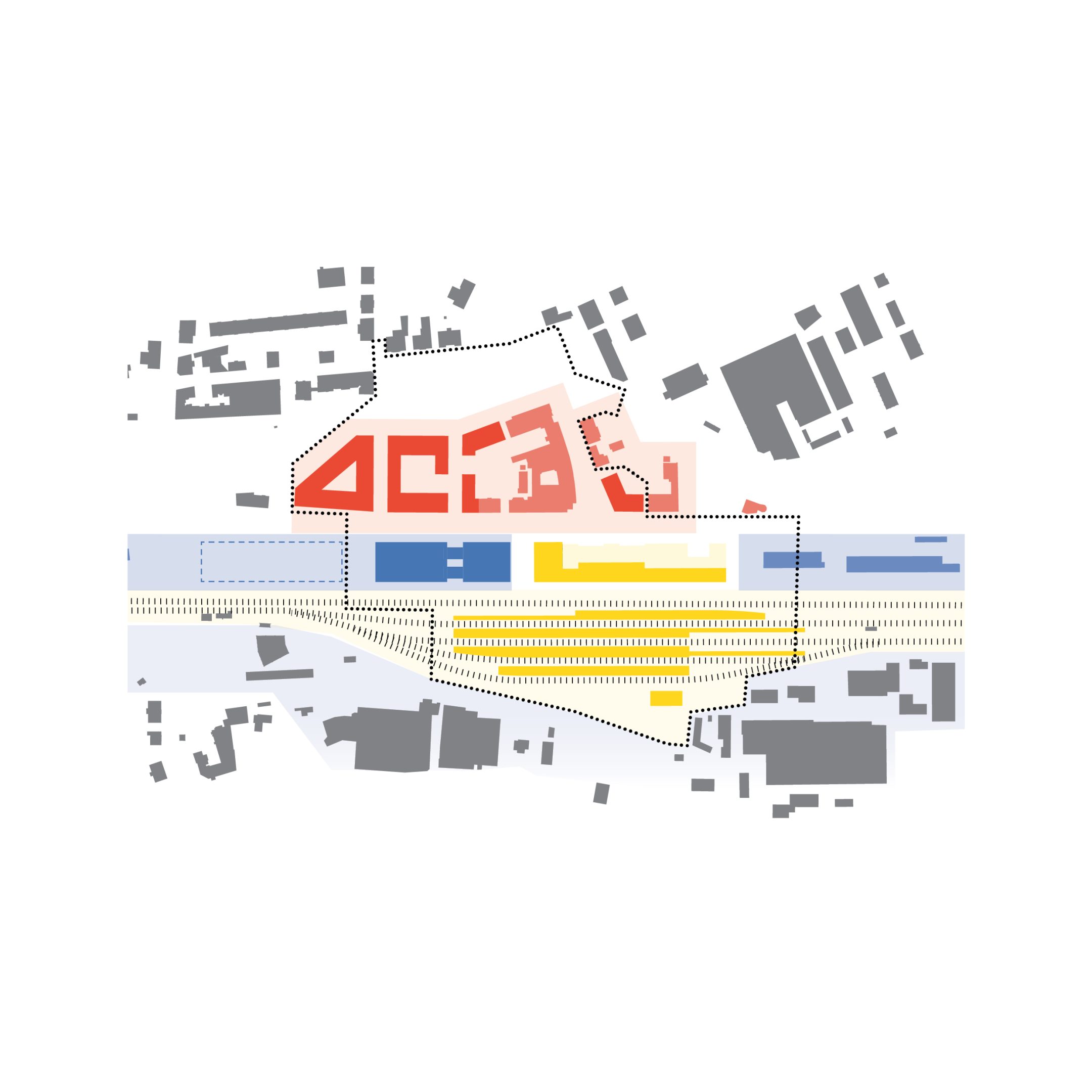
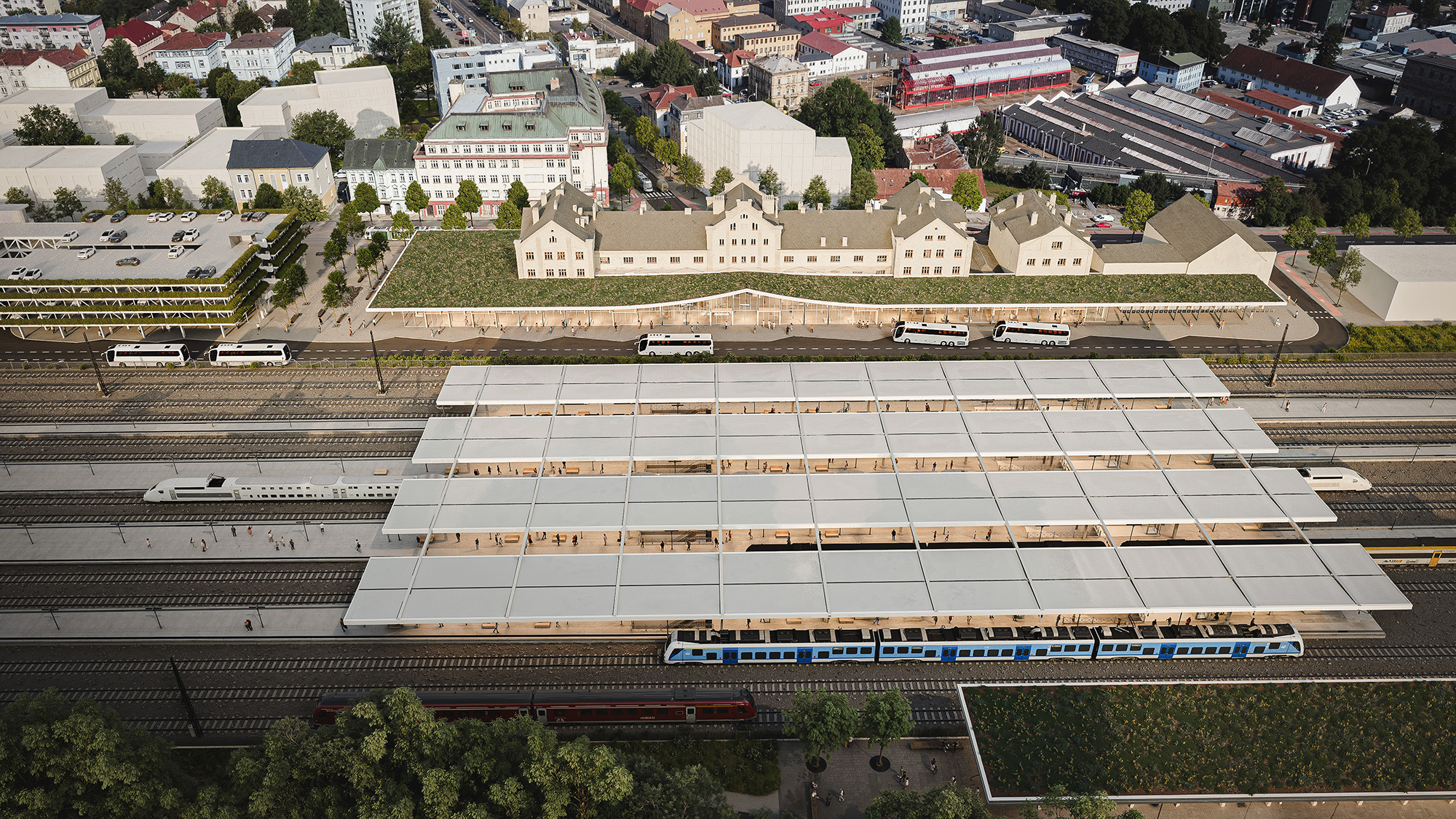
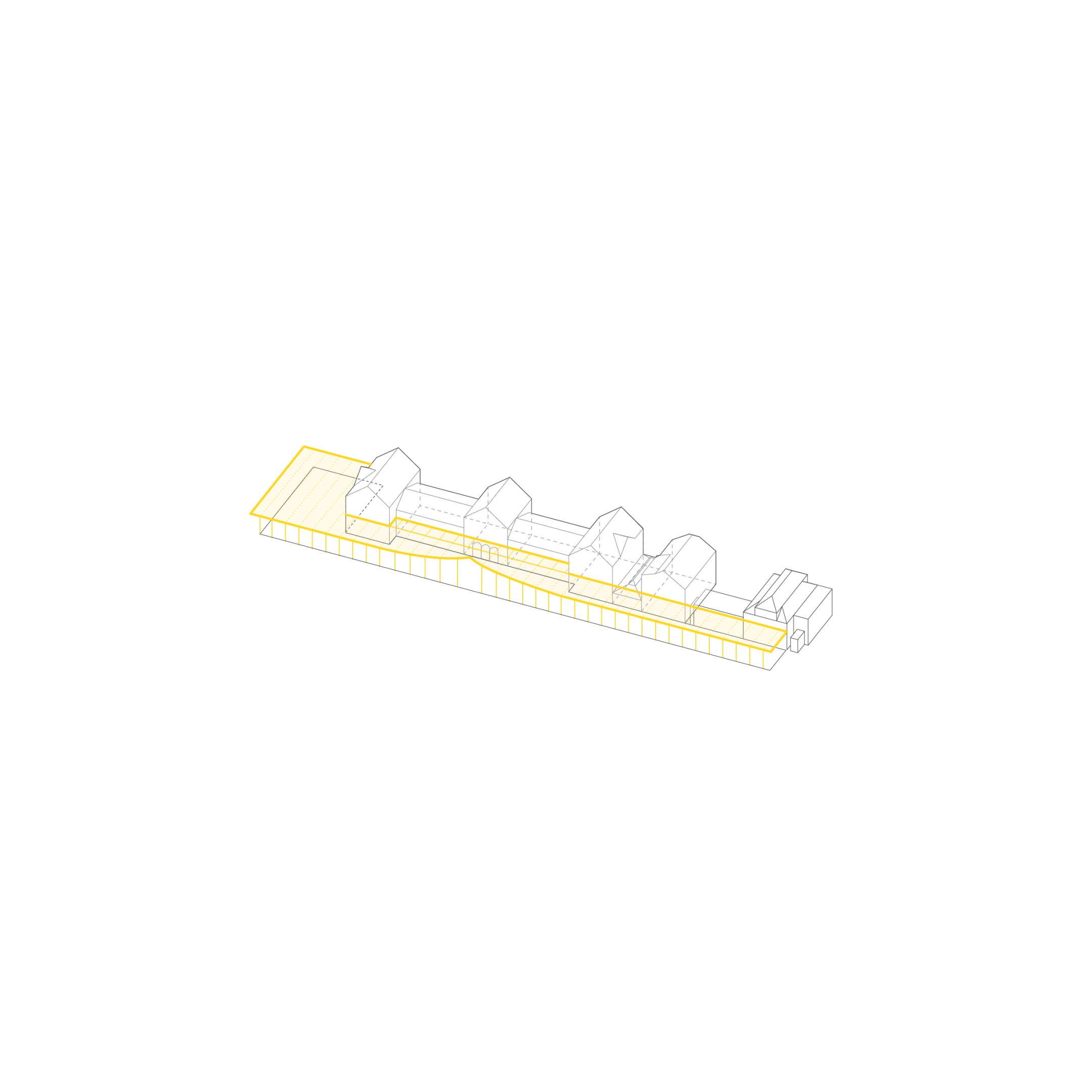
Conceptually, we divide the whole territory into three parts: identity, adaptability and quality. The first part consists of the transport terminal itself with the historic station building, the new extension, the track and the bus platforms. Here we work with the original footprint of the site – the historic columns, the paving and the motif of the wooden structures that refer to the vernacular architecture of the foothill region. The new part of the terminal therefore does not compete with the historic building, but complements it and develops its character for contemporary needs.
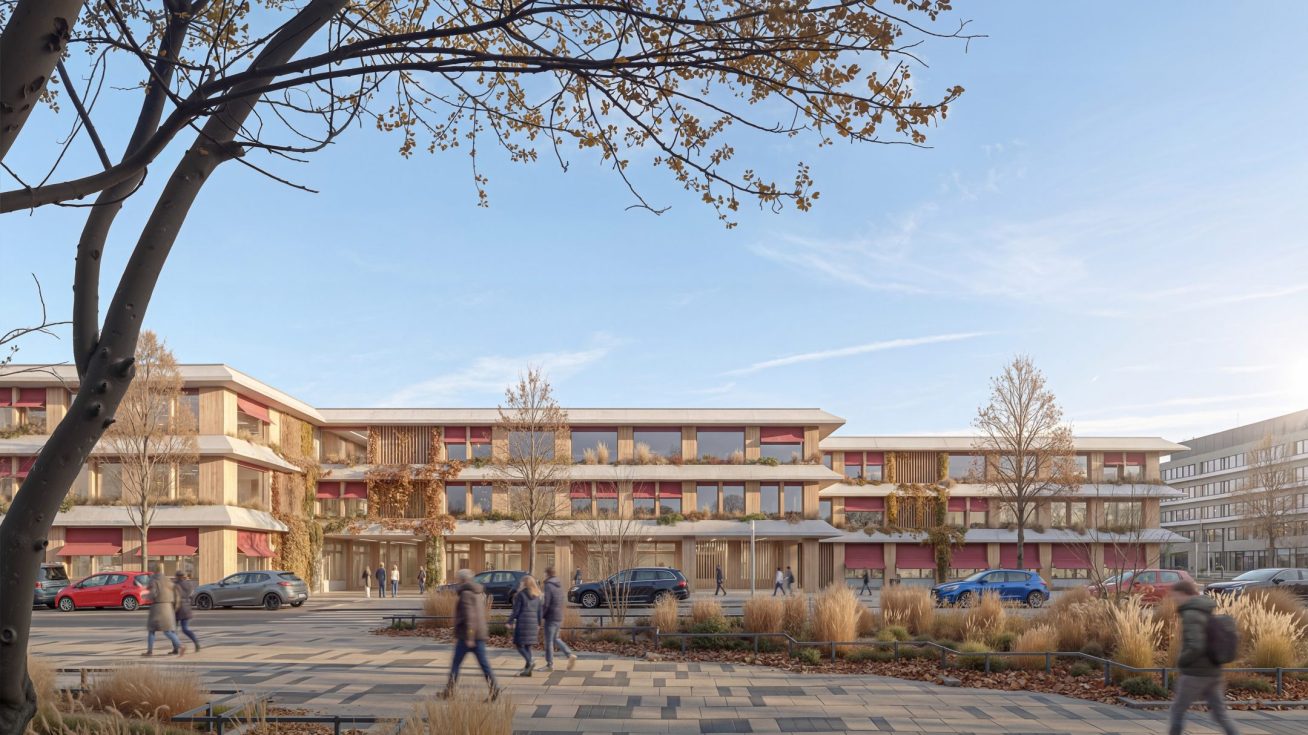
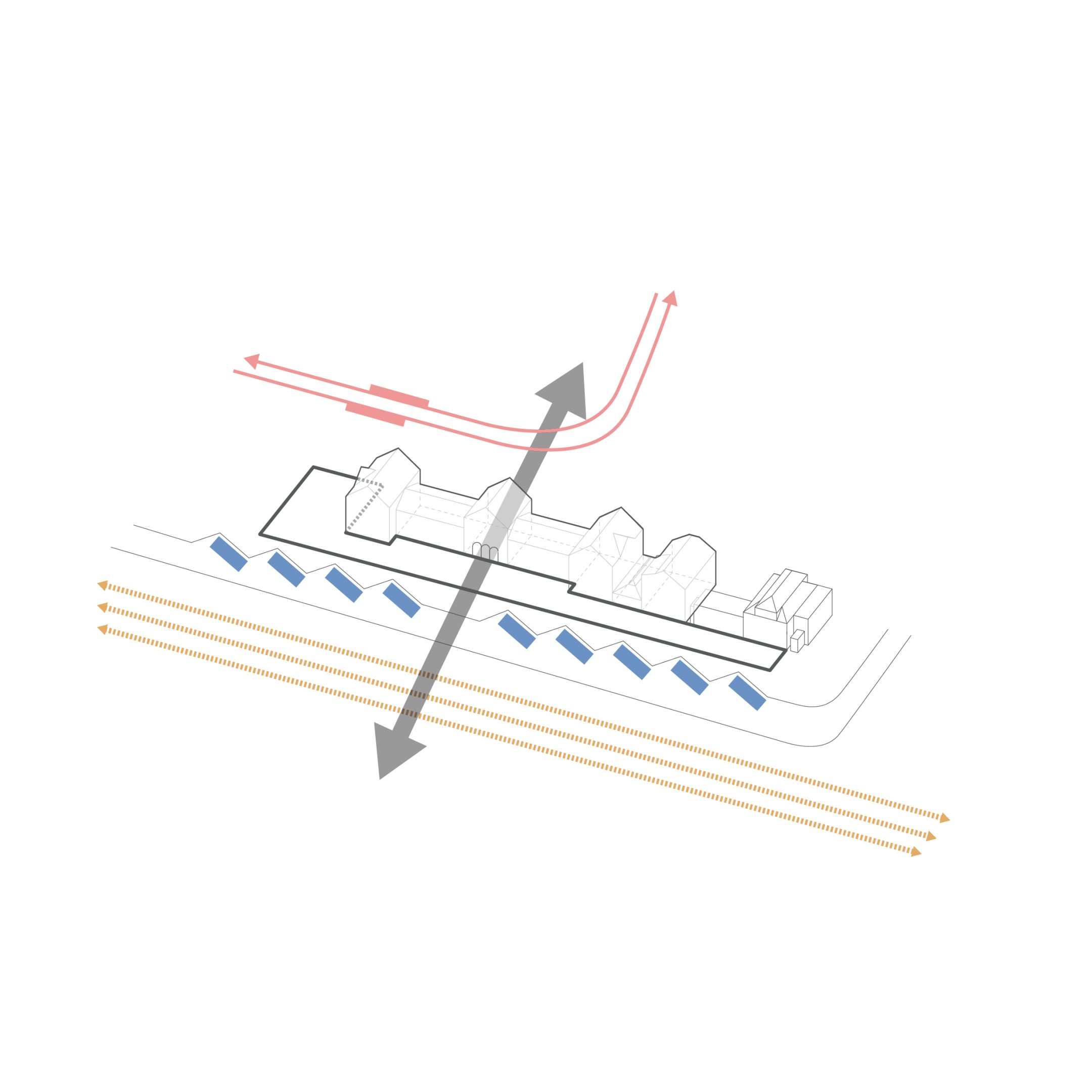
The second part is the adaptation zone between the railway and the city. In this area we propose a prefabricated steel parking house with a capacity of 565 parking spaces. Its structural system is based on a modular geometry that allows it to be modified, extended, dismantled or converted to other uses in the future. The parking house also acts as an acoustic barrier between the railway and the city and helps to cultivate Zittau Street through its active parterre.
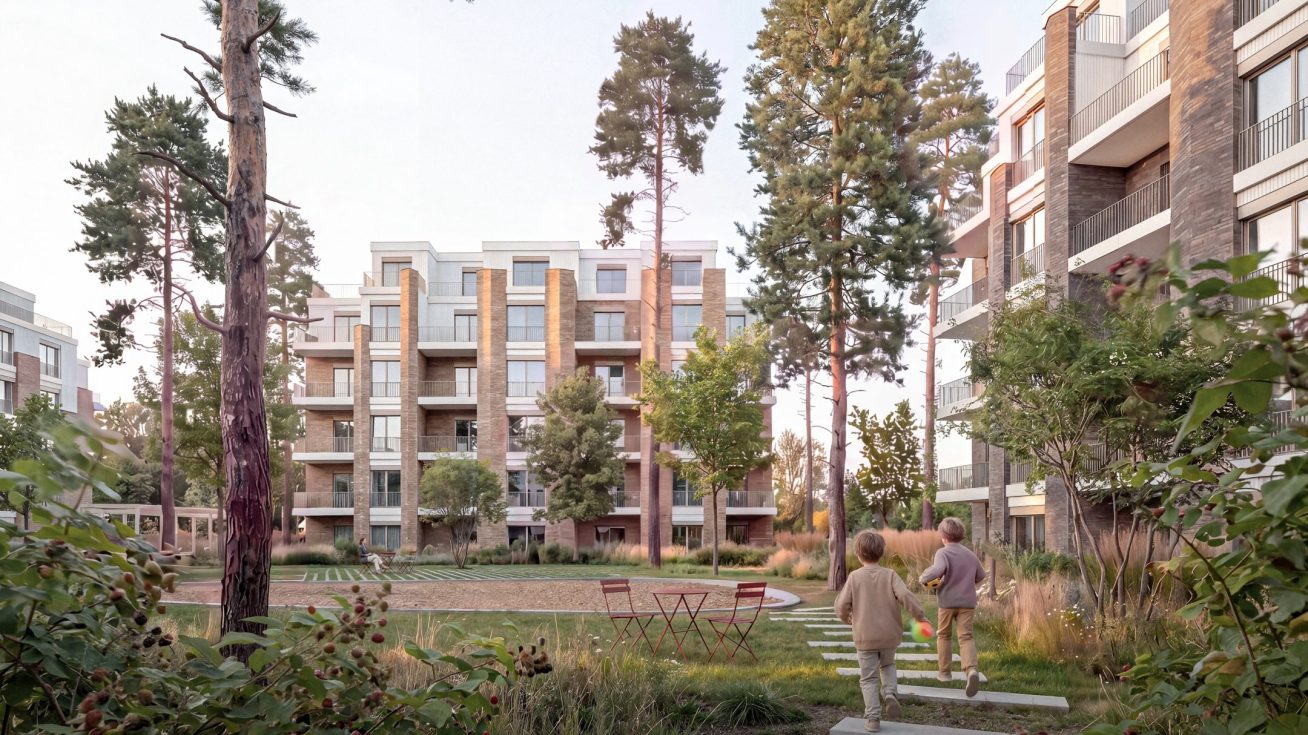
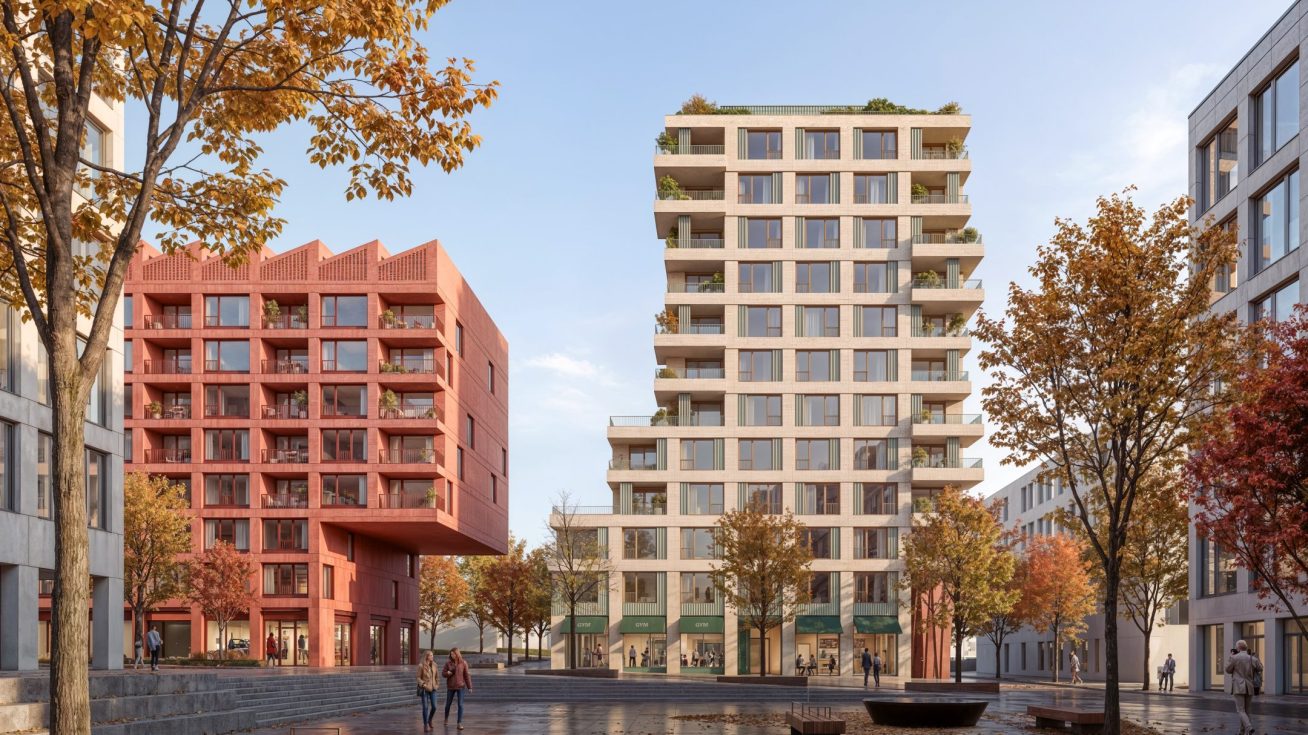
The third part consists of new urban housing, multifunctional houses and a park in the area of the original bus station. The proposal here brings a quality urban structure in direct connection with the transport hub. The residential blocks are located in green areas, complemented by semi-private courtyards and connected by pedestrian streets to the new urban park. This offers space for sport, play, relaxation and community activities and becomes the green backdrop of the new neighbourhood.
A design that builds on place memory
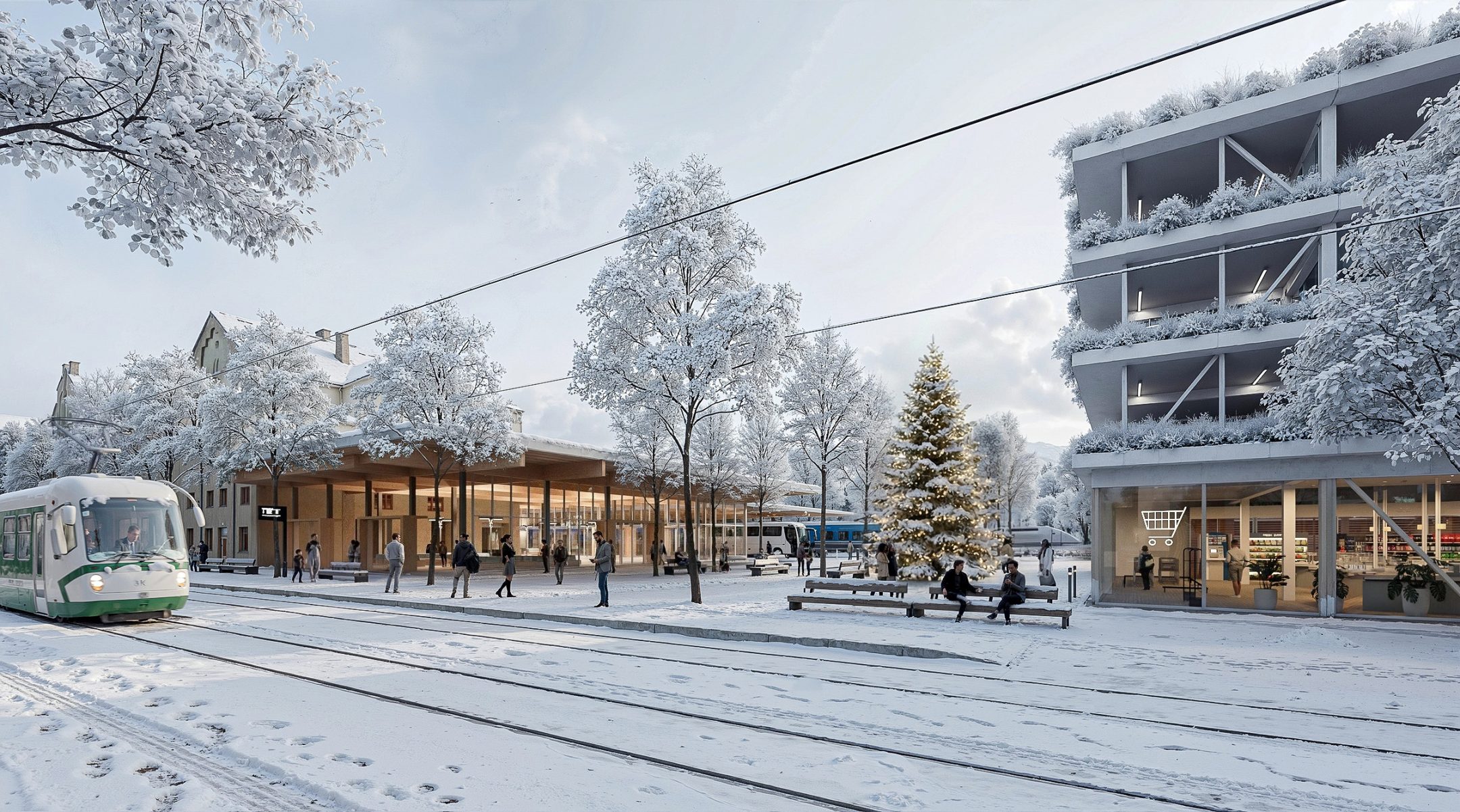
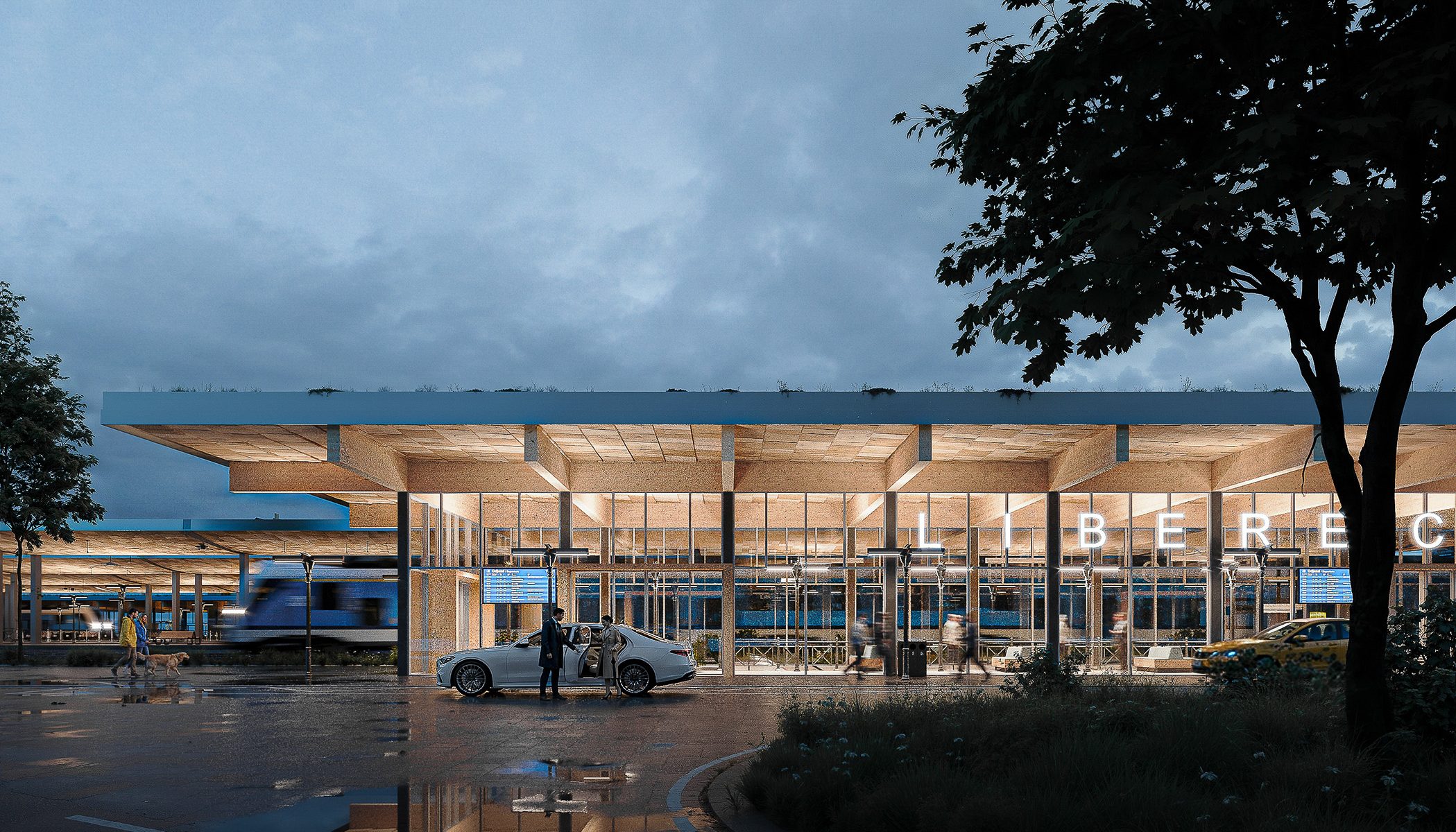
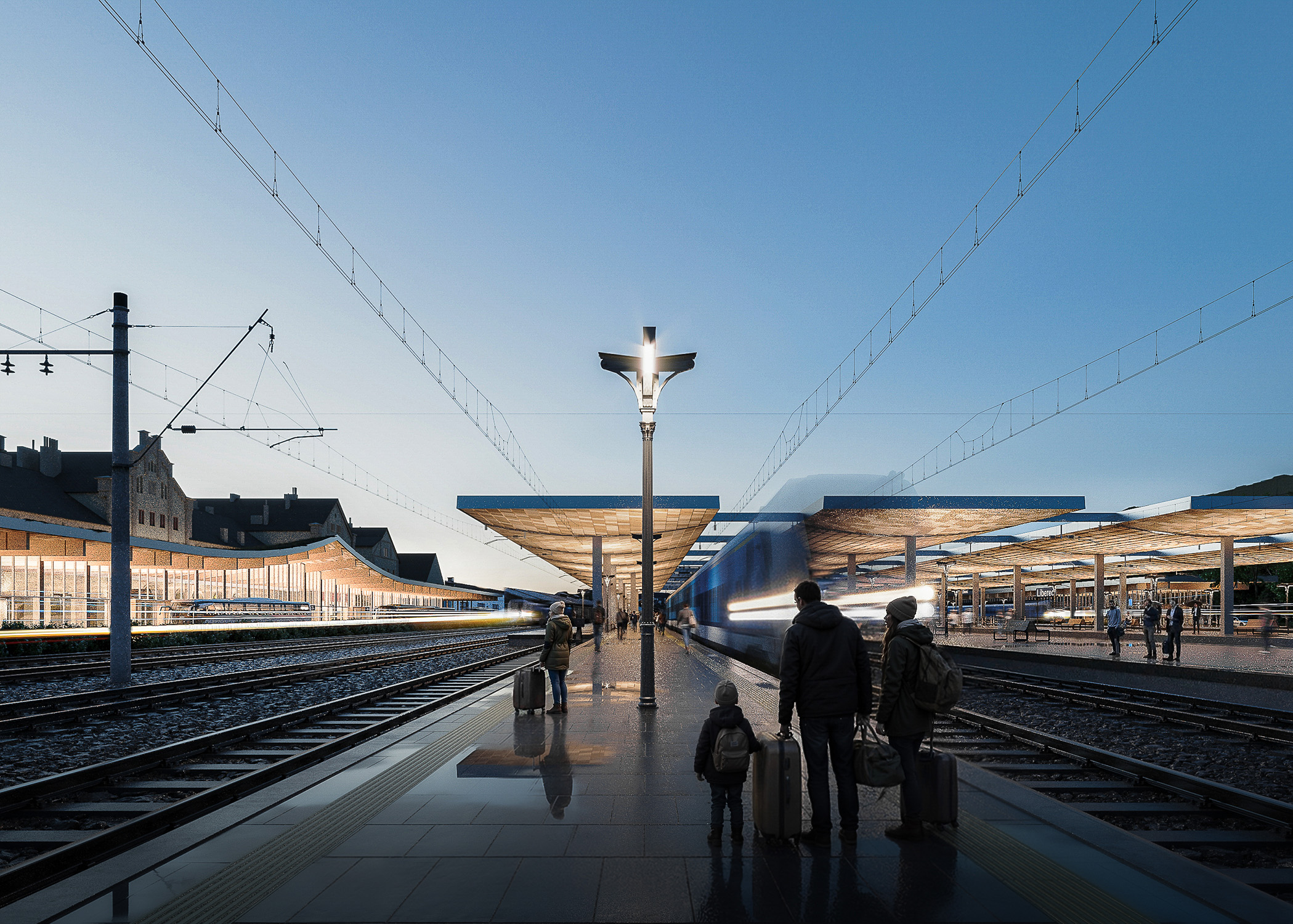
The terminal architecture works with a simple and clear design logic. The new extension follows the typology of the historic station waiting rooms – the sturdy steel columns are complemented by a subtle wooden roof with glulam beams. The wooden soffit becomes a distinctive element of the interior and the roofing of the platforms, creating a unified identity for the entire complex. The interruption of the roofs between the platforms also opens up views of the surrounding hills and natural landmarks.
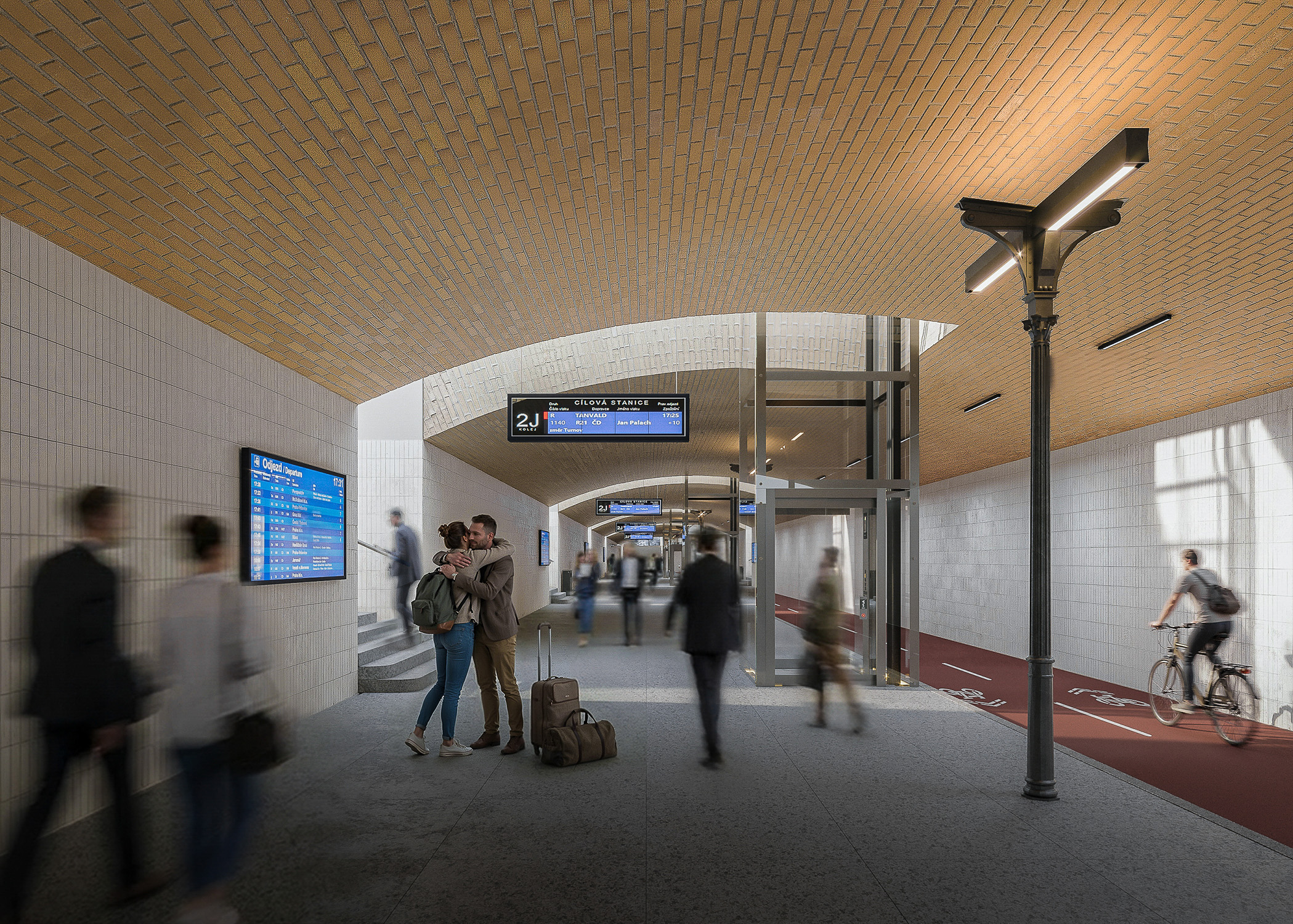
An important part of the design is also working with the original cast-iron columns of the historic roofing of the platforms. These are now used as carriers for the information system and integrated lighting. This creates a specific element of the Liberec terminal – a lamp that connects the history of the original station with the functional needs of today’s transport infrastructure.
Public space as the first contact with the city
The public space around the terminal is designed to be safe, clear and generous for pedestrians. Individual car traffic is removed from the forecourt area, the different modes of transport are separated so that they do not restrict each other, and pedestrians are given clear priority. A water feature to improve the microclimate completes the new square between the terminal and the parking structure, and the statue of the Girl with the Dove is moved in front of the main entrance, where it reinforces the character of the pedestrian zone.
The Liberec Regional Terminal is therefore not just a transport solution. It is a proposal for a new urban district that connects infrastructure, housing, services, public space and landscape. The terminal becomes a gateway to the city and the region – a place of transfer, meeting and first contact with the identity of Liberec.