Space affects performance. More than we care to admit.
The office is not just a backdrop in which we spend our working day. It is an environment that influences our biology, the way we think and the results of our work. Our brains naturally respond to light, temperature, air quality. If the environment is uncomfortable for long periods of time, the ability to concentrate decreases, fatigue increases and mental stress increases.
Research on work environments and cognitive performance has repeatedly shown that a well-designed workspace can increase our productivity by up to 20-35%.
Let’s take a look at the three factors that have the biggest impact on our performance.
Daylight is essential.
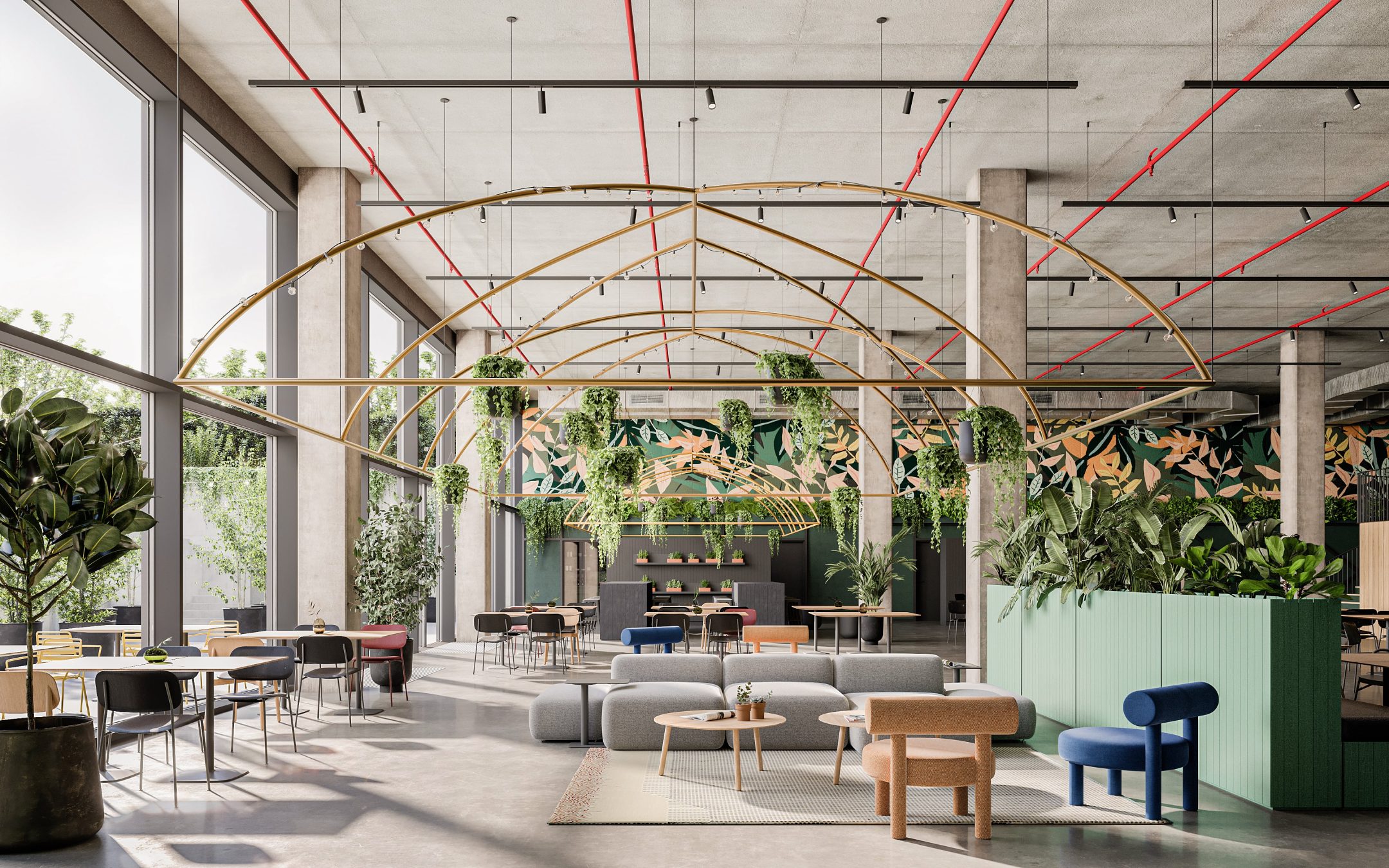
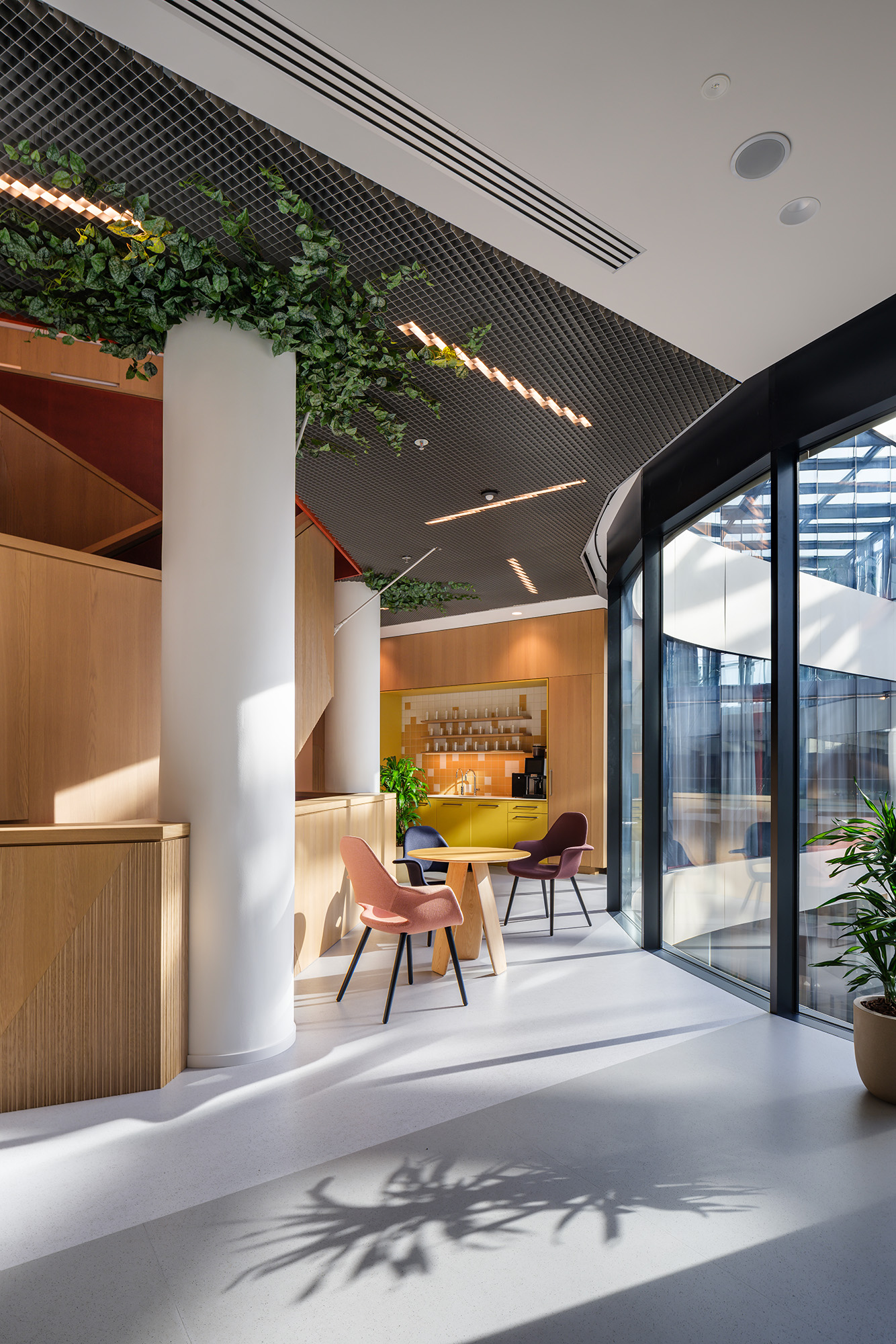
Do you automatically sit by the window? If so, you probably feel that you work better in natural light than under artificial lighting. And it’s not just a feeling. Access to daylight improves concentration, reduces fatigue and promotes overall mental well-being. This then translates into performance.
For example, a Cornell University study showed that people in offices with access to daylight reported an 84% lower incidence of eyestrain, headaches and blurred vision – factors that significantly reduce productivity (Hedge, 2018). Research published in the Journal of Clinical Sleep Medicine also confirmed that people with access to daylight have better sleep and higher vitality (Boubekri et al., 2014)
The reason is simple. Daylight regulates our circadian rhythm – our internal biological clock. This keeps us more alert during the day and helps us regenerate better in the evening.
In the office, therefore, it makes sense to:
- workplaces are as close to daylight as possible
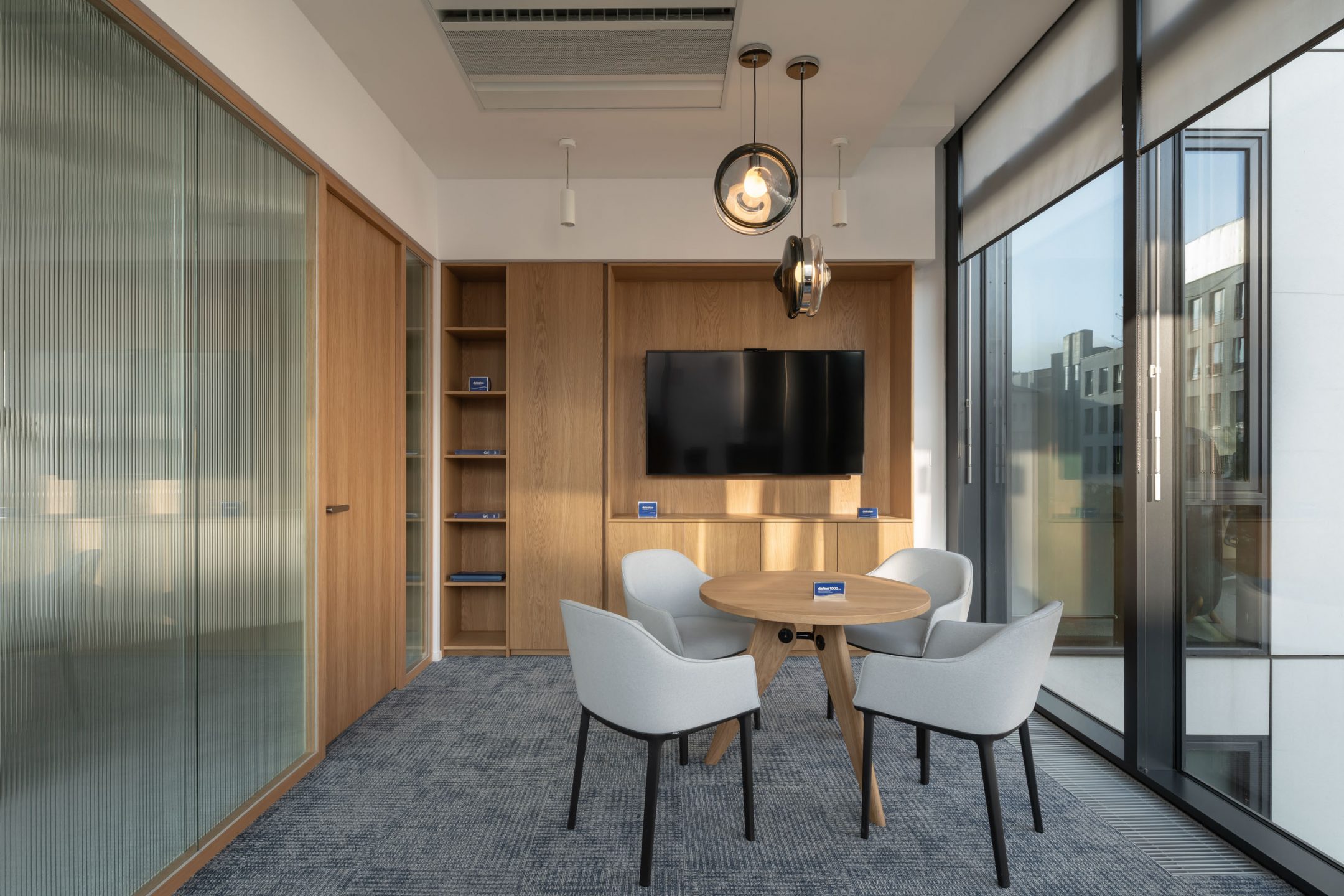
- meeting rooms had access to windows
- the layout did not block the light penetration into the space
So if you’re drawn to working outside in the sun, your body is probably just asking for more energy.
Bad air = bad decisions
We usually only start addressing air quality when it doesn’t work. A typical example? An hour-long meeting in a small meeting room with no ventilation. Suddenly the energy drops, the head hurts and no one can make a decision.
It’s no coincidence either. A large Harvard University study of office workers in six countries found that higher CO₂ concentrations and poorer ventilation were associated with slower reaction times, lower accuracy and poorer performance on cognitive tests. In contrast, people in environments with good ventilation and low CO₂ levels performed better across tasks. (Harvard T.H. Chan School of Public Health, 2021)
Therefore, I recommend thinking about:
- quality ventilation
- possibility of natural ventilation
- regular air exchange during the day
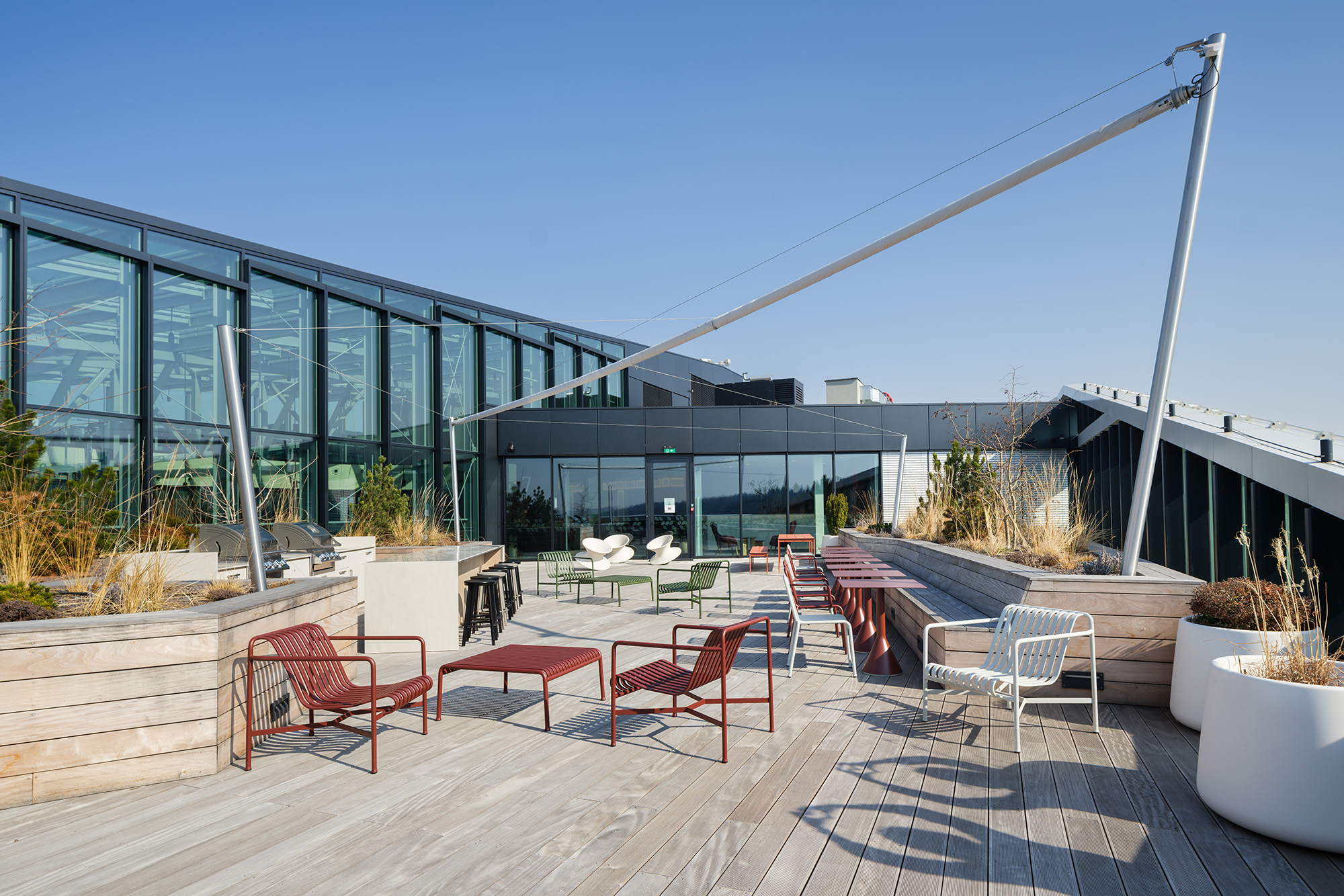
And if you like to work outdoors in the garden, again this is no coincidence.
Temperature is not a detail. It’s a workplace issue.
Debates about office temperature are often treated as internal folklore. In reality, it is a legitimate factor affecting performance. If people are cold or hot, part of their energy is used by the body to adapt. And that is then missing at work.
A Cornell University study showed that when the temperature was raised from a cool 20°C to a more comfortable 25°C, employees made 44% fewer mistakes and their productivity increased significantly. Other research confirms that the highest productivity is around 22°C. Performance begins to decline at both too high and too low temperatures. (Lawrence Berkeley National Laboratory, 2006)
Therefore, it is essential to address in the office:
- temperature control option
- air flow
Comfort is not a soft topic. It is an operational topic.
If you’re tempted to work outdoors in spring and summer, it’s your body’s natural response to better light, fresh air and a more comfortable environment. Let’s enjoy it before our bodies start preparing for fall weather again.