About project
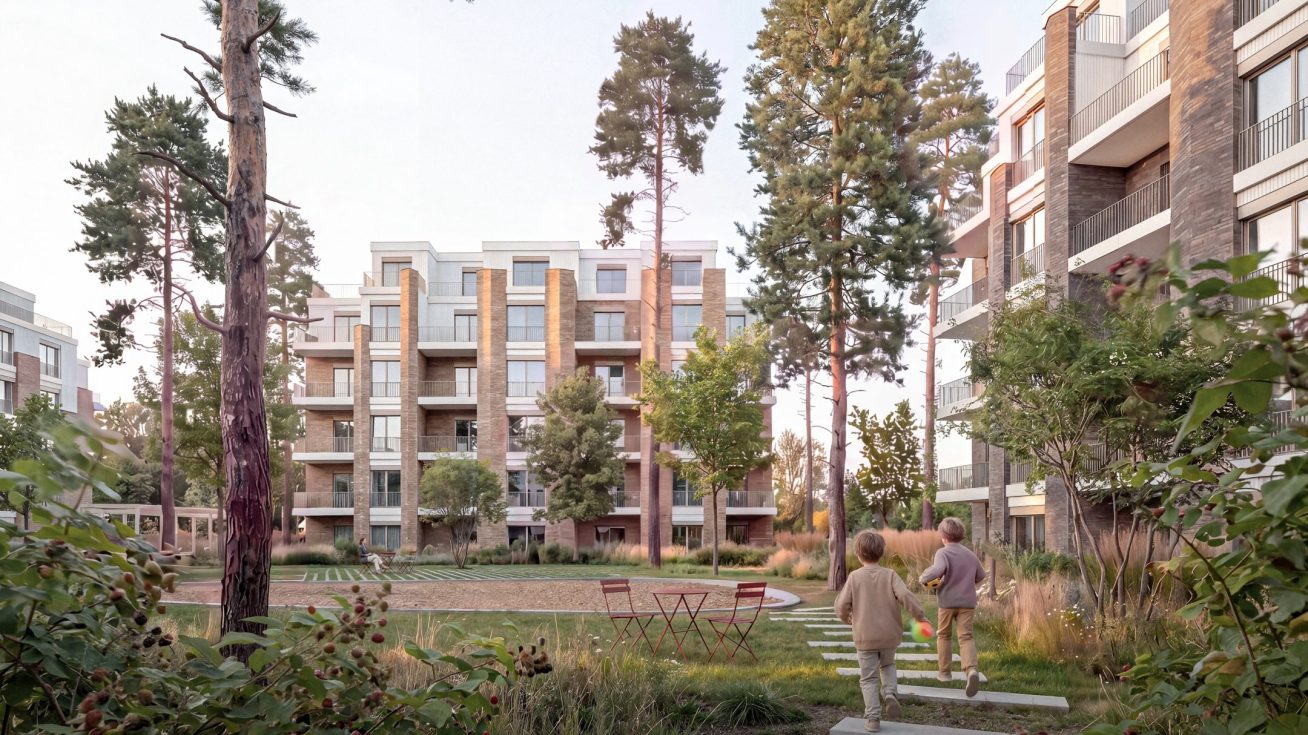
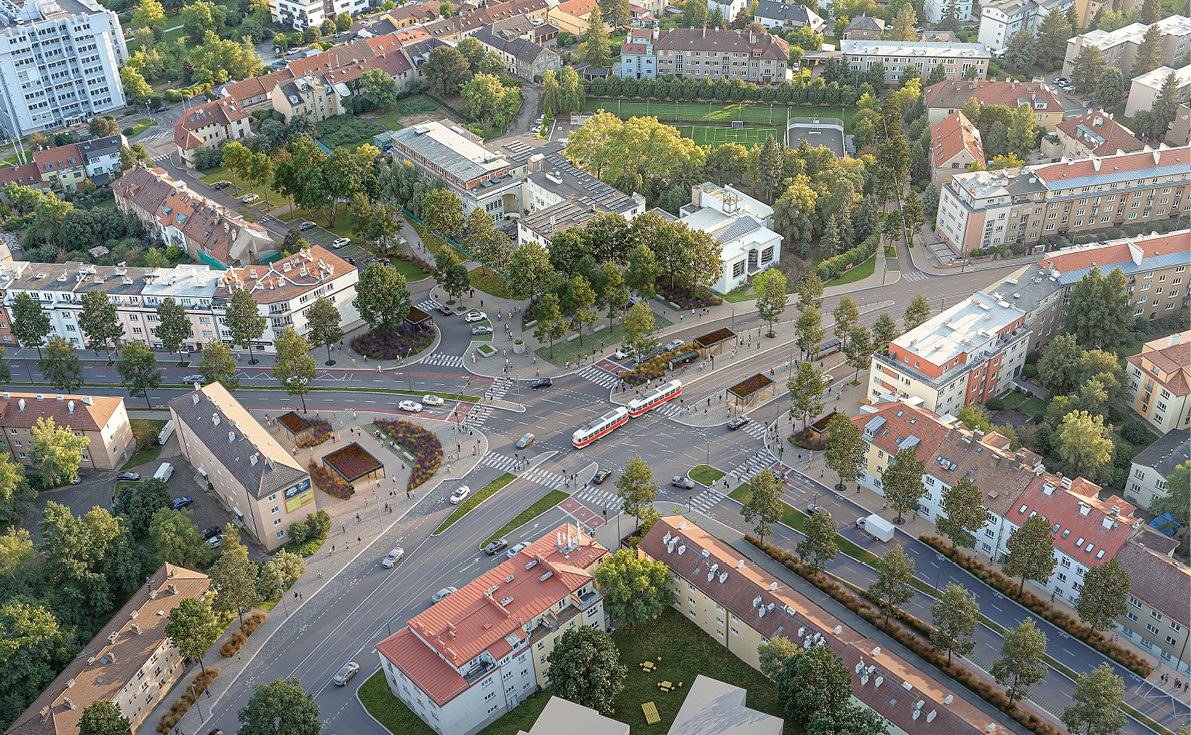
The winning design for Sofijské náměstí focuses on a sustainable transformation of public space that naturally connects the urban environment with the nature of the Modřanská rokle.
The aim is to create a space that uses the existing green potential and offers a quality background for recreation, creativity and community life. The concept is based on the principles of blue-green infrastructure and responds to the needs of local residents and visitors.
The space is designed to encourage common daily stops – a rest under the trees while waiting for the bus, a place for children to play or small art installations to enliven the atmosphere of the site. Because of its location and importance within the neighborhood, the space will also be able to host special events – outdoor exhibitions, community markets or cultural programs. The revitalization thus brings a new heart of public life to Modřany and strengthens the relationship between nature, art and community.
-
Client
Municipal district of Prague 12
-
Year
2025
-
Location
Prague, Sofijské náměstí
-
Size
9 000 m²
-
Authors
Kristýna Stará
Barbora Kuciaková
Denisa Petreková
Lukáš Pitoňák -
Visualisations
Ján Martin Púčik
-
Show all


BROADER RELATIONSHIPS AND CURRENT STATE OF THE TERRITORY
Sofijské náměstí represents an important green public space in the very heart of Modřany – at the border of the Tyl and Čech districts, Baba II and the housing estate under Lhotecký potok. Its strategic location between residential areas and the proximity of the Modřanská gorge increase its urban potential. The area is well connected to the urban infrastructure – in the immediate vicinity there are bus and tram stops, a bicycle network and pedestrian connections via an underpass to the Lipiny pond and directly to the Modřanská gorge. The connection to the already reconstructed part of the square and the quality civic amenities in the vicinity are also a significant benefit.
Currently, the area functions mainly as a transit zone. The furniture and greenery are in poor condition due to long-term maintenance, the shrubbery creates cluttered and dangerous corners and the space loses its natural friendliness. This also leads to its use by socially excluded groups. Another limitation that the new proposal addresses is the large number of utility lines with visible terminations on the surface. On the other hand, the advantage remains the quality tree stock, which will be preserved, professionally treated and supplemented with improvements to improve the visibility and safety of the whole area.

Who will the square serve
The revitalised Sofia Square will offer a welcoming environment for everyday life, from short stops to longer stays in the green. The space has been designed to accommodate visitors from near and far – people heading from the bus stop to the post office, to the shops or those just taking a shortcut to the tram. Parents with young children will find a new playground for the little ones, while older children will get a space to play, play sports and relax. Locals will be able to sit in the park area, enjoy the tranquillity under the treetops and take in the views of the countryside. The area will also be welcoming for cyclists who will find a place to rest, refill water or make minor repairs to their bikes.
Individual design zones
The revitalisation of Sofia Square brings several interconnected zones that respond to the different needs of residents and visitors. Each offers a different way to use, experience and share the space.
- Boarding area at the bus stop
- Representative front area of the post office
- Connection to existing square and place for Christmas tree
- Multifunctional natural playground
- Rest under the treetops
- Junction by the underpass and a place for bike servicing


Material palette
The material concept is based on the connection to the surrounding environment and the context of the territory. The proximity to nature is reflected in the choice of natural materials. Wood appears in the furnishings, pergolas and playground elements, while paving is chosen for representative and busy areas such as the front of the post office, the extension of the square or the entrance area to the park.
Plant concept
The proposed planting is based on the natural vegetation of the site and builds on the existing trees. It combines native tree species, both evergreen (e.g. pine) and deciduous (maple, birch, ornamental apple), which transform the character of the site throughout the year and promote biodiversity. Perennial plantings of dry-loving plants, which do not require watering and are low maintenance, occur along the pedestrian routes and in the forecourt of the post office. Shade-loving groundcover plants are placed under the trees, while the main part of the park consists of a herbaceous lawn – more resilient and lower maintenance than a traditional park lawn.
Principles of blue-green infrastructure
A key element of the proposal is sustainable water management and the pursuit of maximum water harvesting within the area. The system is designed to combine vegetated landscaping, semi-permeable materials and gradients of surfaces towards green space.
Newly planted trees use a structural substrate that improves water retention and ensures their long-term vitality. Landscape modelling and suitable gradients allow natural irrigation of the greenery, while storage tanks under paved areas capture rainwater, which is further used for irrigation of grass and park areas.