About project
A school that grows out of the landscape and lives all day long
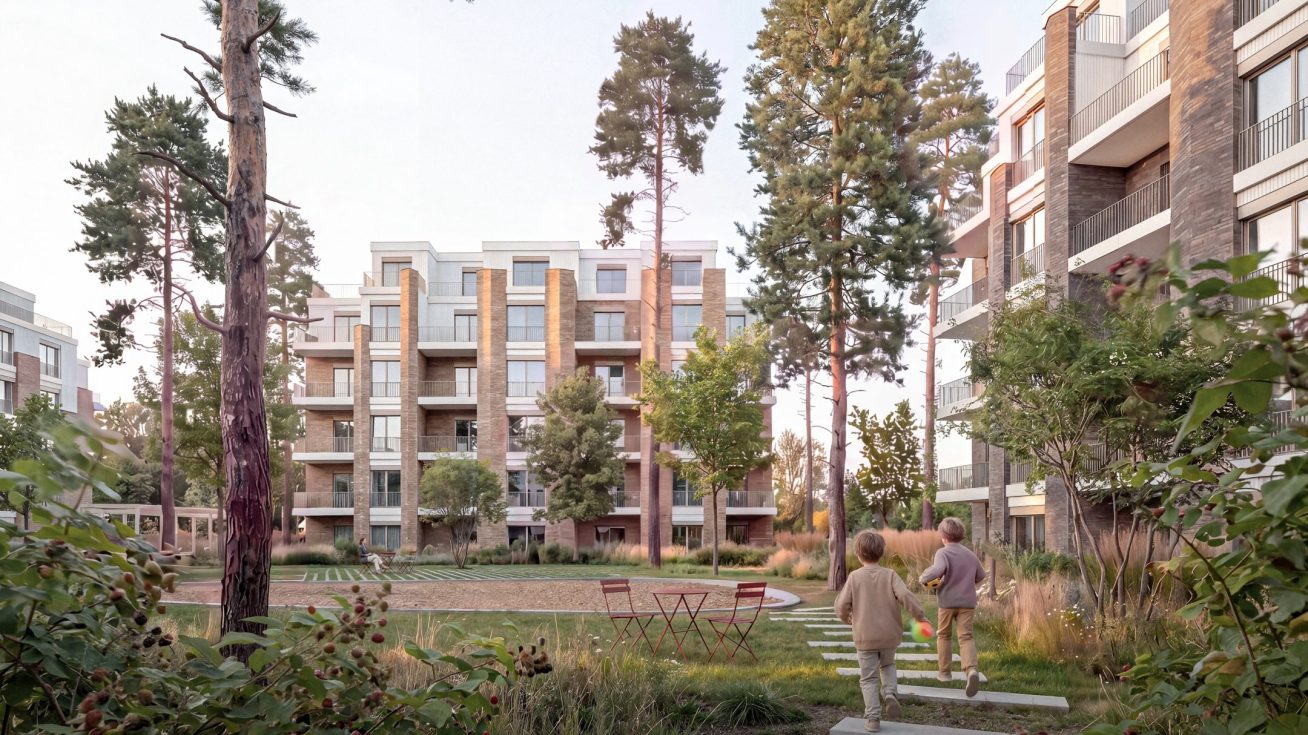
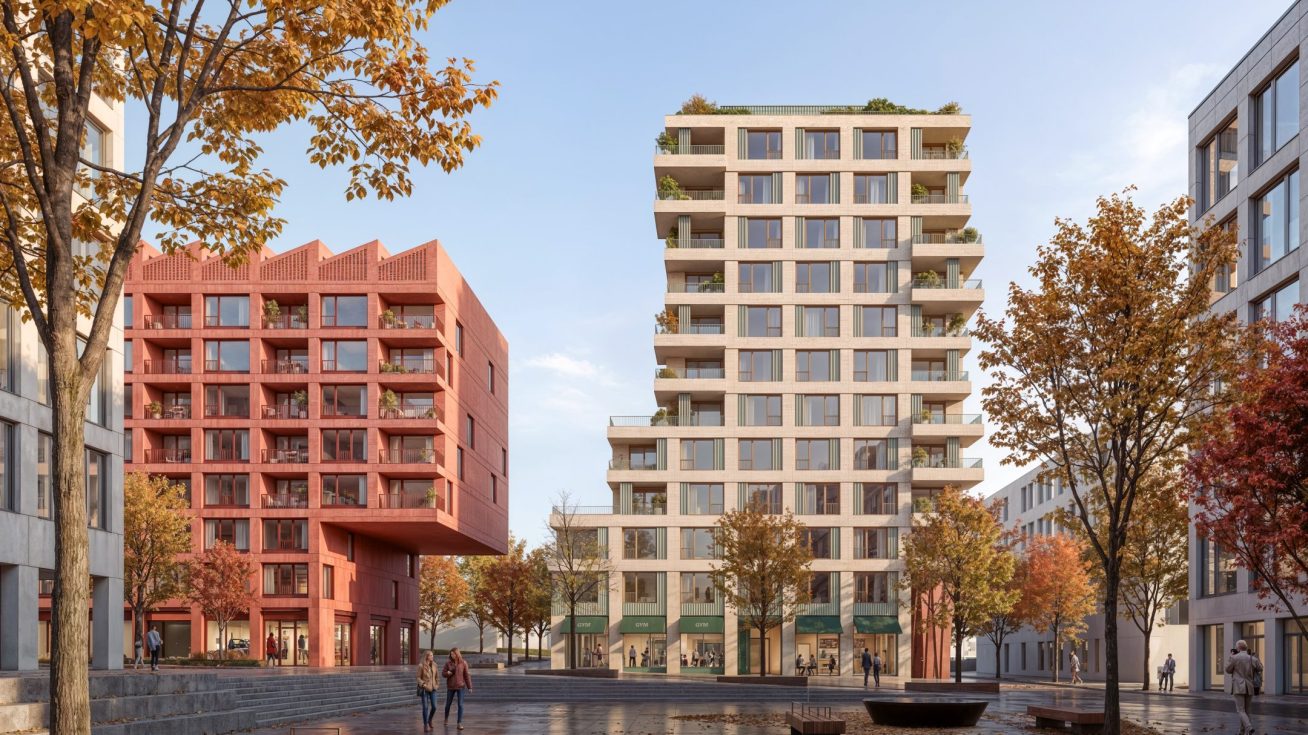
Our competition design for the Zbuzany school draws inspiration from the surrounding nature. It works with an irregular regularity, with a fixed order that is deliberately disturbed in places, liberated. The individual masses create a clearly defined but vividly played out space around them. Internal circulation is simple and clear, linking the different clusters that meet in the central atrium of the school.
The school is designed so that it can be divided into separately functioning parts at different times of the day and be used as efficiently as possible throughout the day. The internal spaces are flexible and interconnected. The school, which will serve six communities, will not become a landmark in the centre of the village but a natural part of the surrounding landscape. It will grow in it like a flower in a meadow, not just for a while, but permanently.
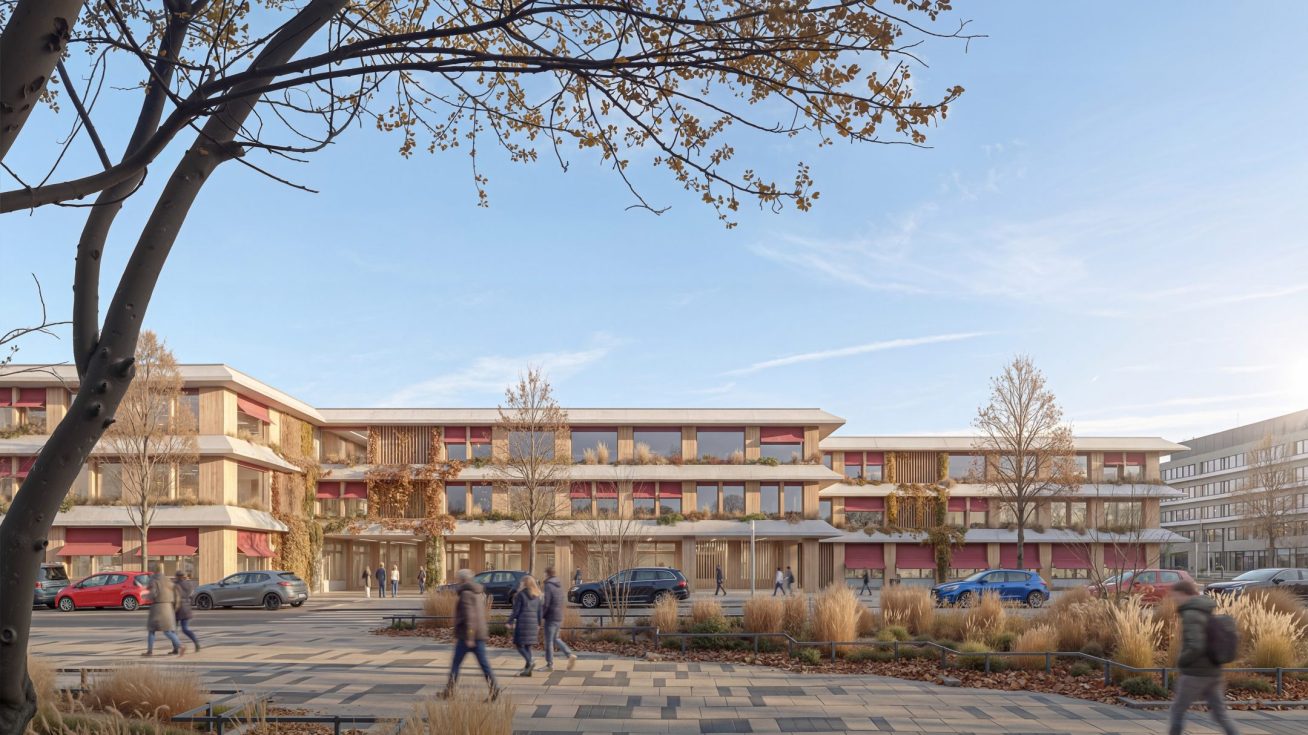
The material solution is sensitive to its environment. Smaller pavilions have ideal floor plan dimensions for wooden structures. The entrance parterre is made up of steamed concrete, evoking layers of earth from which wooden buildings with red-stained facades grow.
-
Client
DSO Związek School Zbuzany
-
Year
2025
-
Location
Zbuzany, Prague-West
-
Size
8 965 m2
-
Architecture
Ján Antal, Martin Křivánek, Samuel Maga
-
Planning
Barbora Kuciaková
-
Visualization
Ján Martin Púčik, Petr Matějka
-
Model
Jakub Longauer
Show all
Safe heart of the campus, traffic under control
We divide the area into a public entrance area and an inner schoolyard – a safe core for learning, sports and living, accessible to the community outside. The entrance faces onto Zigzag Street, reducing congestion in the surrounding residential streets. Smaller pavilions as self-contained clusters reduce scale, organize traffic and feel welcoming. They are subtly oriented: they adapt in scale to the houses and form a clear street line to the road. The three main clusters are oriented towards the centre of the site for views and noise; the gym forms the entrance space and acts as an acoustic barrier.


A school that works all day: separable, clear, connected
The internal division of the school is based on the principle that the first floor houses functions that can serve not only the pupils but also the public, such as the gymnasium or specialist classrooms. These spaces can be separated from the rest of the school and have separate entrances, which allows their use without clashing with normal school operations. A terrain difference of more than three metres is used to place the kitchen, dining room, auditorium and restaurant in the underground floor on the north side – however, due to the gradient, the dining room and auditorium have direct access to the exterior terrace adjacent to the natural amphitheatre.
The auditorium can be flexibly connected to the dining room and used, for example, as a dining room for teachers, or the dining room can be expanded for large events. The main circulation on the first floor is a curved corridor that connects the square in front of the vocational classrooms with the square in front of the social hall and the multipurpose hall, which is connected to the school club. The gymnasium is connected to the changing rooms and the multi-purpose hall, can be divided into three parts by retractable nets, and there are areas for tools behind the goal area.
A broken corridor runs through the heart of the school atrium. The atrium vertically connects all floors. Around it are the cloakrooms for the first and second level and the escape staircase, which also serves as a vertical communication to the other floors. The atrium further connects the 1st floor, 2nd floor and 3rd floor, where three clusters of six classrooms are located. In the centre around the atrium are laboratories and specialist classrooms, ensuring almost equal distance to all clusters. In addition, each cluster has its own outdoor classroom on the green roof, extending the learning opportunities to the outdoors and connecting the school to the surrounding nature.


Smart simplicity: wood, passive principles and low operating costs
The school building is designed with an emphasis on energy efficiency, effectiveness and comfort for users. The smaller pavilions use heavy timber framing supplemented with OSB and monolithic concrete, while the large-span gymnasium beams are prestressed timber. Heating and hot water is provided by ground source heat pumps, internal heat recovery is provided by ground source heat pumps, and cooling is provided by radiant panels under the ceilings.
Each room has the possibility of natural ventilation, the atrium works with a chimney effect, the windows are complemented by external roller shutters. Good quality daylight is provided despite glazing less than 35% of the envelope – each classroom has one large fixed and one or two opening windows, ideal depth and hygiene parameters. All lighting elements are energy efficient LED.
Roofs are extensively green and hydro-accumulative with photovoltaics, promoting biodiversity, retaining rainwater and reducing heat gains. The school allows for autonomous operation of individual parts – gymnasium or vocational classrooms – with their own public entrances without disrupting the main traffic. The entire system integrates construction, technology and passive measures to create an efficient, healthy and comfortable learning environment.

Earth and wood: tranquillity inside, character outside
The material solution follows the idea of a school growing out of the landscape and strives for maximum naturalness and legibility. The main structural system consists of wood, which is complemented by white walls and ceilings in the interior that cover the technological wiring, creating a clean and calm learning environment. The façades work with red stained wood, whose regular grid corresponds to the division of the classrooms so that each has at least one opening and one large fixed window – perceived as an image of the surrounding landscape. The regular façade structure is transformed into an irregular one in places, creating a subtle play of verticals and windows that brings a reflection of the natural irregularity of the landscape into the fixed order of the building.

Campus by the meadow: teaching, movement, meeting
The aim of the design is to create a representative and functional space that meets the needs of the school, sensitively fitting it into the surrounding landscape and turning the original farmland into a green natural oasis. The landscaping of the site itself works with gentle undulations in the terrain, which compensates for the three metre difference in height between the northern and southern parts of the site. This sculpted relief also allows for the natural expansion of the school’s interior to the exterior from different elevations, creating a seamless connection between the building and the surrounding landscape. The design is based on the division of the site into two main parts – the public entrance area and the schoolyard.
Convenient access, clear directions, friendly parterre
At the entrance there is a K+R, parking and bus stops. The entrance area is paved with islands of trees and grassed paving; circular benches form meeting points. Directions in the pavement guide the flow; the bistro opens out to seating. To the north, the parterre transitions into a park-like area with meadow vegetation and flowering trees.
Courtyard as classroom: slope, playground and edible garden
The fenced yard is primarily used by pupils, the sports field is partly used by the public. The gymnasium and the club are connected to the wooden terraces and the playful slope – the grandstand to the multifunctional playground and the track. The sports and workout elements (basketball/volleyball/handball, beach, trapeze, ladders) are complemented by a residence slope by the dining hall and auditorium with outdoor seating. Nearby are herb and growing beds, an outdoor classroom and edible garden; to the south, an orchard with didactic features.


Clear traffic situation without collisions
The traffic service of the new primary school is designed with an emphasis on clarity and safety of movement of pupils and visitors. The main access road runs along the Class III road along the southern boundary of the site. Two bus stops for both directions of travel are proposed along its route, located in the bus lanes. The westbound bus stop is complemented by a K+R (Kiss and Ride) parking bay which will be used to stop vehicles for a short period of time as necessary to drop off or pick up, particularly older pupils.
The eastbound stop is located after the junction. Between the stops, a pedestrian crossing is located in front of the corner of the intersection, which logically connects pedestrian linkages and allows safe access to the campus. The crosswalk is directly adjacent to paved sidewalk areas leading to the main entrance of the building. A one-way car park with a total capacity of 30 spaces is proposed in the south-eastern part of the site. The parking spaces are arranged diagonally, which contributes to the flow and clarity of traffic. A K+R (Kiss and Ride) parking lane is provided adjacent to the main entrance for short-term stopping of vehicles to drop off or pick up students. This lane seamlessly connects to the walking areas around the entrance, ensuring a safe and convenient attendance especially for younger children who require parental accompaniment or supervision. The connection of the car park to the existing transport infrastructure is solved by a new exit in the northern part of the car park area.
The design respects the requirement for separation of pedestrian and vehicular traffic, minimizes conflict points and provides for clear traffic circulation in the immediate vicinity of the school. The concept also includes the promotion of sustainable forms of transport. Therefore, paved areas are proposed near the main entrance to allow for the placement of bicycle racks to provide safe and comfortable parking for bicycles of pupils and staff. The proposed transport concept thus comprehensively ensures the accessibility of the school for all forms of transport, with an emphasis on the safety of pupil movement and the flow of traffic around the site.
In the next phase of the project preparation it is recommended to focus on slowing down the traffic in the vicinity of the pedestrian crossing, for example by reducing the speed limit (30-40 km/h), adding horizontal road markings No.