You bring 20 years of experience in interior design to Perspektiv Studio. What are you most looking forward to?
I am looking forward to new challenges, projects, clients and most importantly to use my knowledge to bring new ideas and innovations. Each studio has its own specific focus, and in my professional career I like interior design the most, so the opportunity to work at Perspektiv and a team that is fully dedicated to interiors is very exciting for me.
VYou studied architecture at the Ecole d´Architecture inNantes, why do you think it is important for young architects to travel abroad and gain education and experience there?
Studying abroad is a huge benefit both culturally and professionally. While studying architecture and design in school, students must complete hundreds of hours of mandatory internships, which means they have the opportunity to work in a variety of studios. The opportunity to go abroad then brings a different approach to education and practice, which is very rewarding. Young architects gain new perspectives and encounter different cultures and social aspects, which is essential for their professional growth and development.
You graduated from the Czech Technical University in Prague and have stayed here ever since, and you’ve been connected with Karlín all this time. Historically, you’ve also been involved with the Karlin Entertainment Association. What is your role in it and what do you do?
I have lived in Karlín since 2000, so I have seen its transformation after the floods. Spontaneously, a friend and I started the Karlin Fun Club to connect the old residents with the new residents. Our goal was to bring back traditional entertainment, like the Carlin Ball, and to promote community life, a bit of a neighborhood night out. We took a break due to covid, but I’ll be happy to see the tradition resume.
You’re originally from Ostrava. Has the industrial landscape influenced your work?
One is certainly shaped by where one grows up, but in the field of architecture I was most influenced by my studies in Prague in the studio of Jan Bočan. However, Ostrava and its industrial environment opened my eyes to other ways of using space and materials, which is reflected in my approach to design.
Josef Pleskot’s project in the Lower Vítkovice area became Ostrava’s most famous transformation, when he turned a then unused brownfield into a place full of life. How do you see the project?
The transformation of Ostrava is truly phenomenal. Josef Pleskot’s projects in the Lower Vítkovice area have brought new life and culture to the place. The buildings support each other and don’t compete, creating a harmonious environment. The Gong (former gasworks) is a wonderful example of incorporating modern design into an industrial space, I was there recently for a theatre performance and it’s a really amazing space. Similarly, the mirrored surfaces of the World of Technology just highlight the former blast furnaces of the steelworks, which make for a really unusual backdrop to it all. I’m really pleased that a formerly enclosed area is an attractive place for the general public.

What type of interiors do you enjoy most – large projects like rental housing or offices?
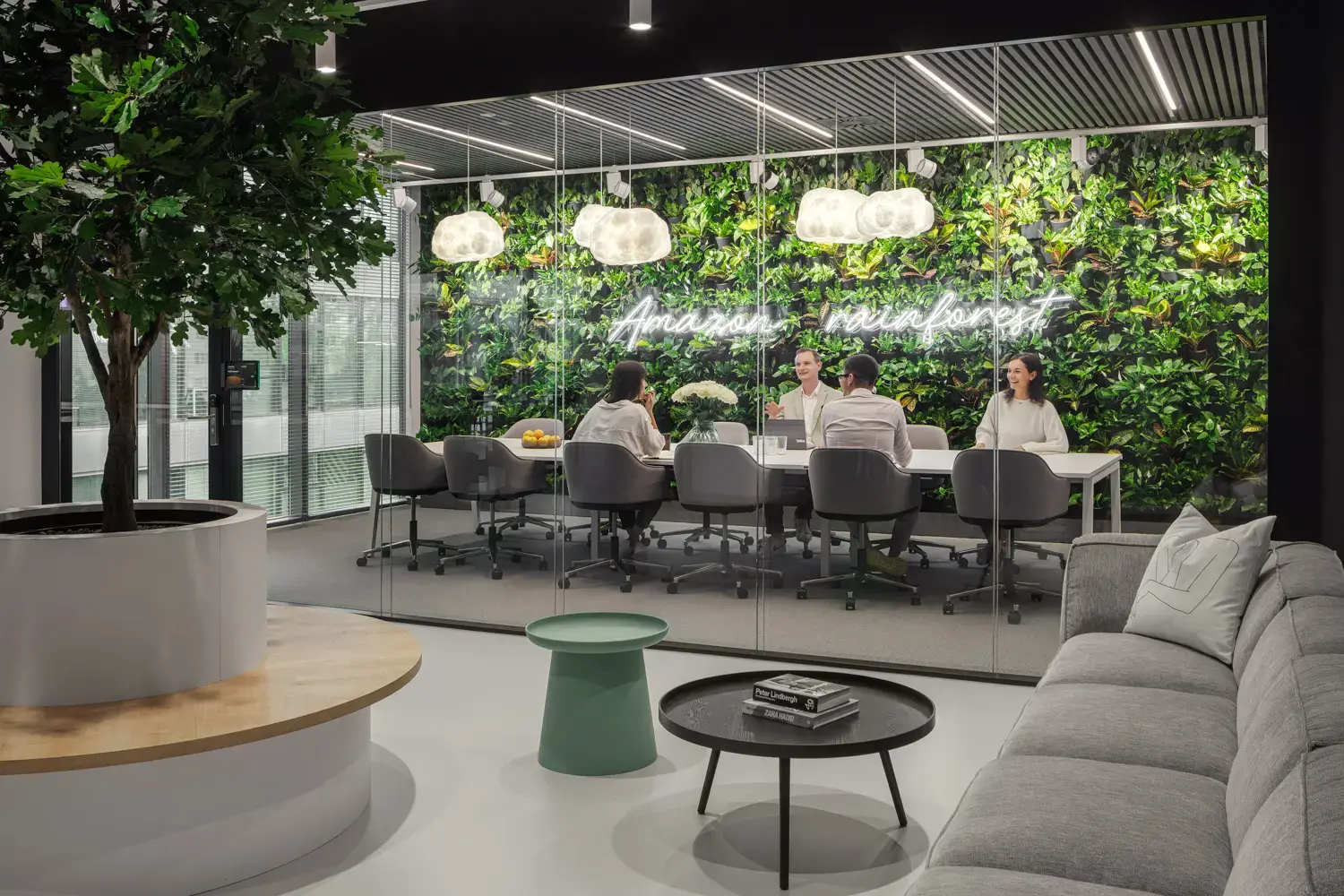
I like the variety of projects. I used to do a lot of residential projects (such as apartments, villas, hotels), but since Covid I have paradoxically focused more on office spaces. Working at Scott.Weber Workspace has shown me how dynamic and diverse office design can be. Designing these spaces encompasses many different functions – from the classic workspace, lounge, cafes and bars to relaxation rooms, social and even fitness zones. I really enjoy this variety, clients (new generations) are more and more demanding so we have to keep up, in fact we have to stay one step ahead.
How does interior design affect people’s overall well-being and productivity?
Interior design is a complex discipline that encompasses many elements, from a healthy working environment (such as workplace ergonomics, quality lighting and air) to social aspects and aesthetics. A quality environment promotes creativity and productivity by providing the right conditions for different types of activities. Social areas such as kitchenettes, bars, chill-out zones and team zones encourage communication and collaboration. On the other hand, rest areas, focus rooms and phone booths are also important to enable focused work. Visual aesthetics and the presence of art also contribute to mental well-being. Modern design often includes biophilic elements and opportunities for physical activity. All this variety and comfort of space then shapes wellbeing.
How do you maintain a work-life balance?
Architecture is a demanding field that doesn’t end with the end of working hours. I have been educating and inspiring myself all my life. I travel a lot and try to spend time with my children, whether it is cultural activities or sports. Balancing work and family life is not always easy, but I definitely try to find a balance and give my full attention to both.
Which of your projects are you most proud of?
I’m sure there are many, but if I had to highlight one, it would be the coworking interior of The Park in Chodov. It was a team effort and I was with the project from the beginning to the end and we won the Office of the Year award for it.
What new trends in interior design are currently inspiring you?
I am very inspired by ESG and environmental impact in projects. Biophilic office design and smart technologies are also being addressed quite a lot at the moment. Some companies appreciate multifunctional and agilely reconfigurable spaces. For me personally, wellbeing is important in offices, which includes not only physical comfort, but also the social and aesthetic aspects of the space. In addition to places that encourage socialising, I also like the use of modern art in office design. For coworking spaces, the challenge is to create an environment that is versatile yet extraordinary for a variety of users, from IT startups to attorneys.