About project
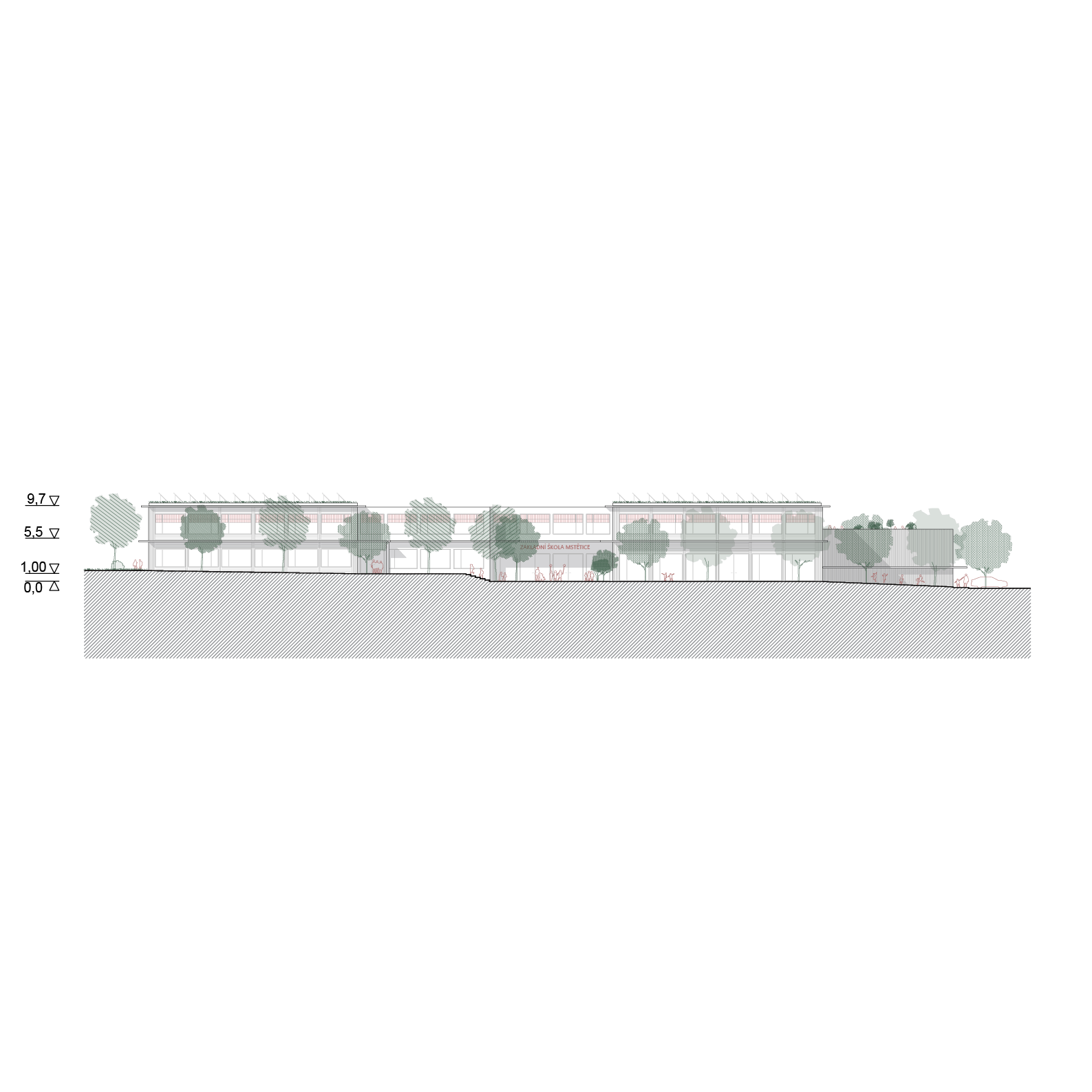
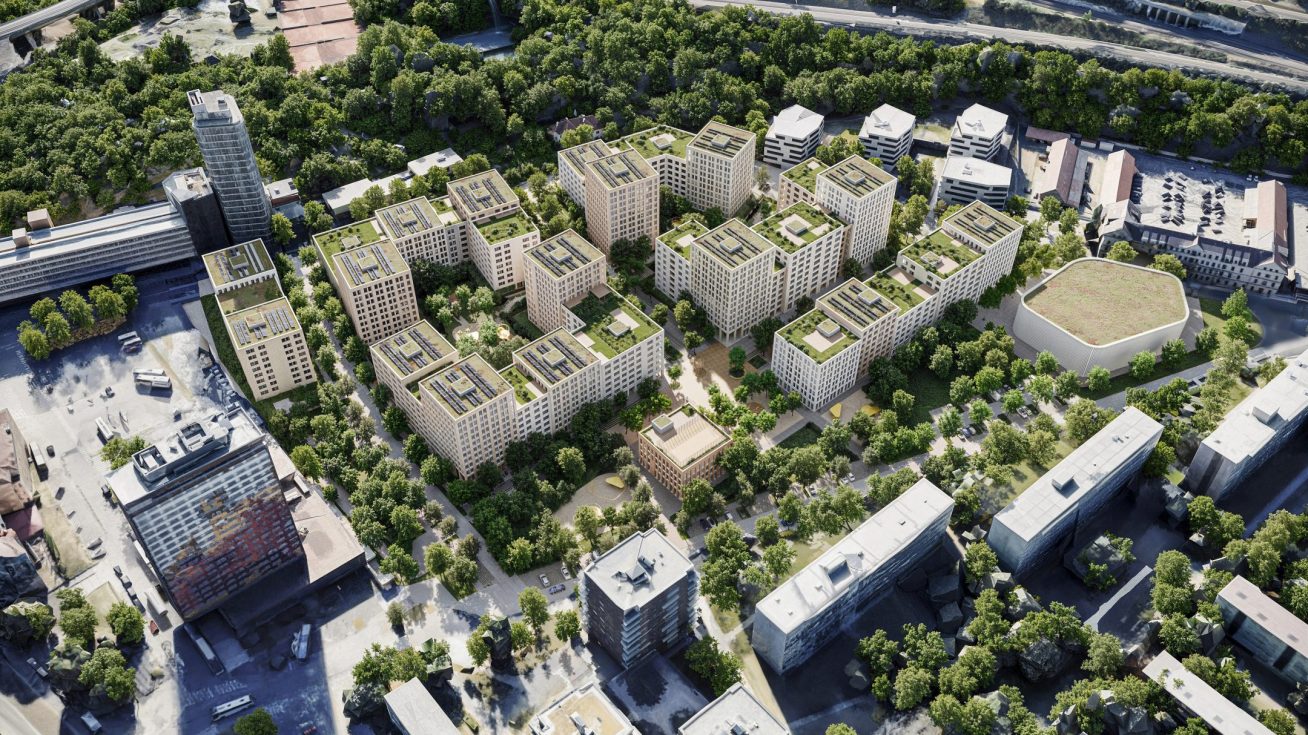
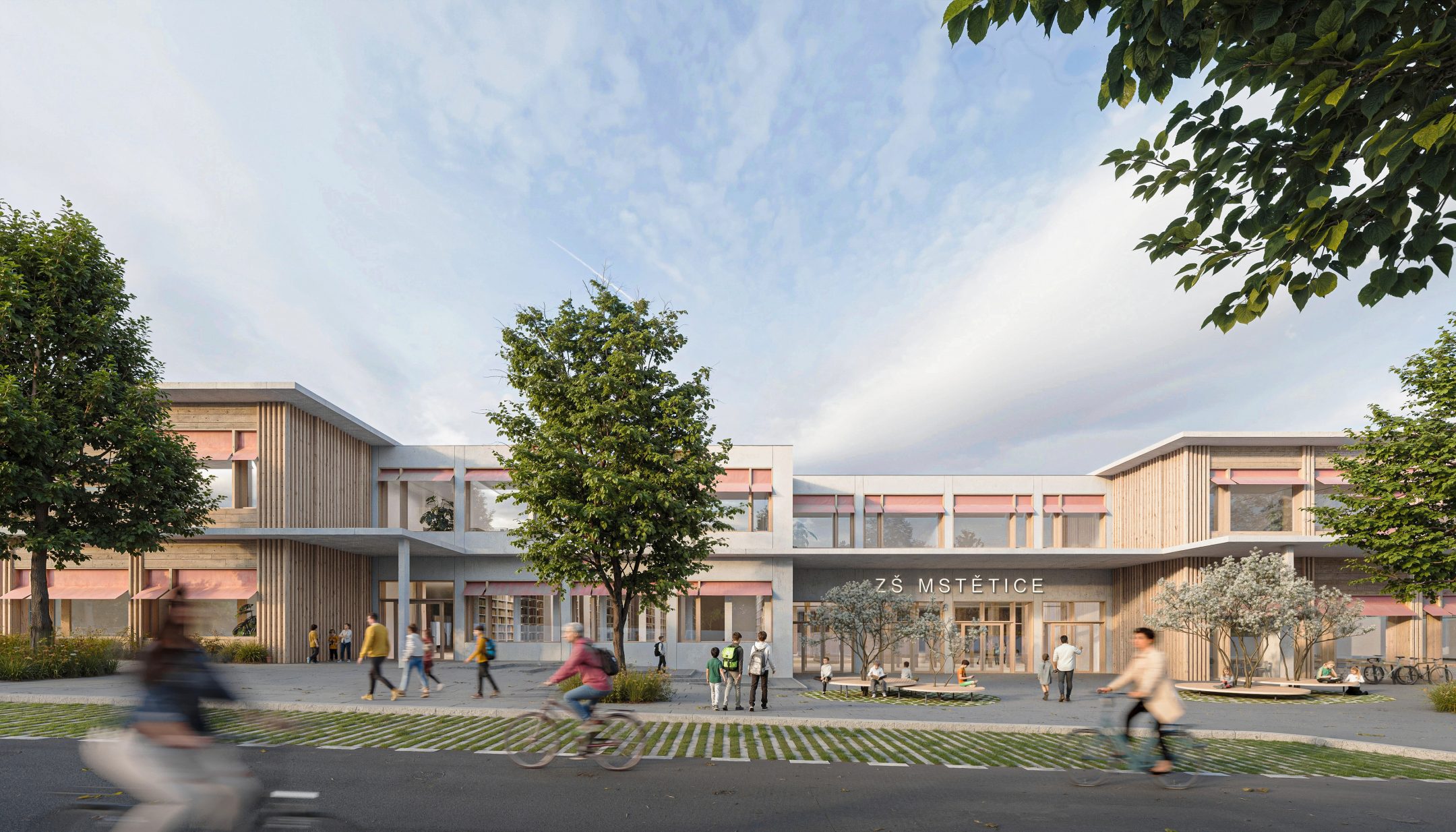
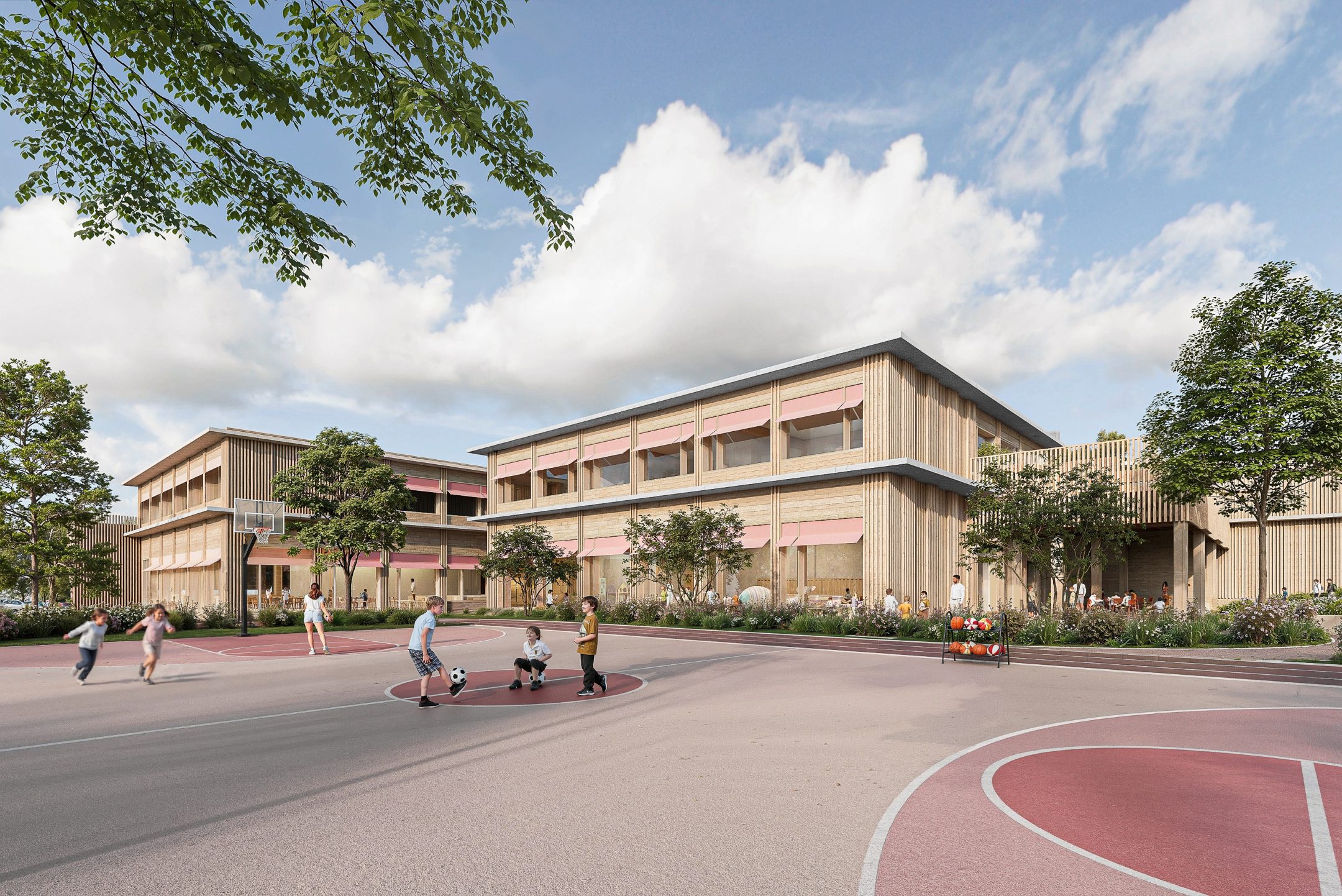
The new primary school in Mstětice is designed to be sensitive to the future structure of the site. With its low-rise form and subdivision into smaller units, it fits naturally into the surrounding context and does not detract from the character of the site. The school forms a compact building open to the public realm and the school garden. In the new location, it takes over the function of a centre for education, culture and sport, serving not only children but also the general public.
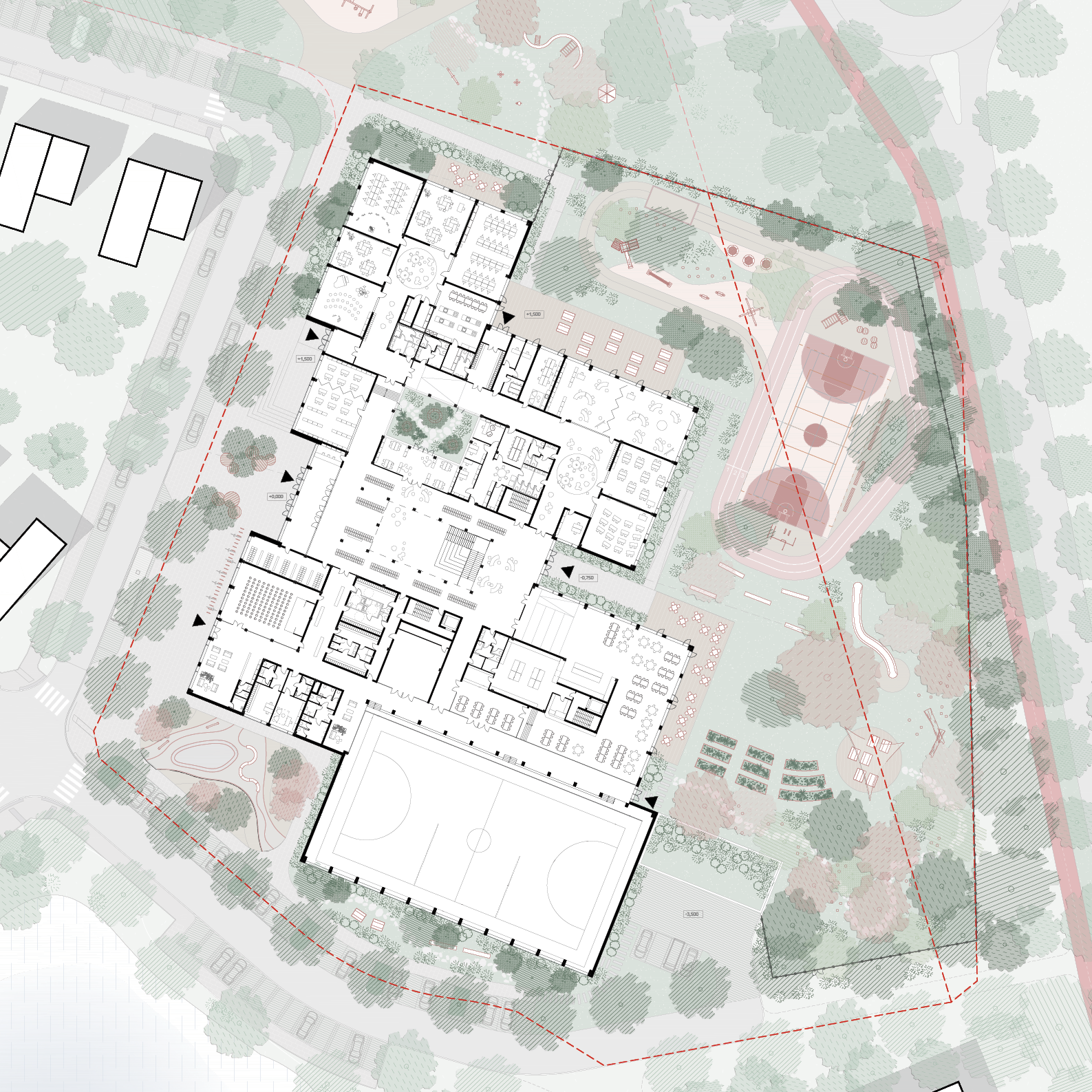
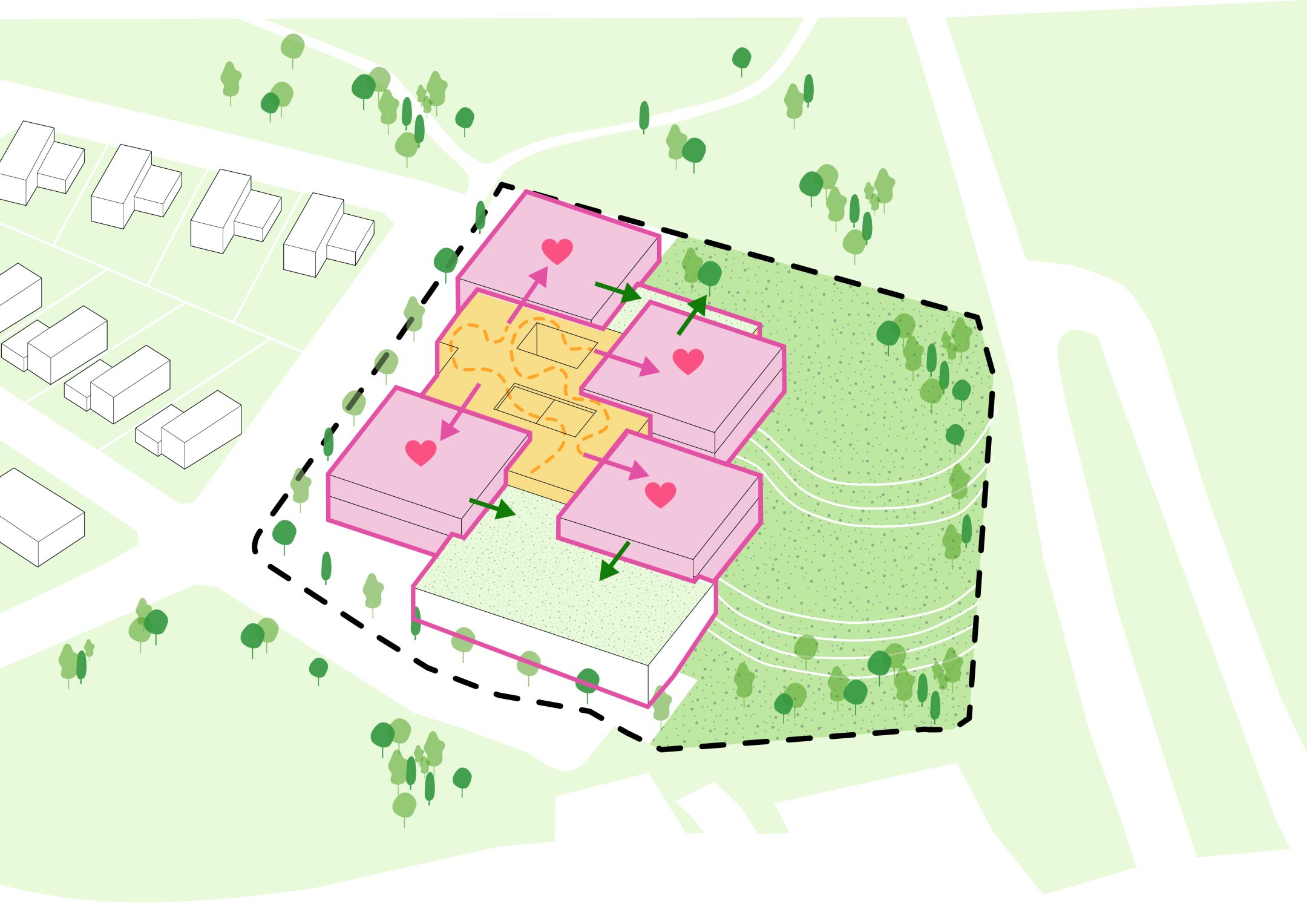
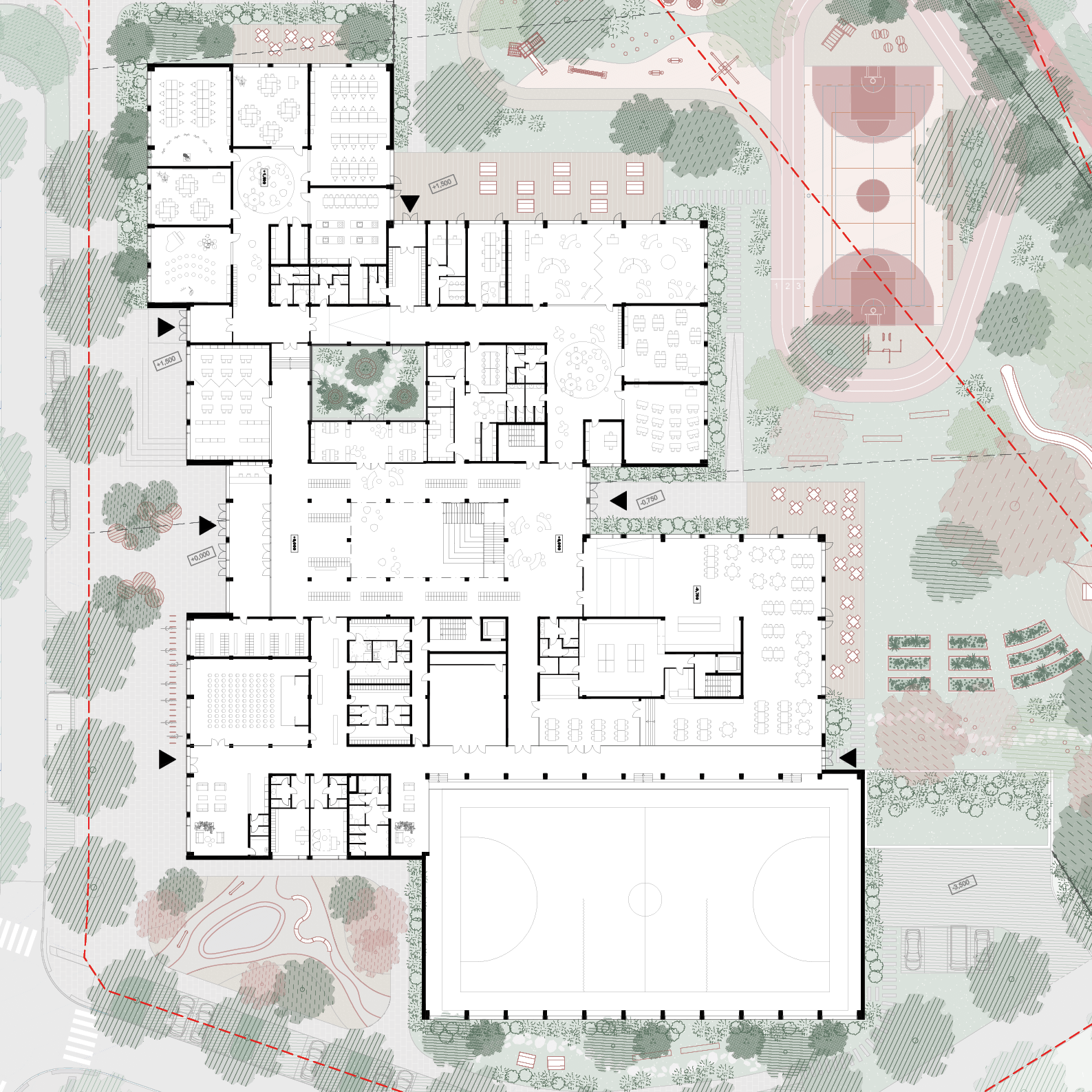
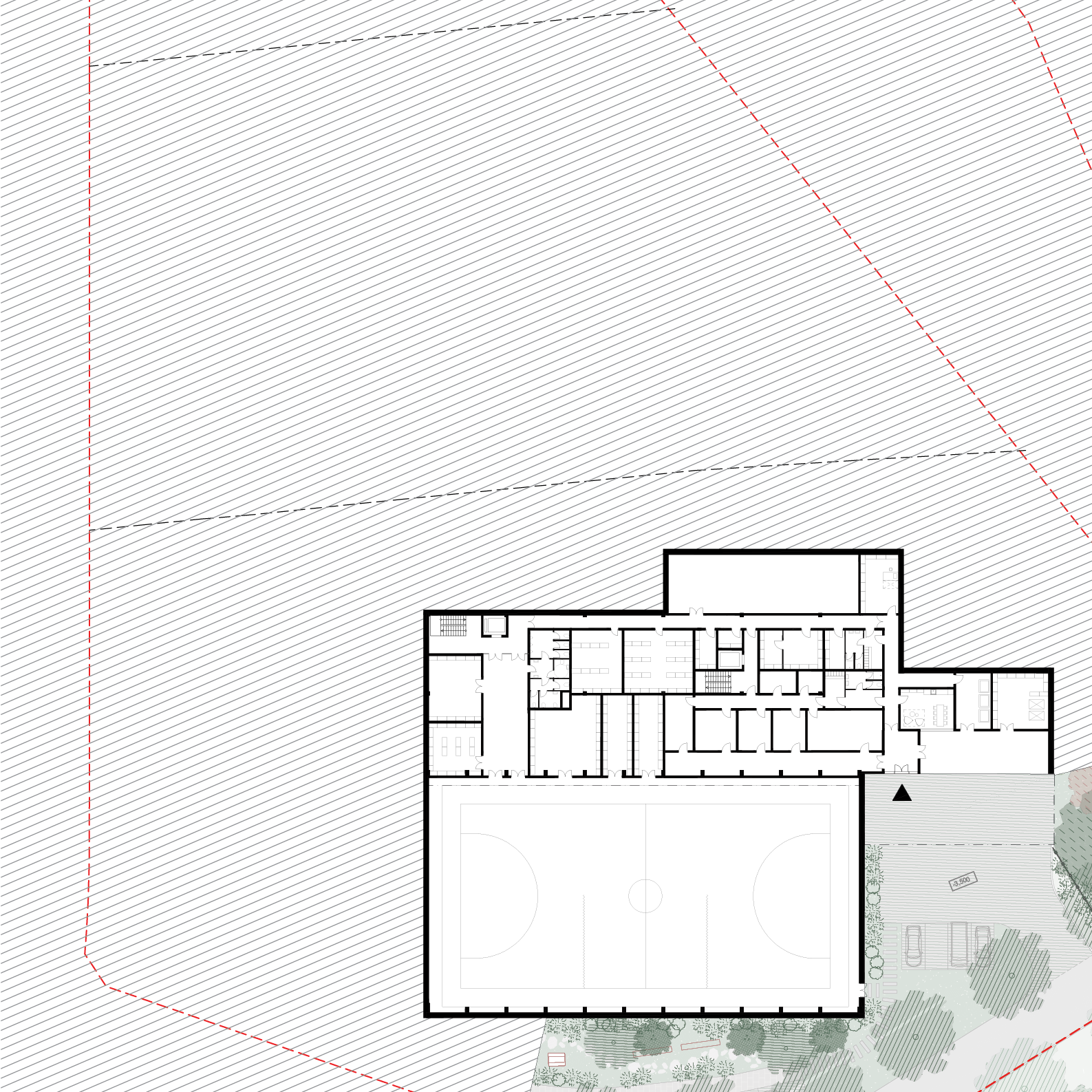
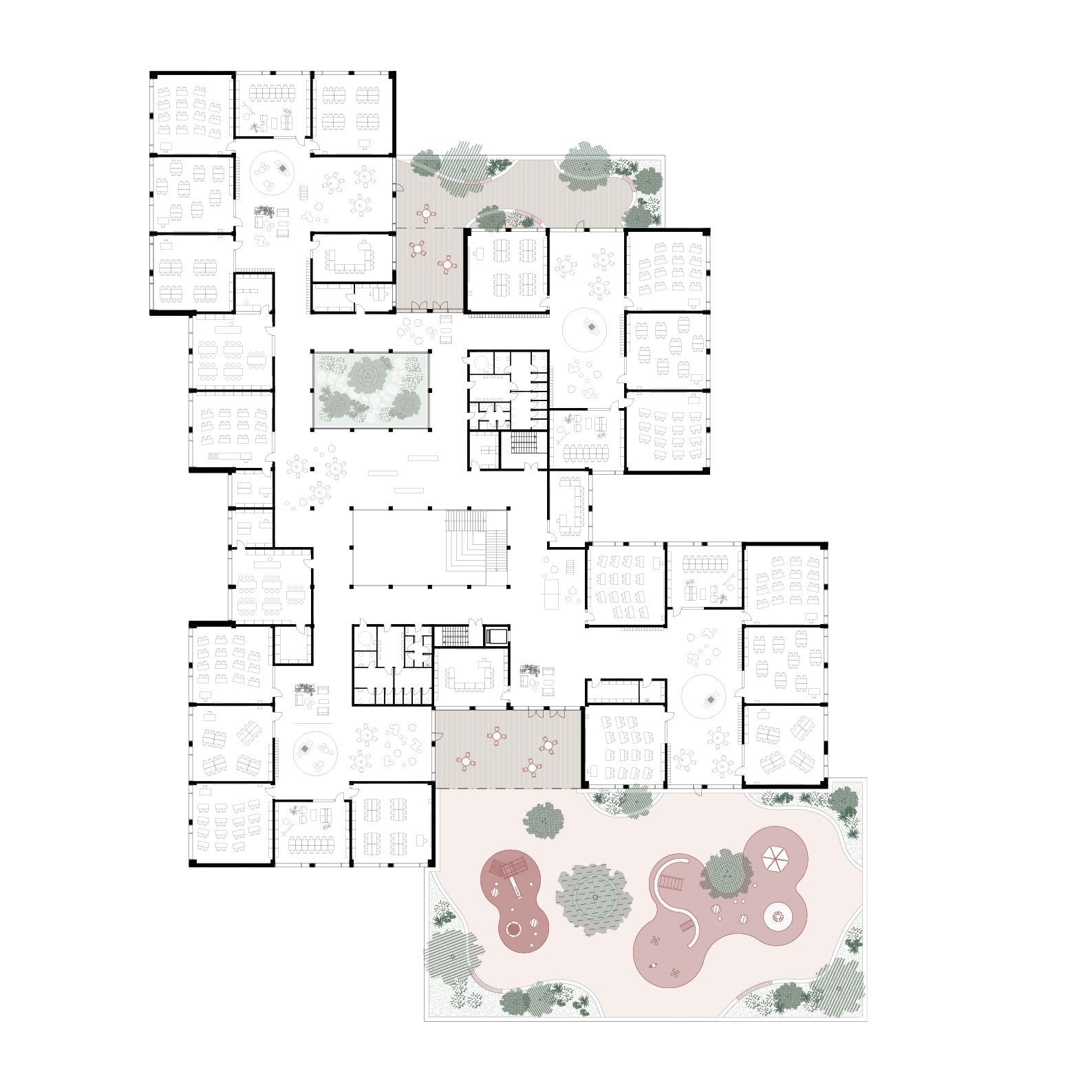
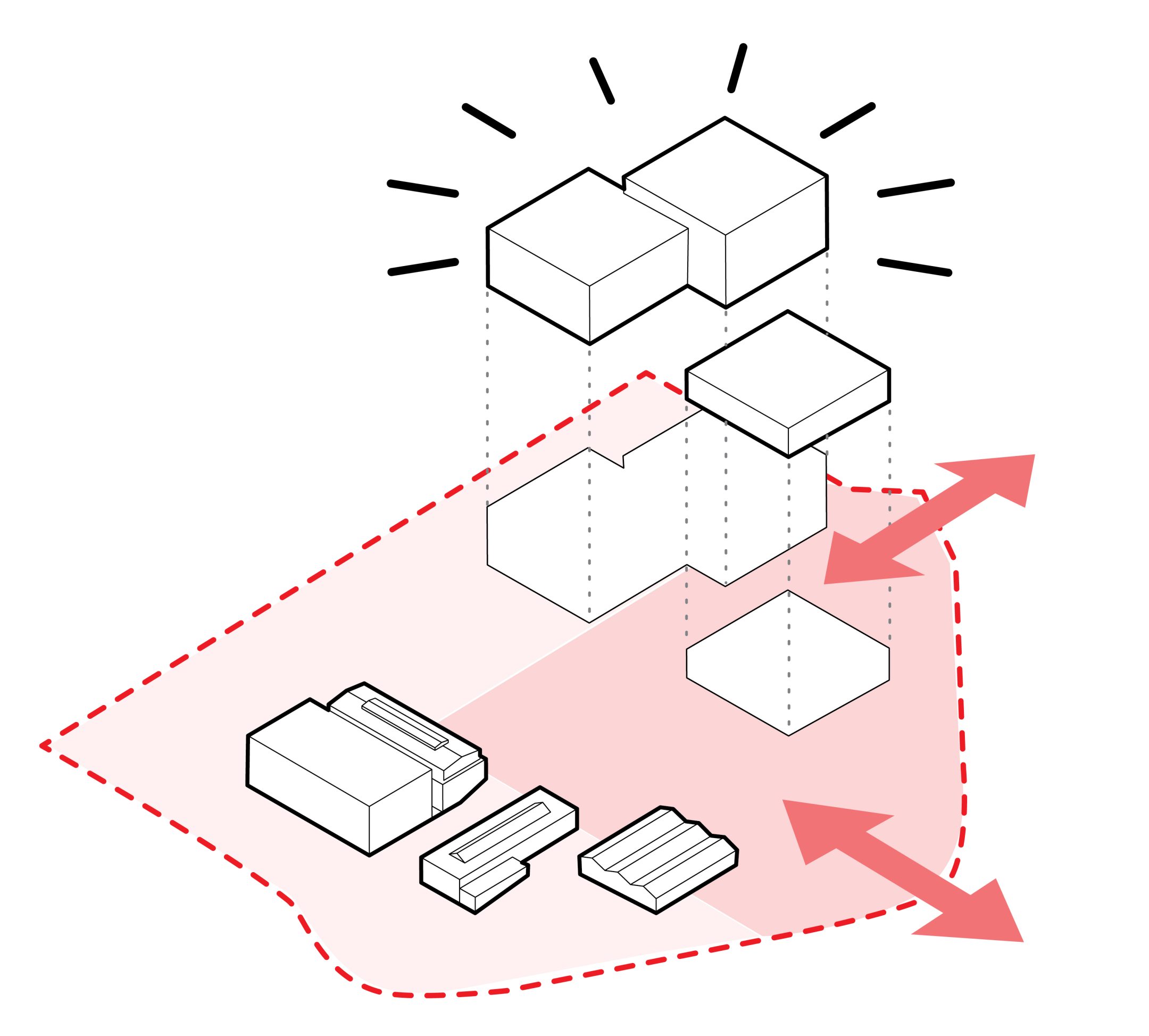
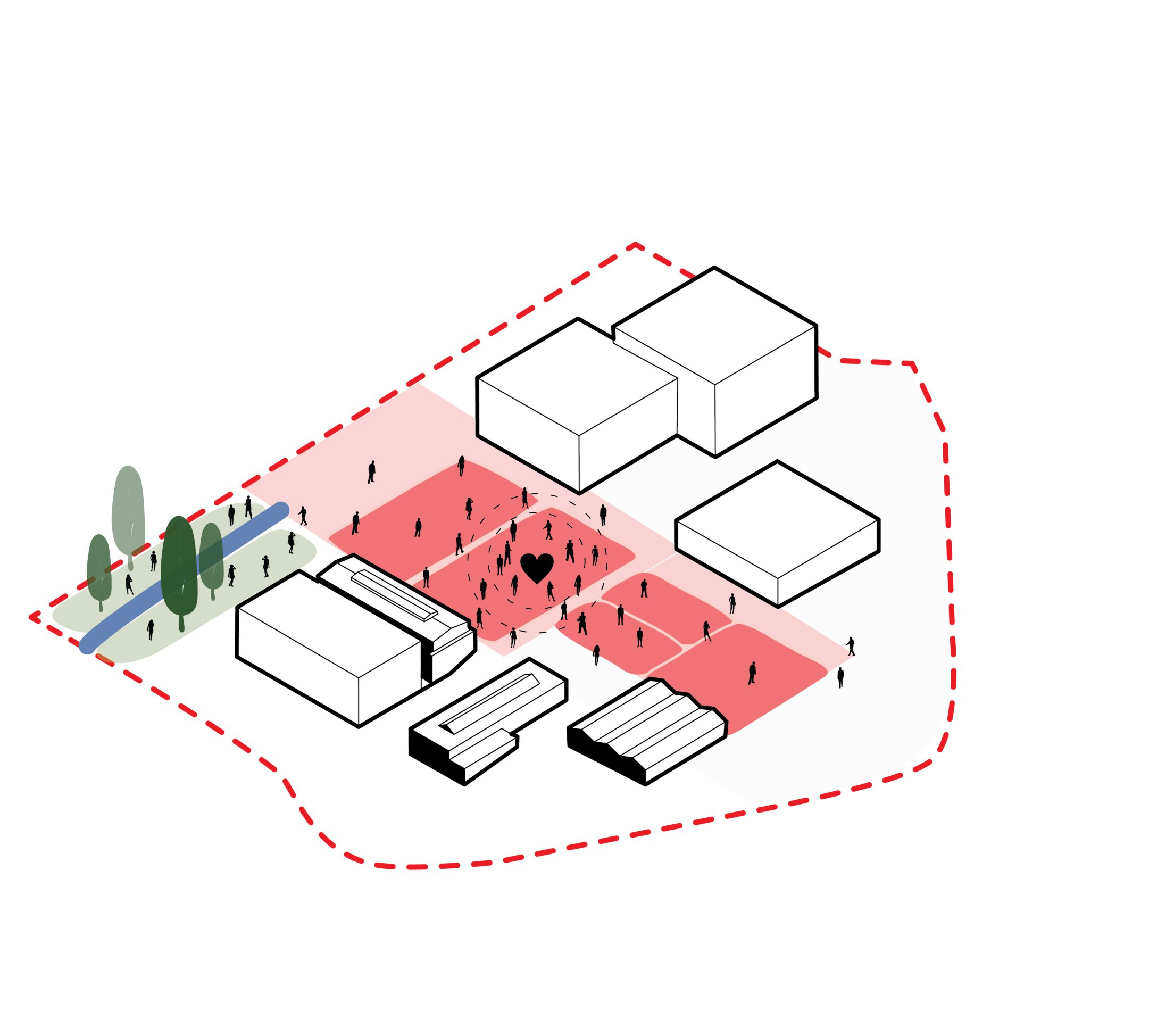
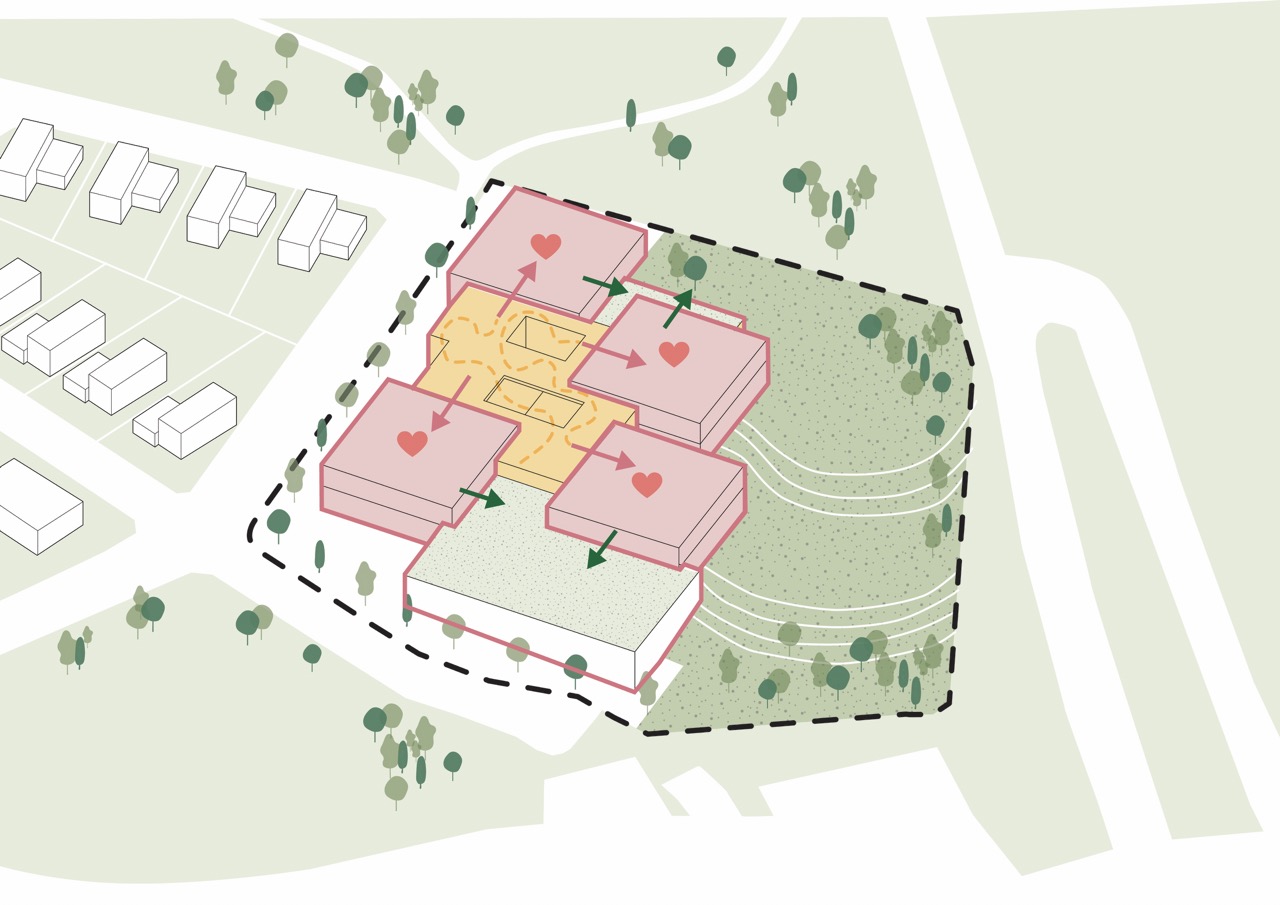
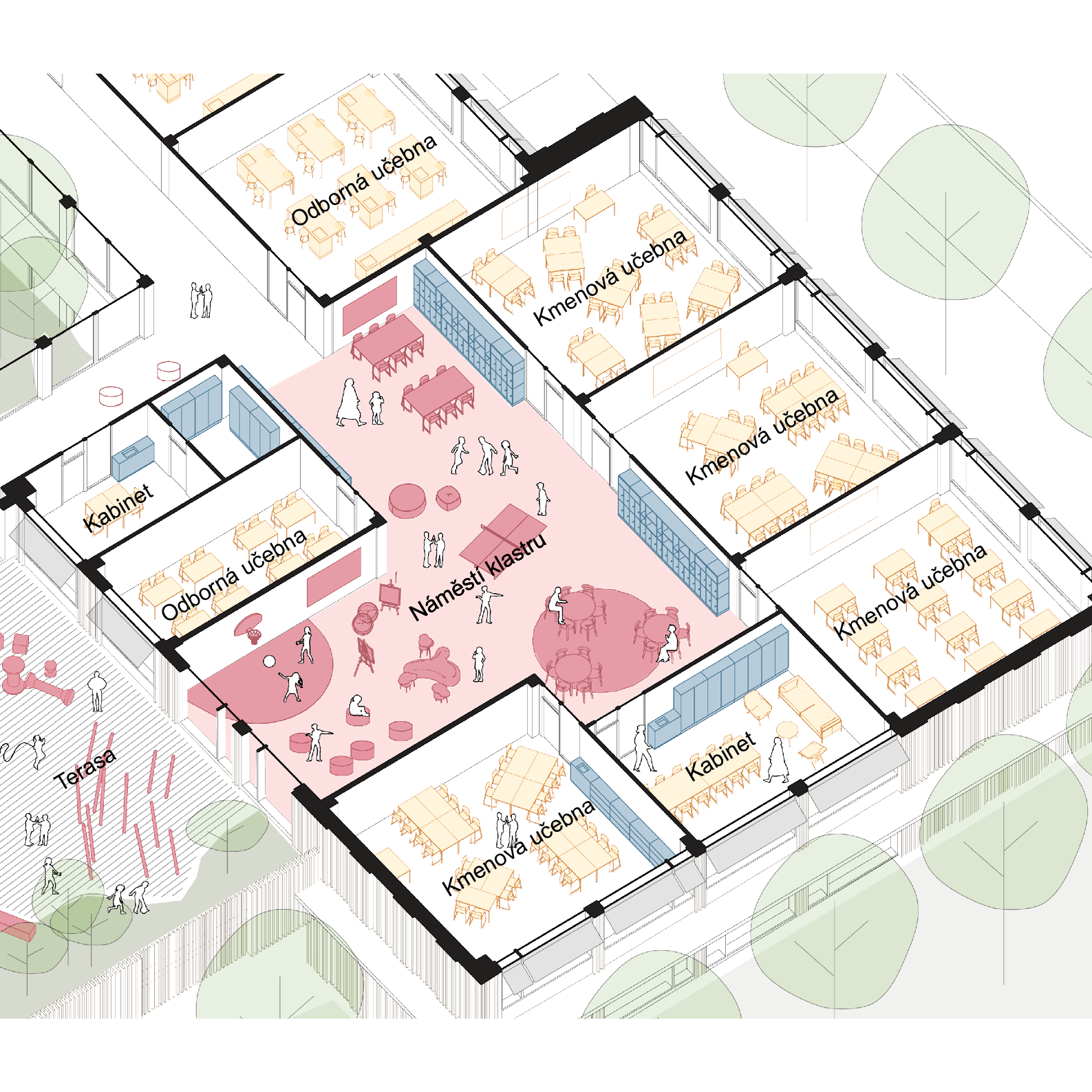
The building is based on an internal functional layout, divided into four teaching clusters, a gymnasium and a central common area. The four learning clusters offer an open educational space that goes beyond the traditional model of closed classrooms. The fragmentation of the building’s scale is reflected not only in its massing but also in the façade articulation.
-
Year
2025
-
Location
Mstětice, Zeleneč
-
Architecture
Ján Antal
Natália Korpášová
Martin Křivánek
Petra Deáková
Samuel Maga -
Landscape
Barbora Kuciaková
-
-
Show all
Scale and urbanism: the school as a living organism
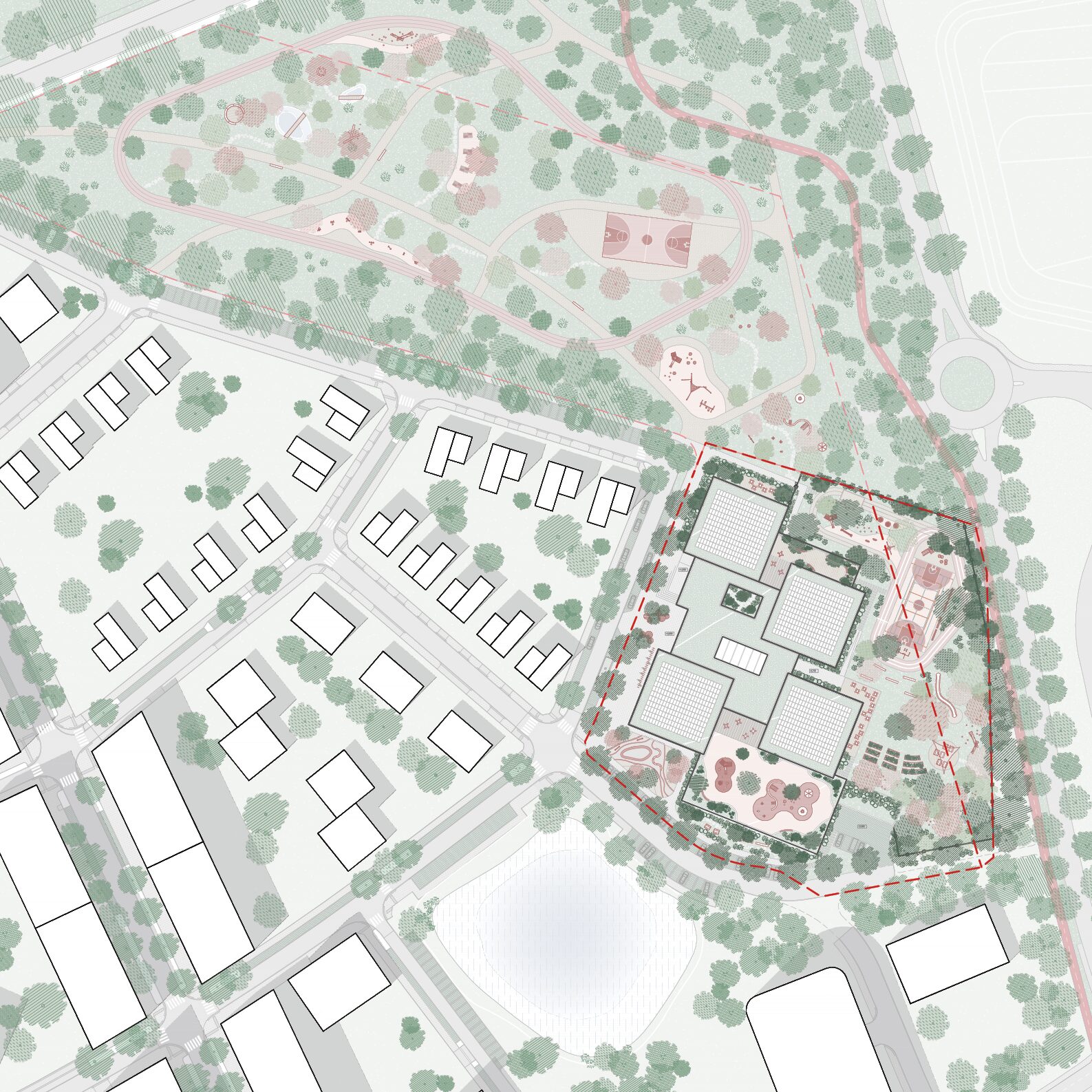
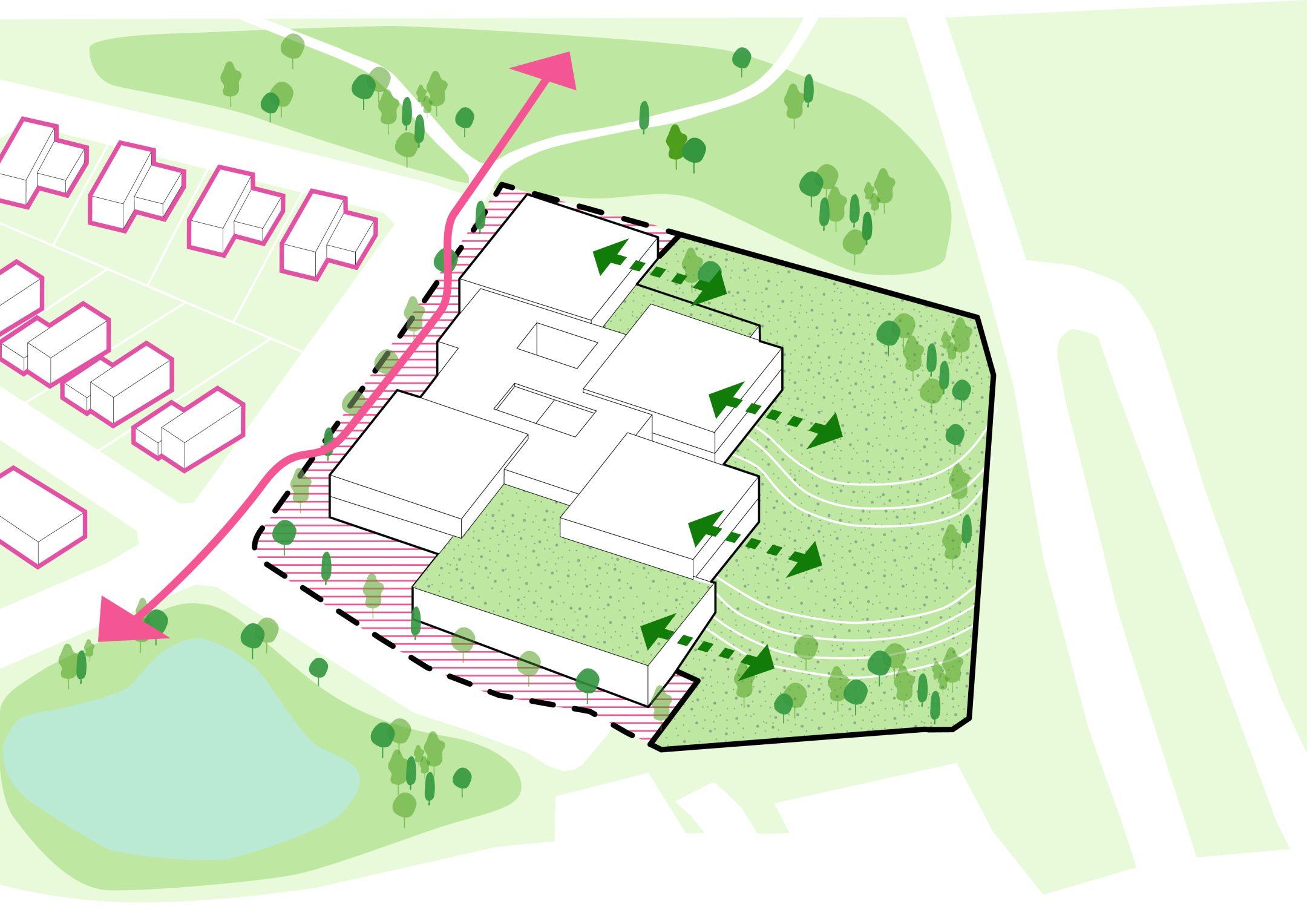
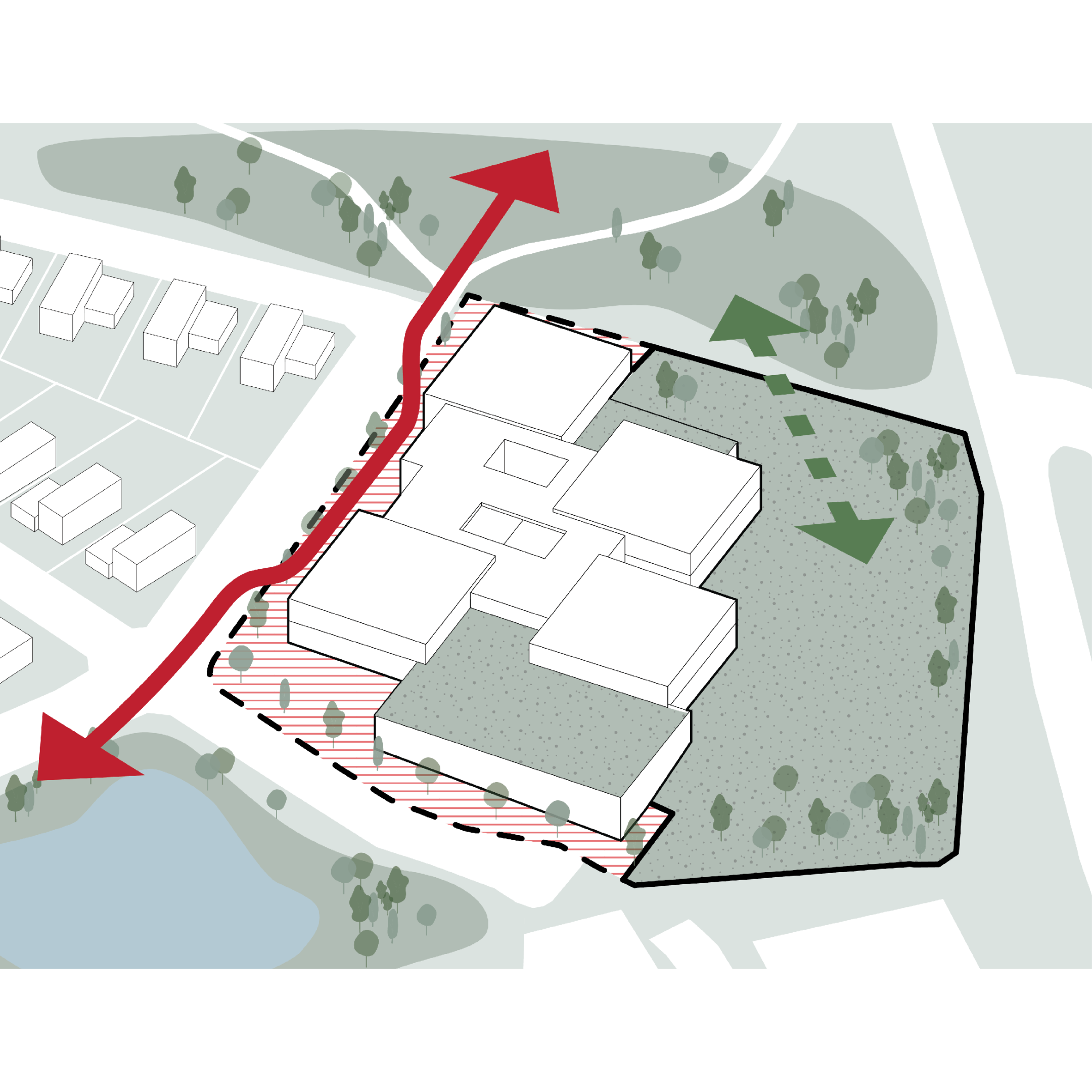
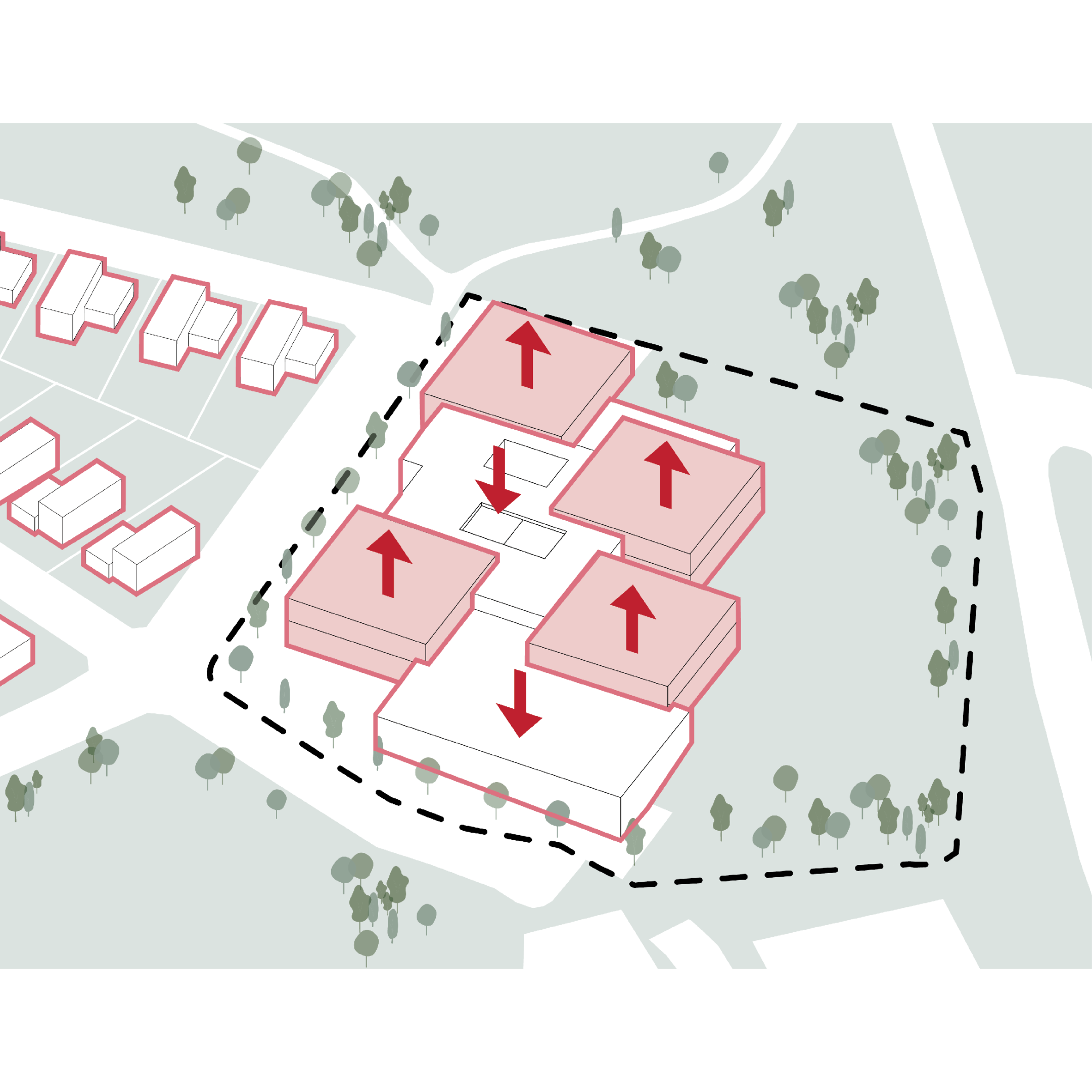
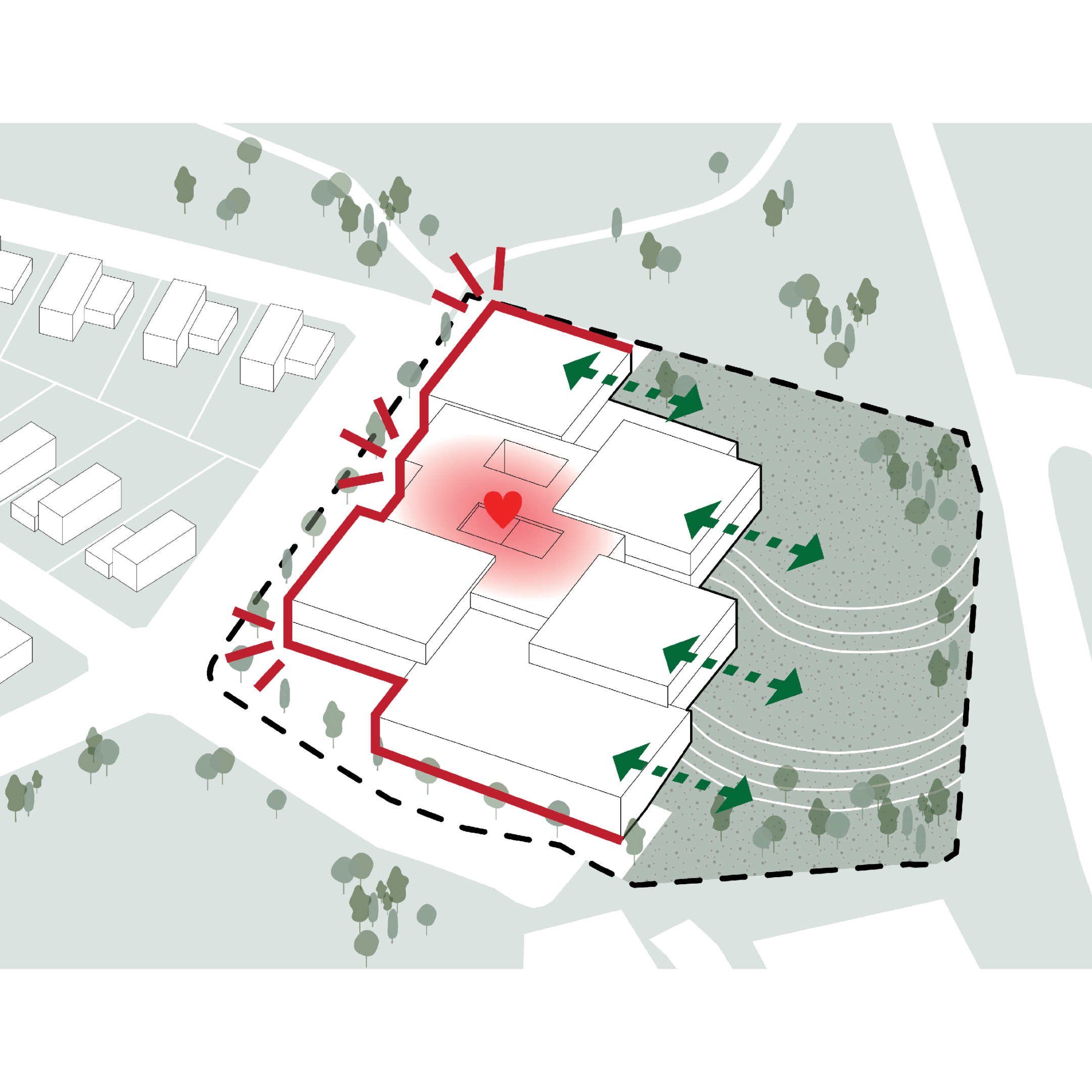
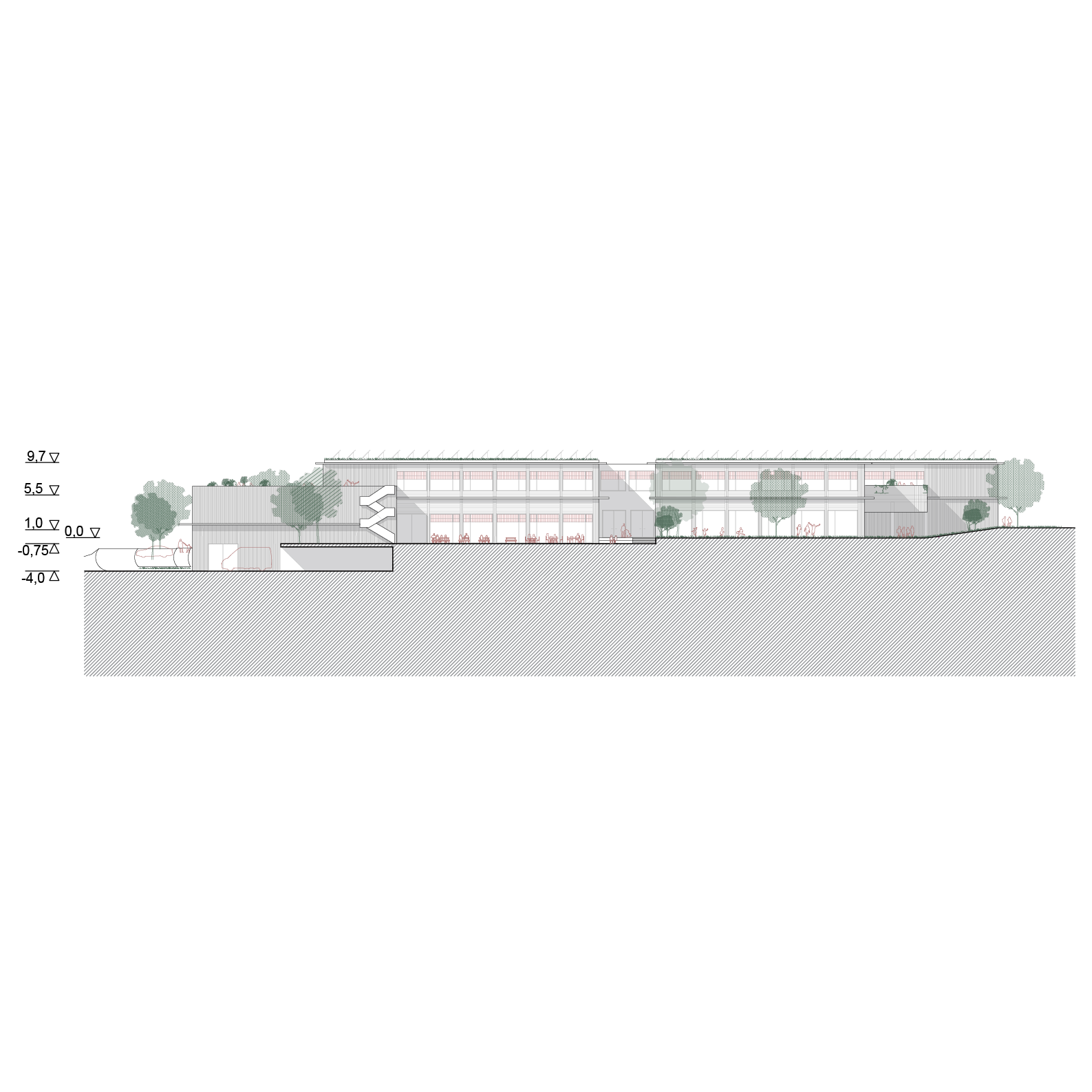
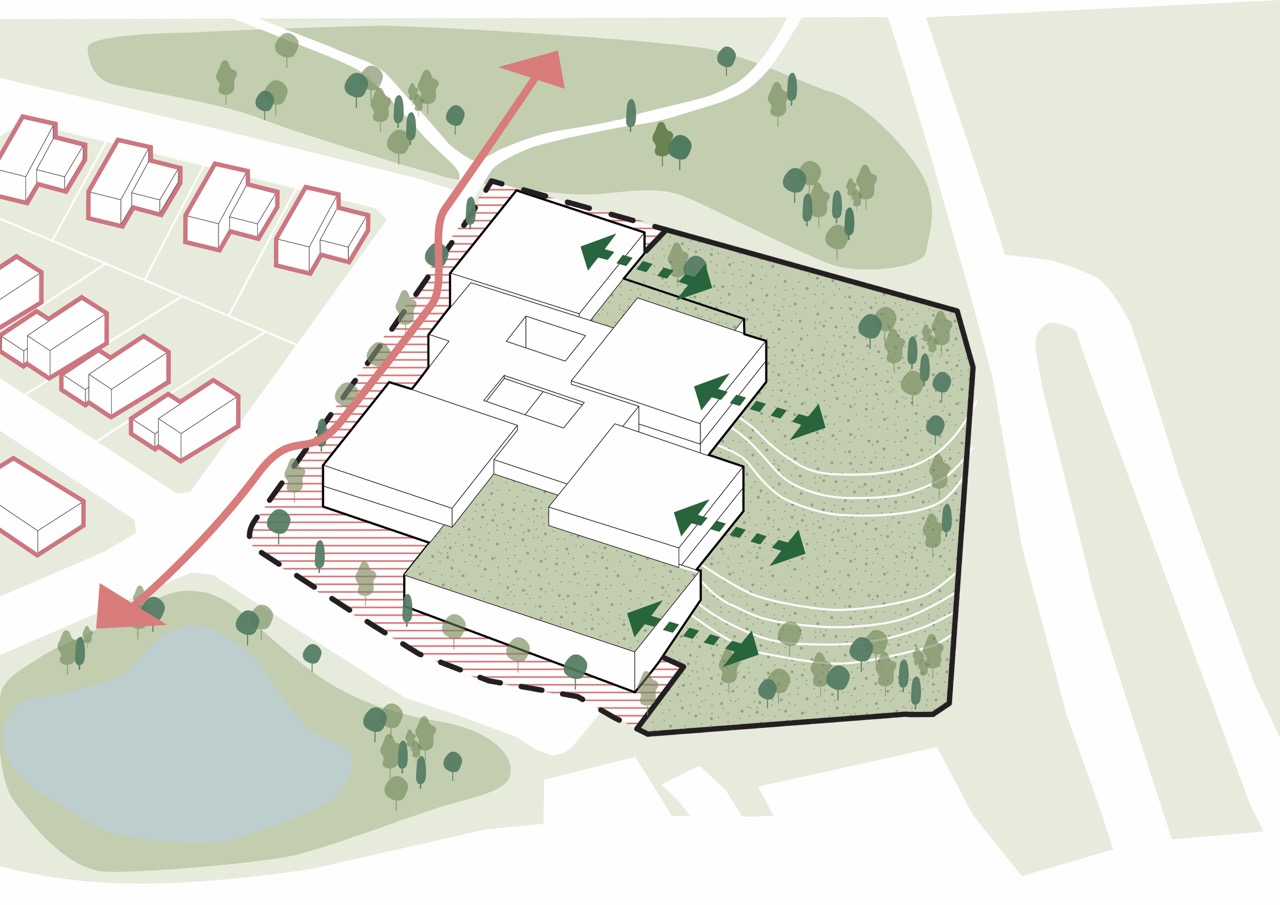
The area is being built in close proximity to a planned residential development of family houses and an important connecting road. The basic urban design principle is to create a school that is in scale with its surroundings and is respectfully integrated into the area. The massing concept works with a low-rise atrium building that naturally ‘breaks up’ into smaller units through articulation and gradual setbacks. At the same time, the building evolves along the sloping terrain – gradually descending and responding to the landscape without unnecessary interventions. The external expression of the school follows directly from its internal structure: the four teaching clusters, the gymnasium and the central common area are projected in height and material, giving the school a legible and welcoming appearance.
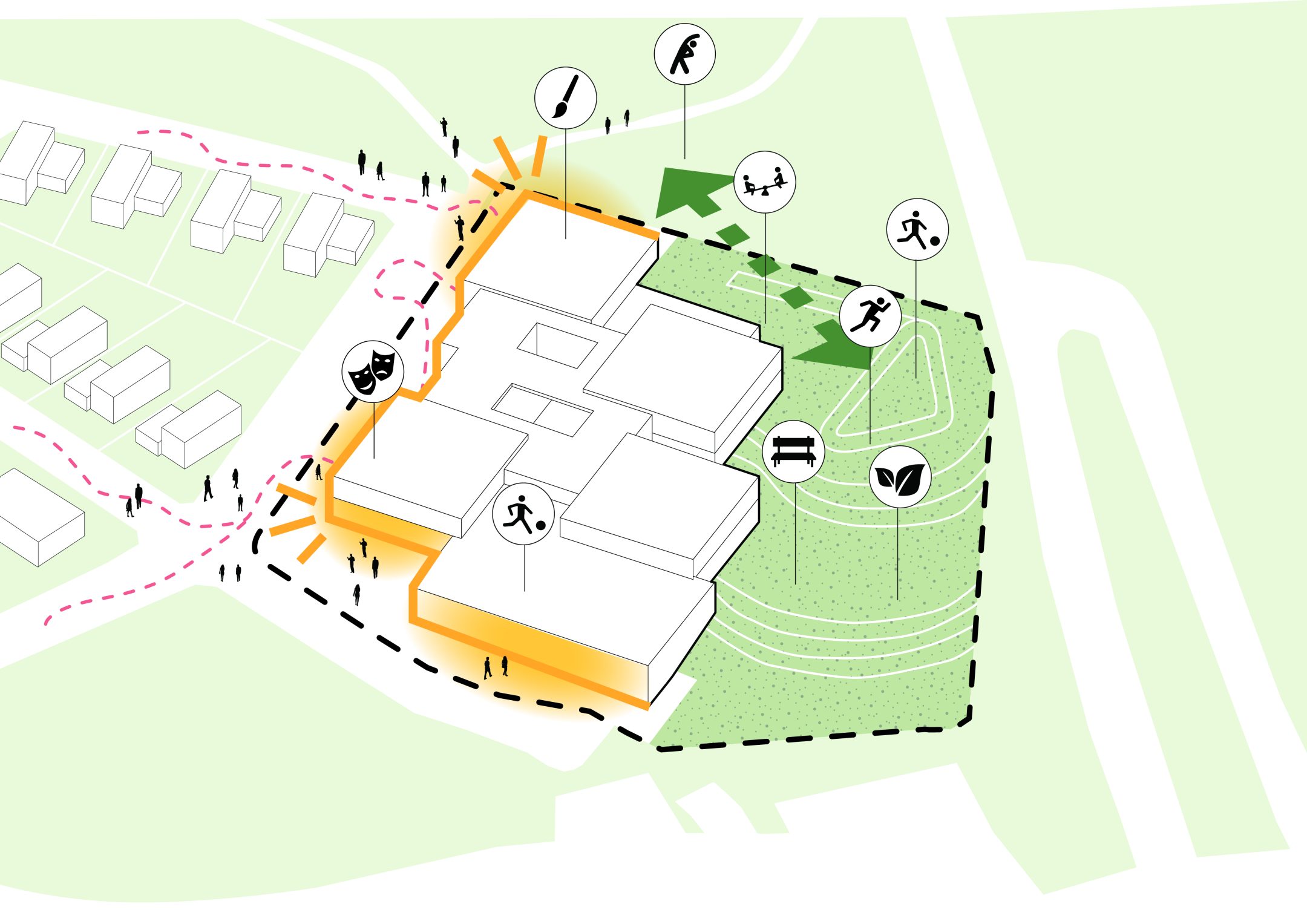
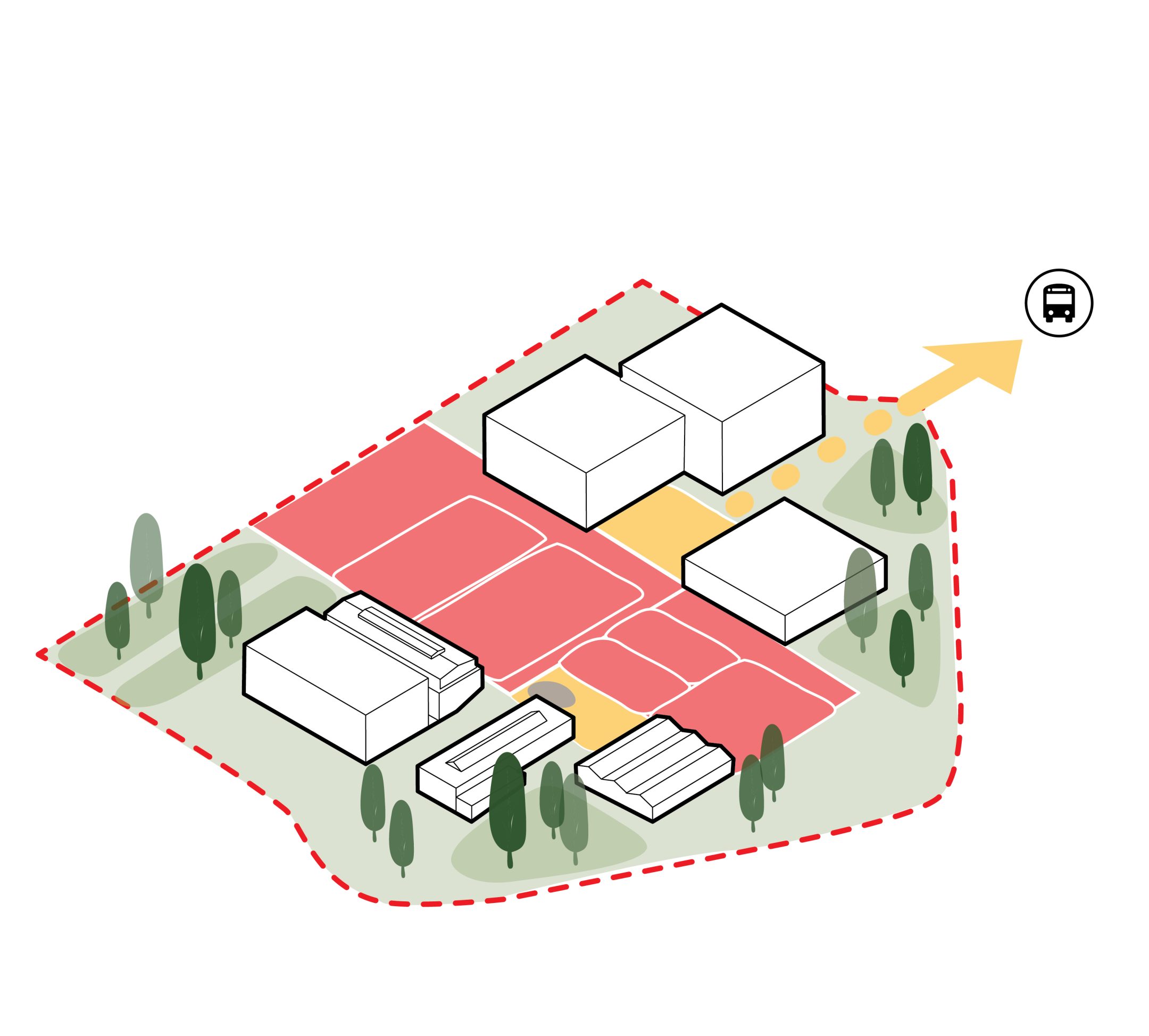
An important theme of the proposal is the clear delineation of the campus and public spaces. The location of the school on the site creates two distinct worlds: the busy and lively school forecourt as a representative public space and the quieter, green school garden designed primarily for children. The site is connected to the street network and transforms seamlessly into a forecourt for pupils and residents to gather. At the same time, it naturally connects the newly emerging sports park with the green retention basin near the site.
The school as a public centre: education, culture and sport
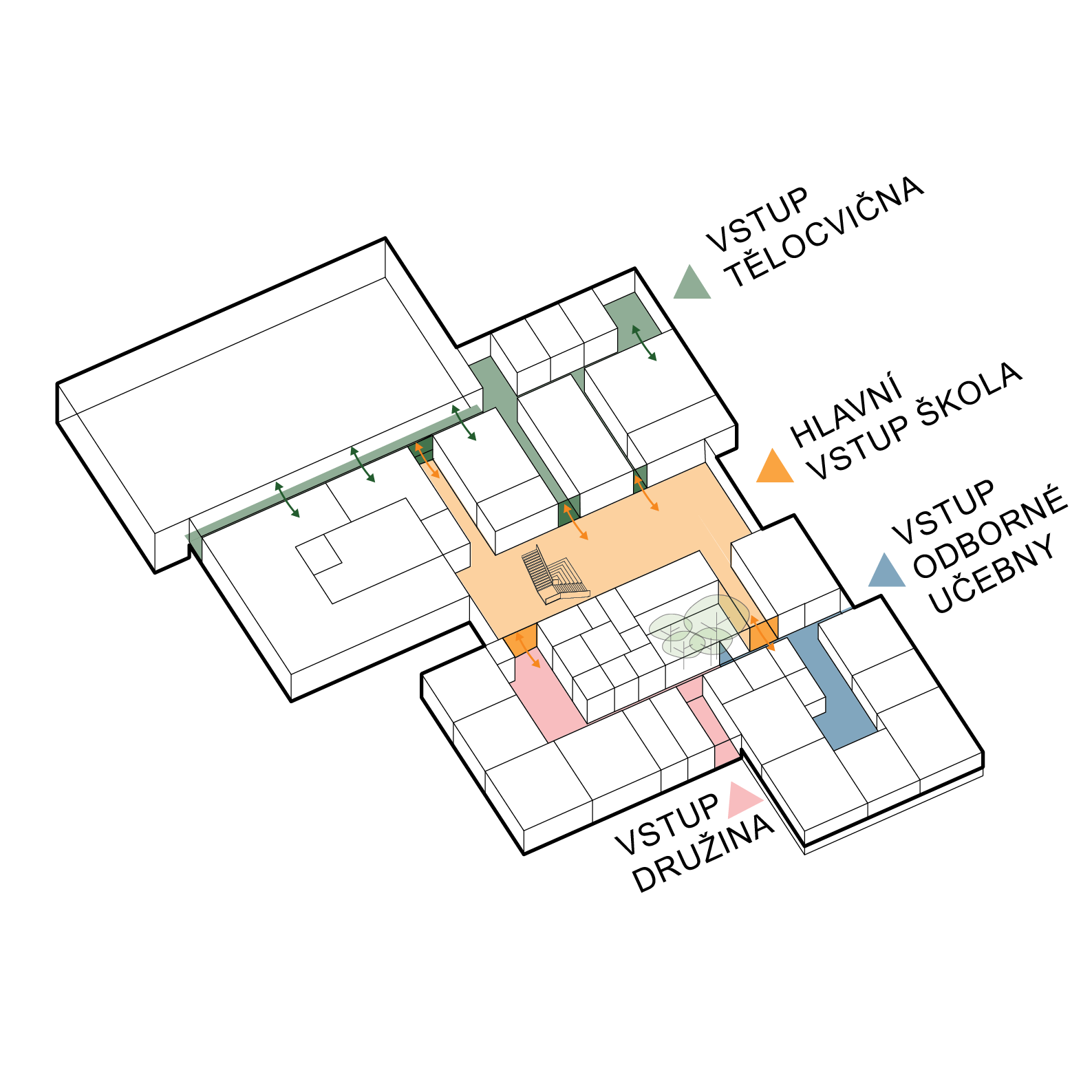
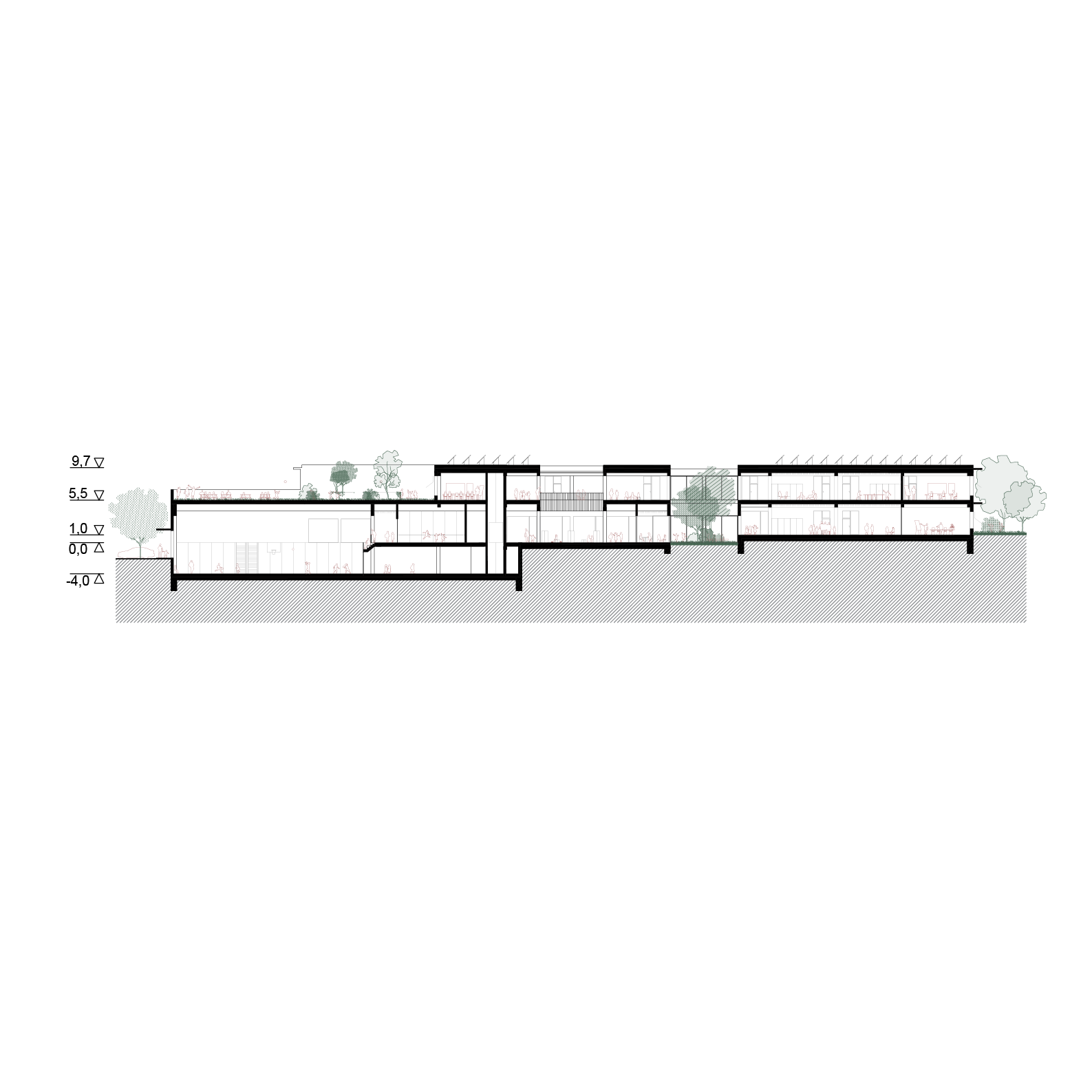
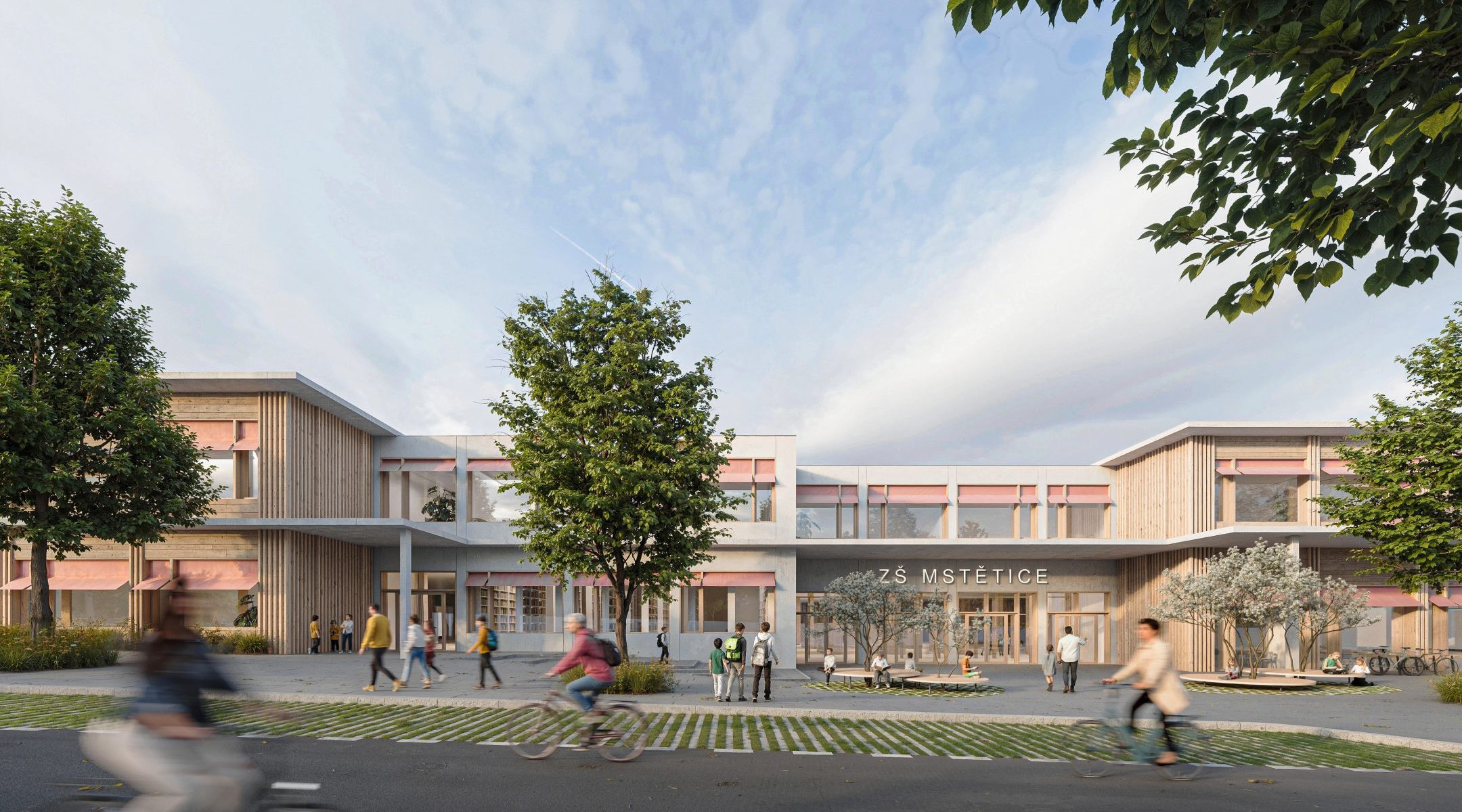
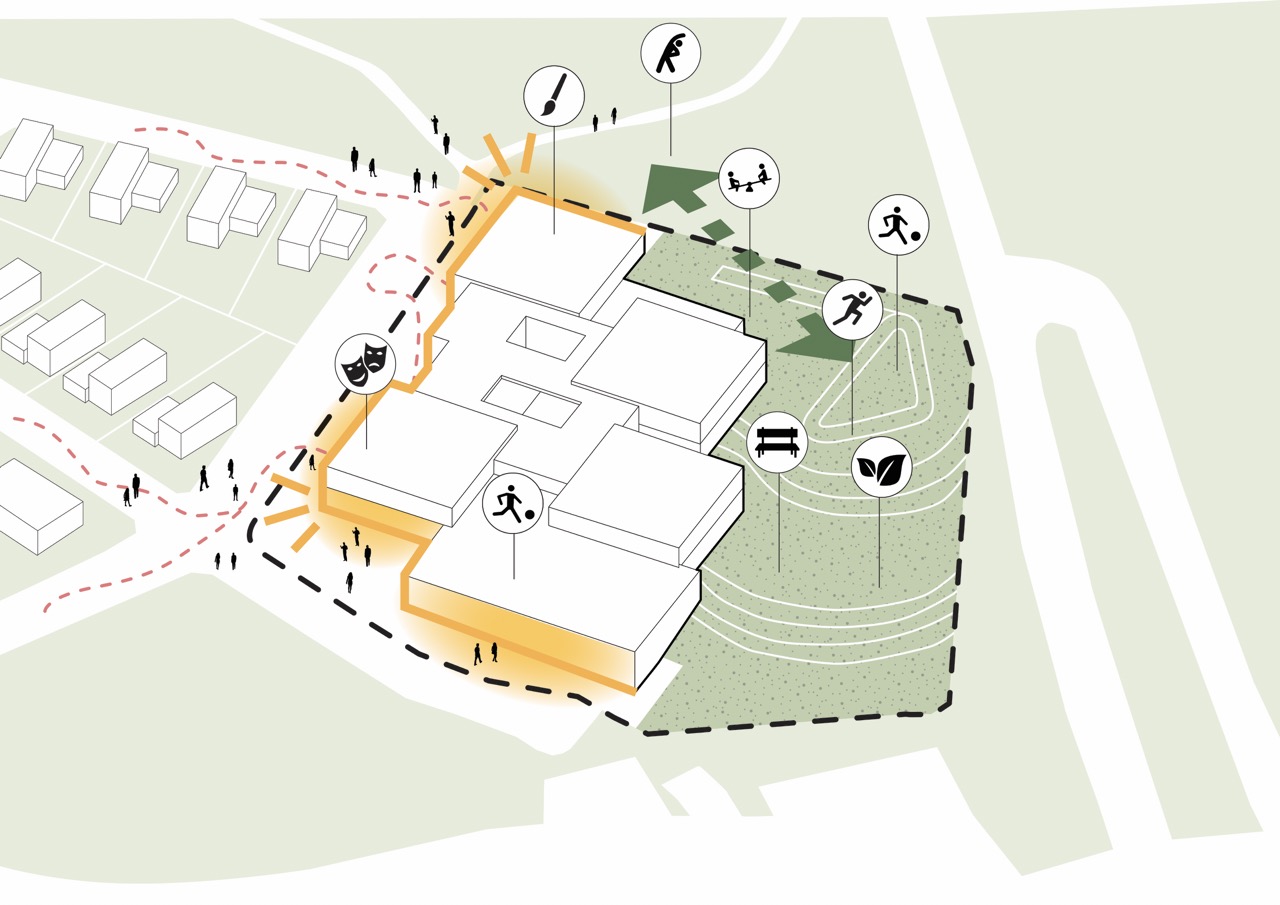
The school’s forecourt is activated by features that support public life both outdoors and indoors. A covered main entrance, a social hall, specialist classrooms, an assembly hall, a library and a gymnasium create a school that is not only alive in the morning but can also function as a community centre. An active parterre dominates both the public forecourt and the school garden. By extending the school’s functions into the garden, the building is naturally connected to the landscape – and the landscaping, in turn, permeates the interior.
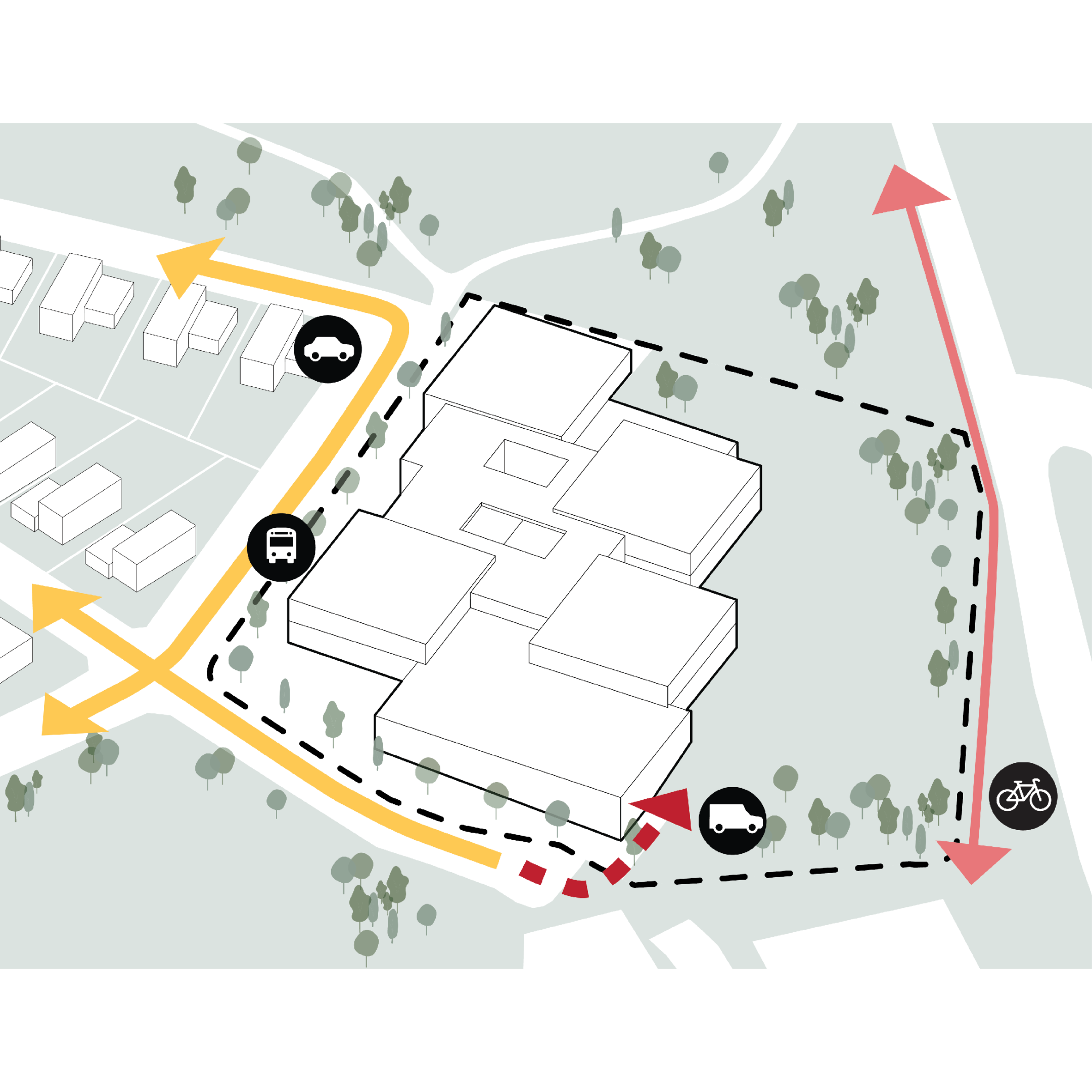
Child safety is addressed directly in the urban design. The forecourt is connected to the K+R car park, so that access to the school is as clear and safe as possible. The forecourt also includes an area for a new bus stop. The area supports cycling and provides for lockable spaces for bicycles and scooters. Service is routed from the south side of the school to minimize vehicular traffic in the immediate vicinity of the school.
Children’s Village: a space that children “own”
The school is designed as a small children’s village. The pupils have everything at their fingertips, the building is clear, legible and creates their own protected world. The space encourages independent movement, community life and the intimacy needed for learning, play and rest. The ground floor concentrates functions primarily for children, but selected areas can be opened to the public in the afternoon. In addition, the first floor can be easily divided into school and public areas, creating self-contained clusters that can be used independently of the operation of the entire school.
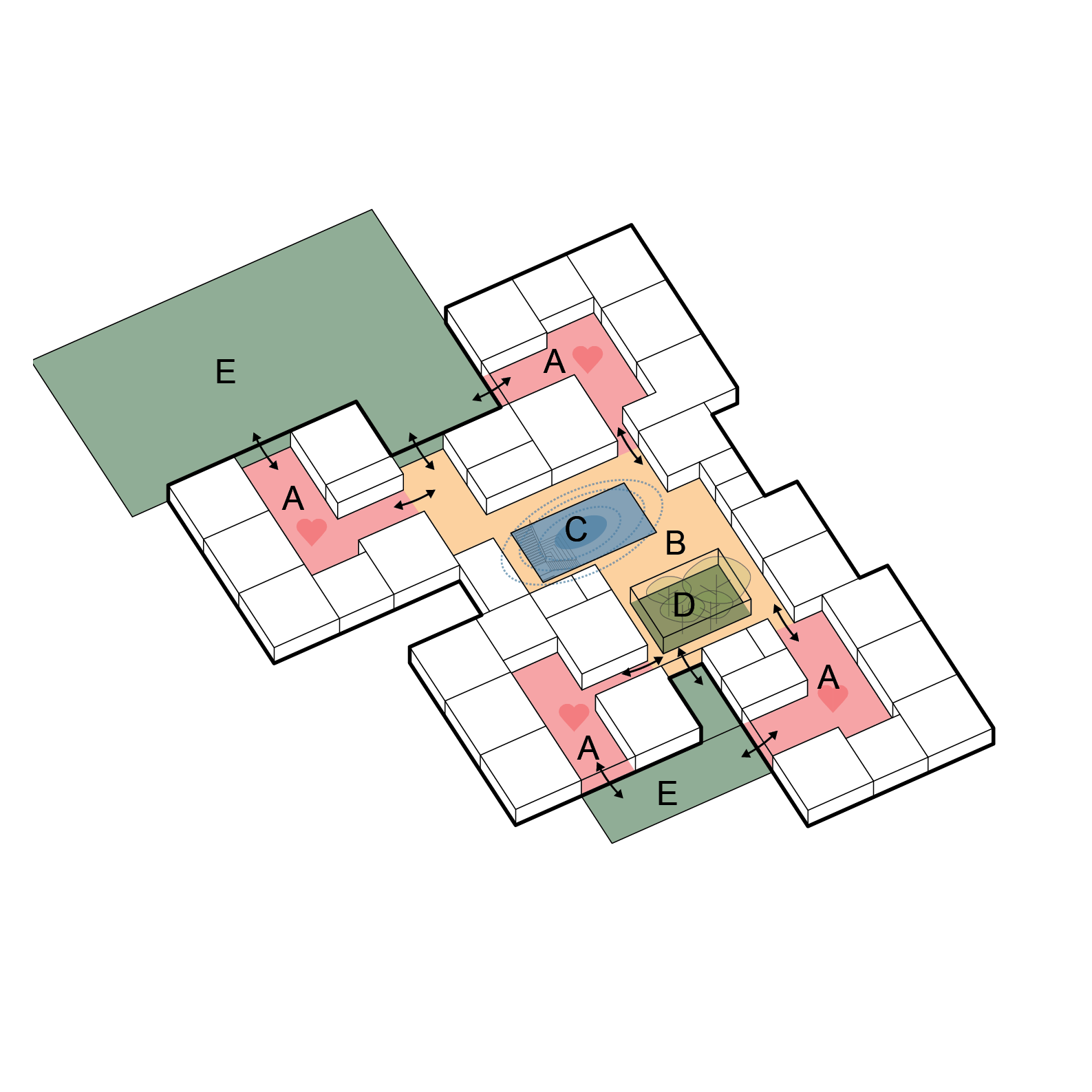
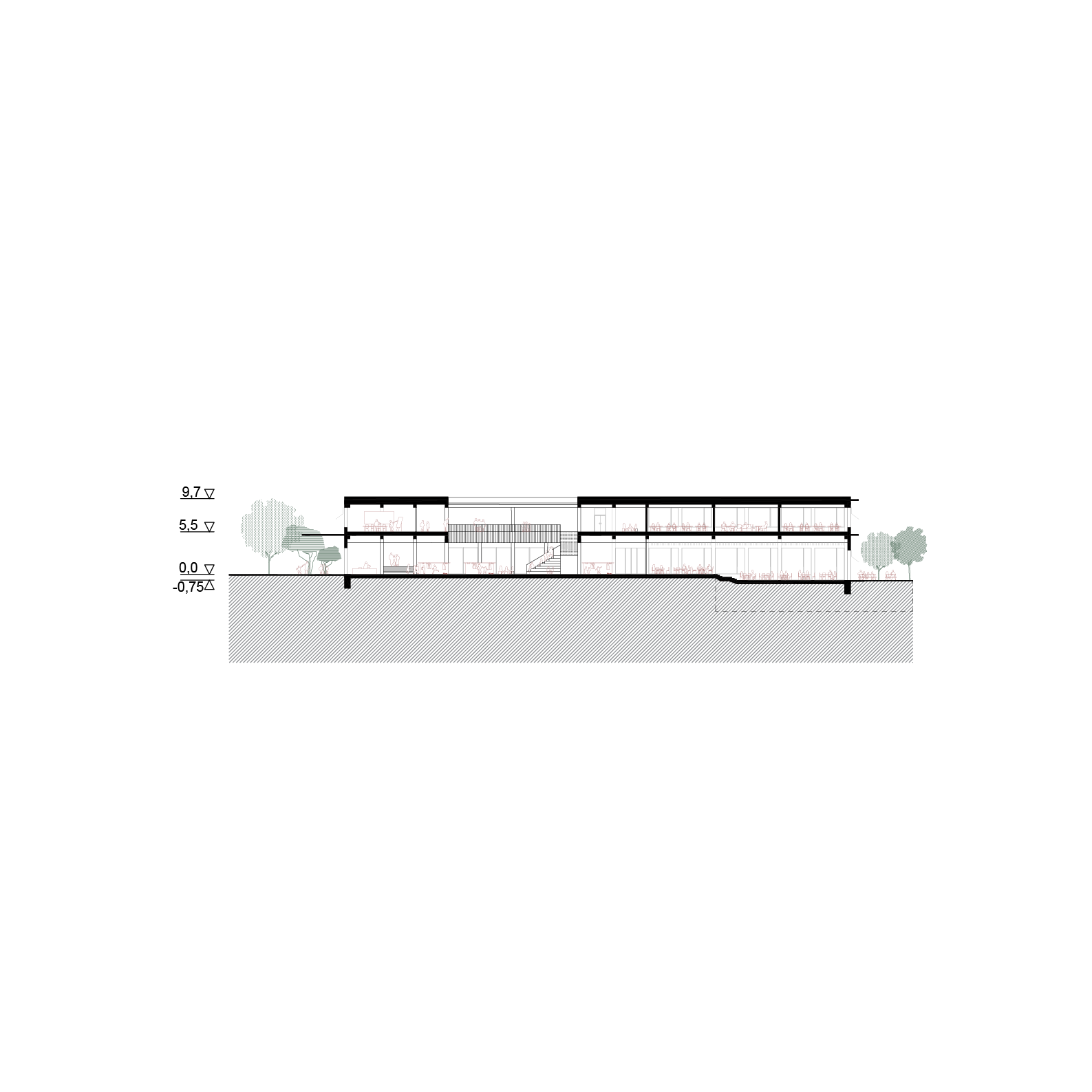
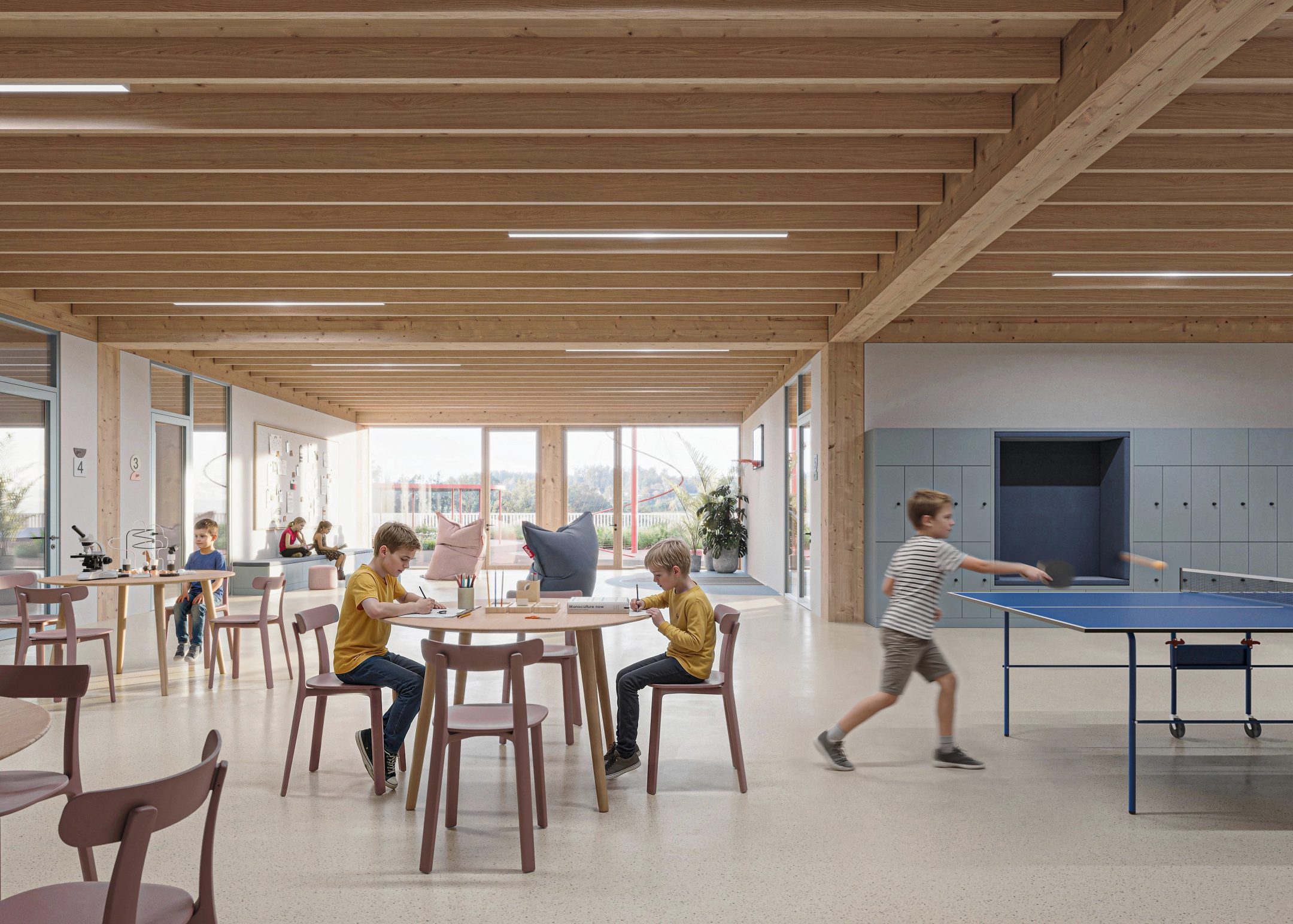
A key principle of today’s school is a space that promotes safe, inspiring and welcoming learning. The school is structured into four learning clusters that offer an open learning environment that goes beyond the traditional model of closed classrooms. Each cluster is composed of four classrooms (two double classes by age), a teacher’s office in direct relation to the children, and a central “plaza” – a space for experimentation, independent learning and informal gatherings. Teaching can also move seamlessly outdoors: the possibility of opening the clusters to the green terraces is a great advantage. The corridors are not just a thoroughfare. They function as a learning landscape – they promote social networking, collaboration and natural encounters between different age groups.
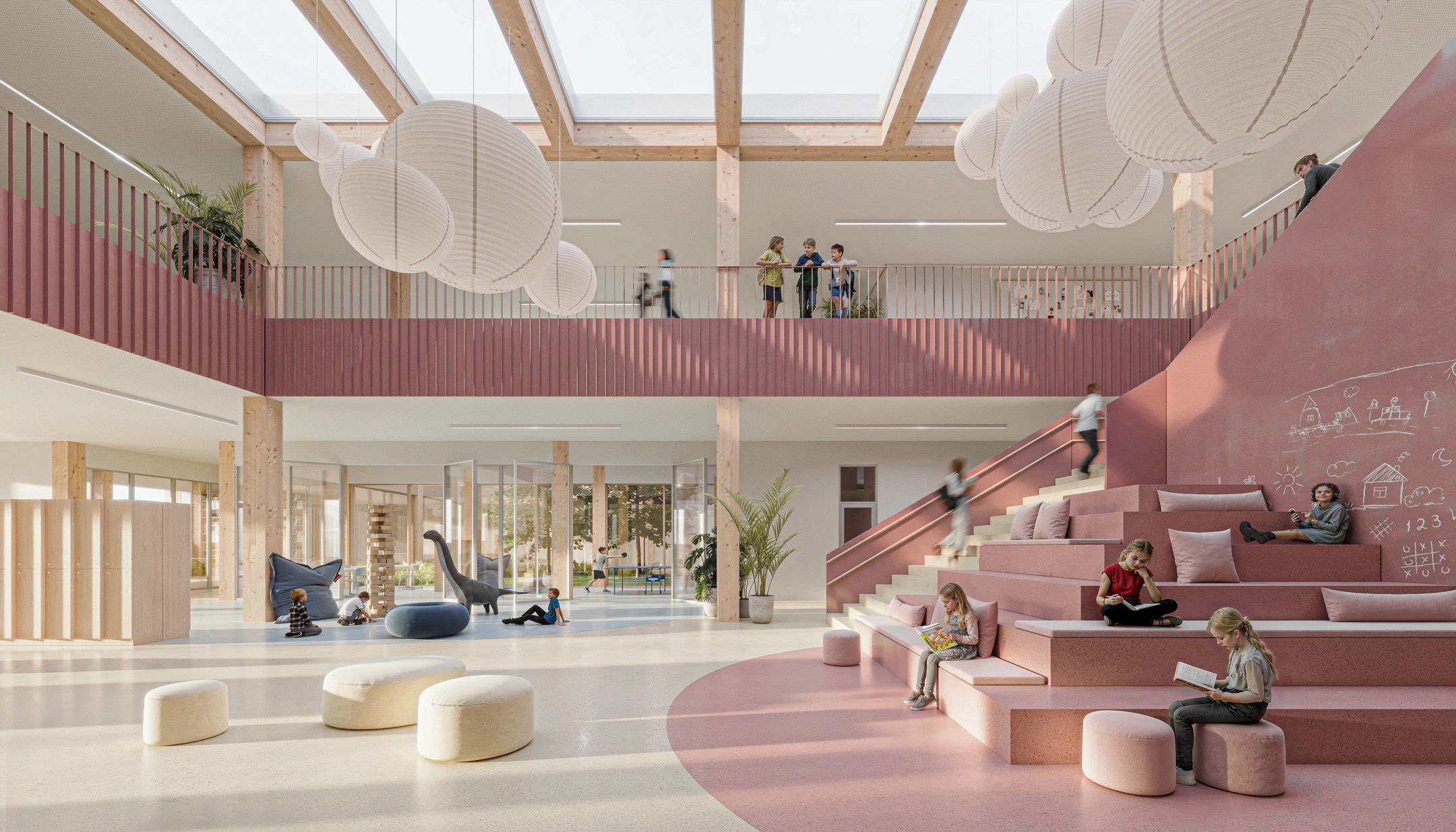
The continuous circulation space is interrupted by a central atrium with a staircase and a green atrium that brings nature into the centre of the layout. Views through the atria create a strong spatial experience and connect the indoor and outdoor worlds of the school.
Construction and materials: a school that invites touch
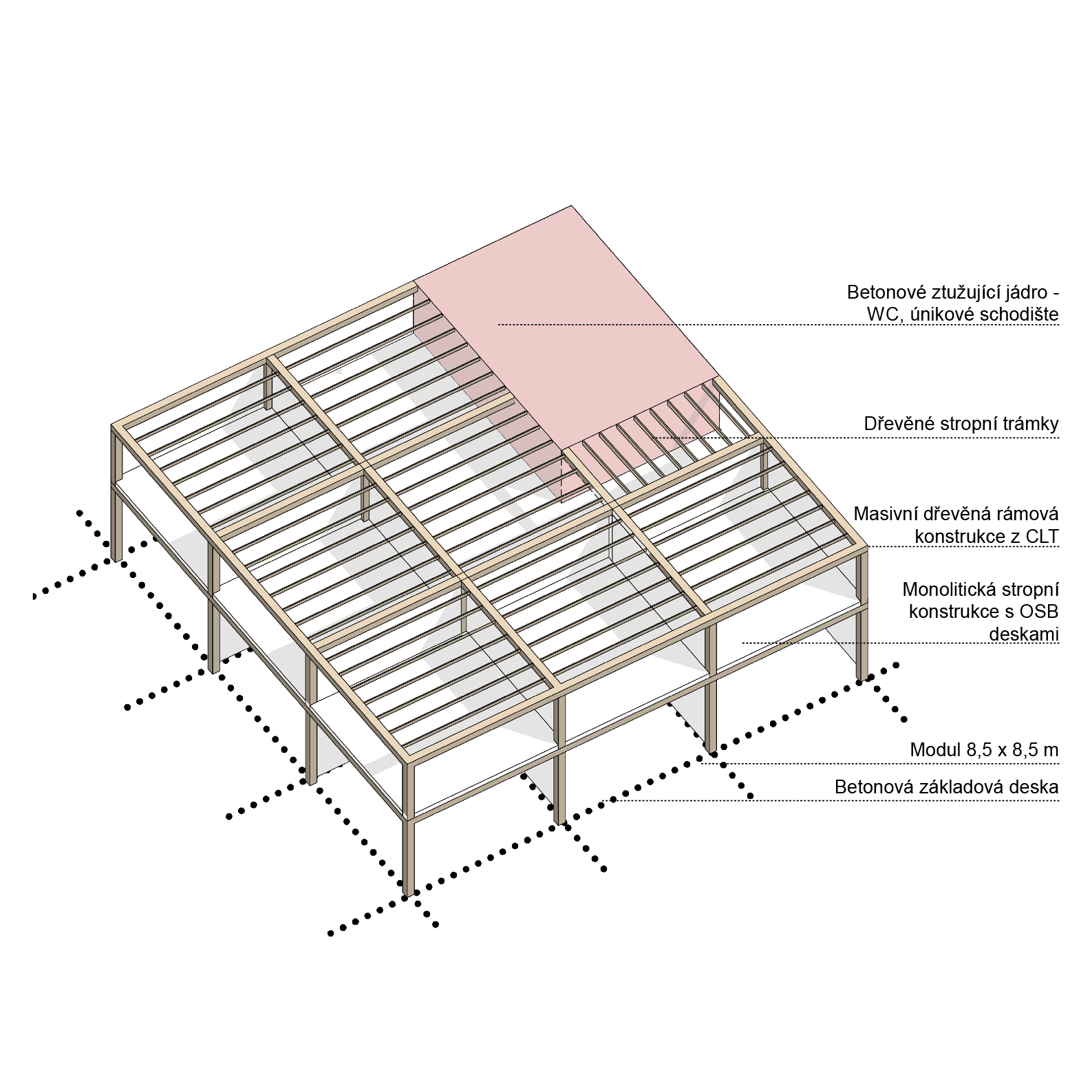
The basic design principle is a rational skeleton made of CLT panels (cross-laminated timber). In the interior, the wooden elements remain visually acknowledged – they regulate humidity, create a pleasant indoor climate and enhance the sensory quality of the space. Wood naturally encourages children to touch, sit and work. The building thus becomes a pedagogical tool – a workshop of the senses. Acoustic comfort and fire resistance are ensured by monolithic concrete ceilings and escape cores; the large-span parts of the gymnasium are designed with prestressed wooden beams.
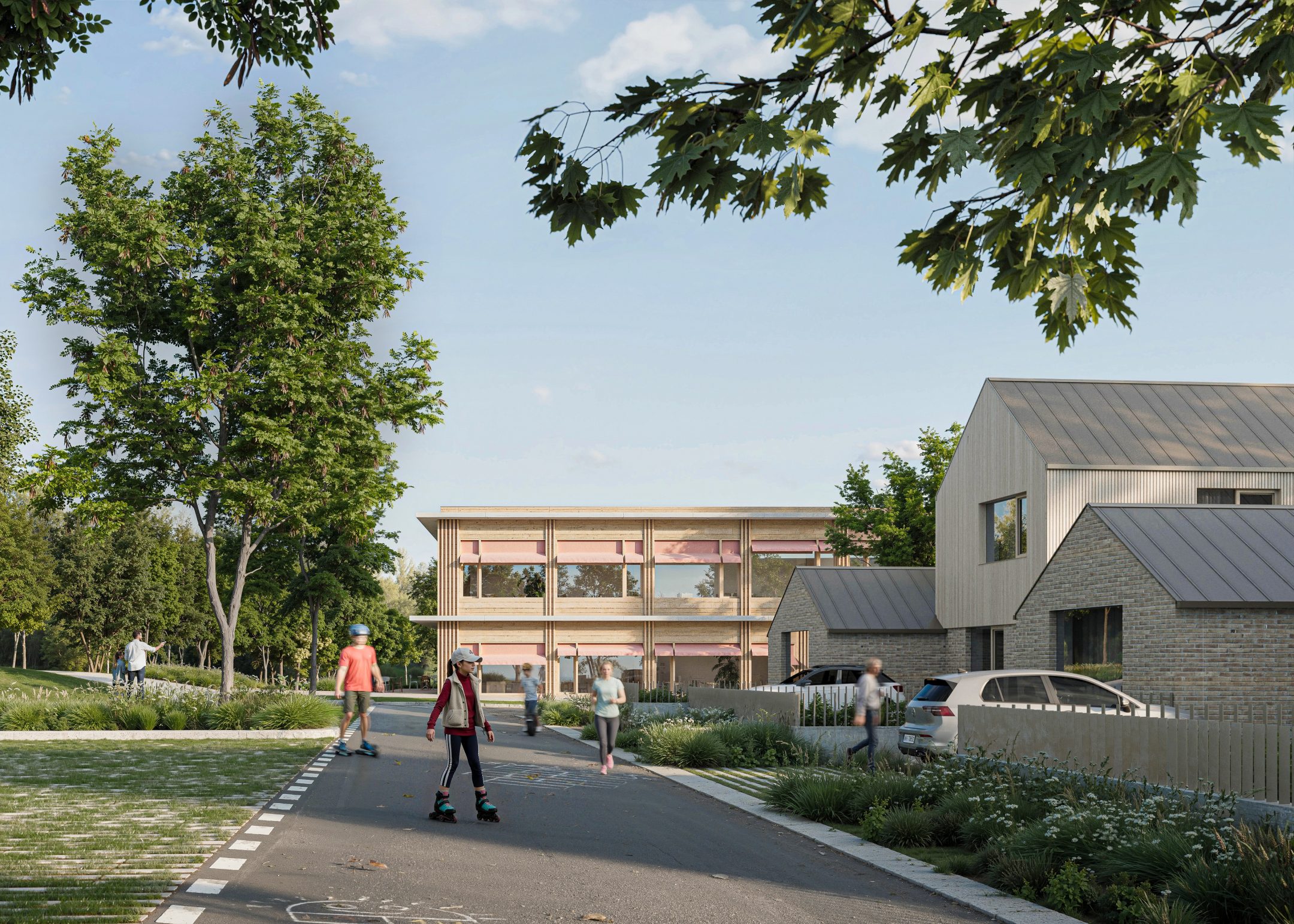
The façade acknowledges the main principle of the school externally: the clusters are defined by timber cladding, the common areas by exposed concrete. The ratio of glazing is designed to ensure sufficient daylight (about 60% in the teaching units) but at the same time avoid overheating due to the exterior shading.
Blue-green infrastructure and energy efficiency
The school works with rainwater as a resource. Green roofs and terraces slow runoff, promote evaporation and improve the microclimate. Under the school “square”, storage tanks are designed to allow rainwater to be used for irrigation or as grey water (e.g. for flushing).
Dry polders activated during heavy rainfall are designed in the garden to help retain water on site and slow its run-off into the landscape.
The building is designed to be extremely energy efficient: the main heat source is a combination of a heat pump and ground boreholes. Heating and cooling is provided by radiant ceiling panels, and the system can be supplemented by heat recovery. Ventilation is designed as a hybrid – a combination of natural ventilation through windows and negative pressure ventilation of the social facilities, with control according to CO₂ sensors.