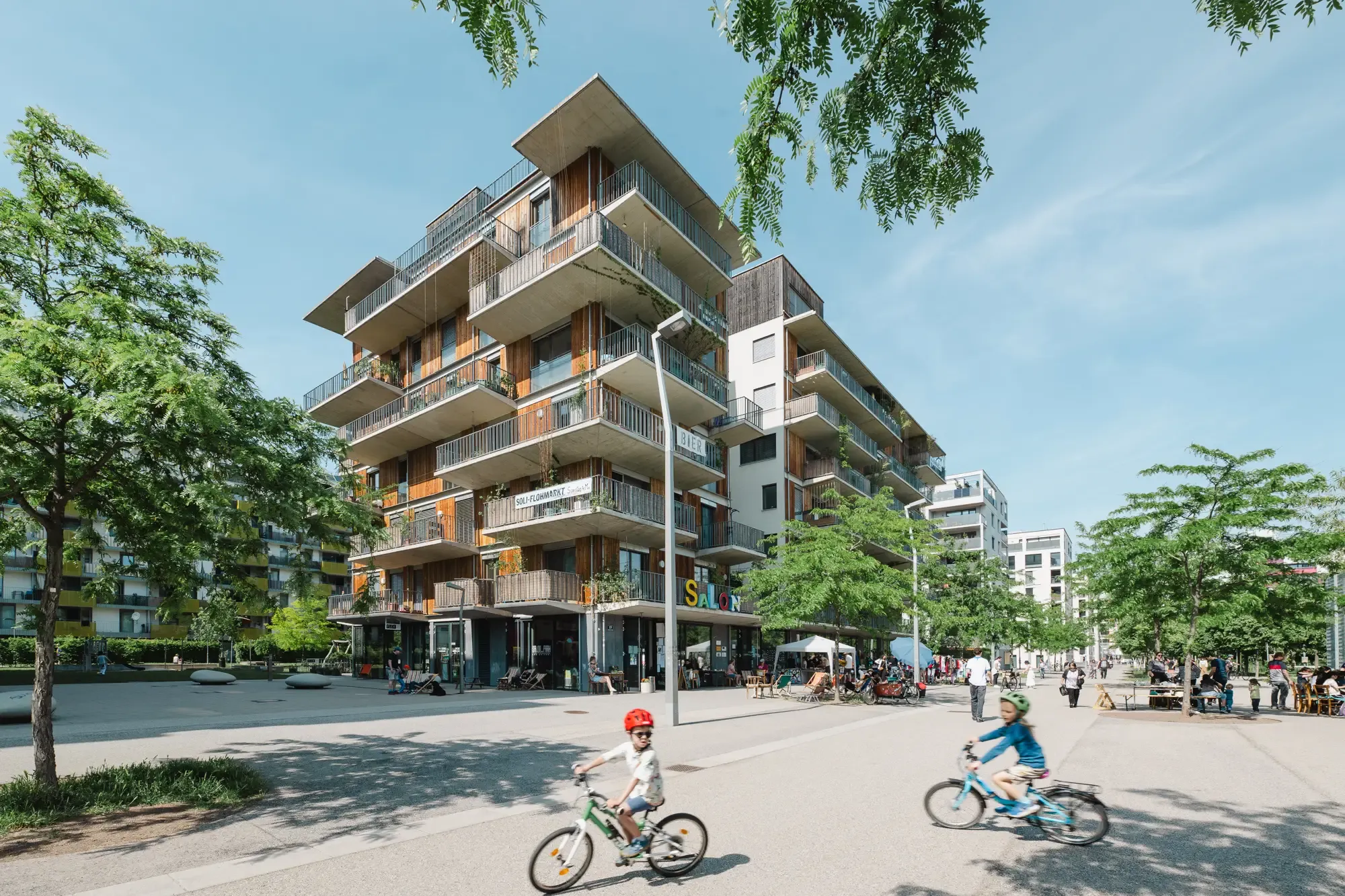
We can look to Austria, for example—particularly Vienna—for inspiration, where housing has been viewed as part of public infrastructure since the interwar period, rather than merely as an investment commodity. The foundations for this approach were laid during the so-called “Red Vienna” period between 1919 and 1934, when the city built tens of thousands of municipal apartments financed by a progressive luxury tax.
Today, approximately 60% of the city’s residents live in municipal or publicly subsidized housing. The city itself owns around 220,000 municipal apartments, home to roughly half a million people, and another approximately 200,000 apartments were built with public support through nonprofit and cooperative developers. Vienna is thus the largest municipal owner of apartments in Europe. This model has a stabilizing effect on the entire market—the high proportion of affordable housing curbs price increases even in the private sector, so rents in Vienna are among the lowest among comparable European metropolises. Affordable housing here is not merely a social program for the poorest, but a structural component of urban policy. Approximately three-quarters of the population is eligible for it, which removes any stigma associated with living in the subsidized sector.